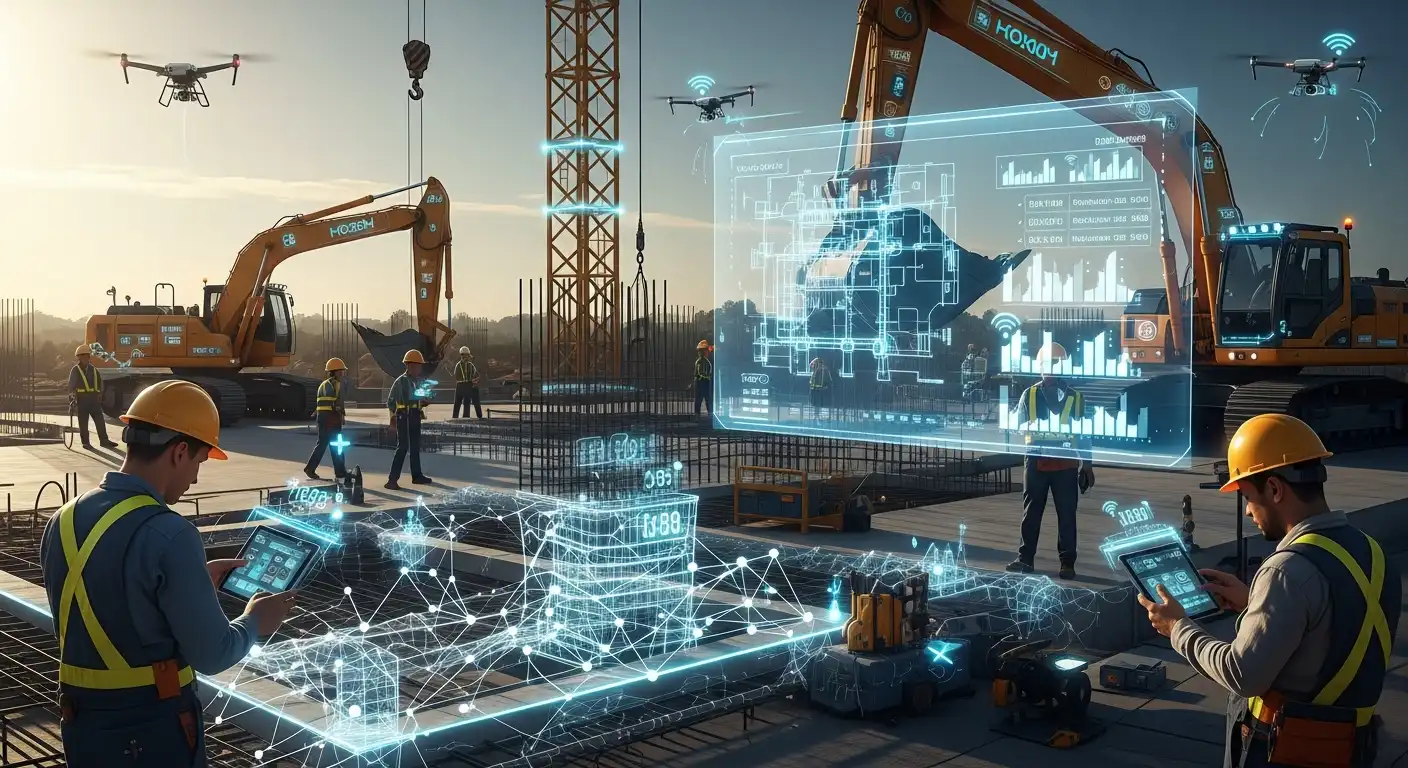
The Internet of Things (IoT) is transforming the construction industry by introducing innovative solutions that enhance productivity, safety, and efficiency on job sites. This article examines the applications, benefits, and future trends of IoT in construction, highlighting its potential to revolutionize project management and construction processes.
Understanding the Internet of Things (IoT) in Construction
In construction, IoT refers to the integration of internet-connected devices, sensors, and data analytics systems into construction processes and equipment. It enables real-time monitoring, automation, and optimization of various construction activities, from site management and equipment tracking to safety monitoring and predictive maintenance.
Real-Time Site Monitoring
IoT sensors installed on construction sites collect real-time data on temperature, humidity, noise levels, and other environmental factors. This data is transmitted to a central platform, allowing project managers to monitor site conditions remotely, identify potential hazards, and make informed decisions to ensure worker safety and project progress.
Equipment Tracking and Management
IoT-enabled tracking devices attached to construction equipment and machinery provide real-time location and performance data. It enables construction companies to monitor equipment utilization, proactively schedule maintenance, and prevent theft or unauthorized use, thereby optimizing equipment utilization and reducing downtime.
Safety and Risk Management
IoT sensors and wearables can monitor worker movements, detect falls, and assess environmental risks in real time. By providing alerts and notifications for potential safety hazards, IoT technology helps construction companies implement proactive safety measures, reduce accidents, and create a safer working environment for construction personnel.
Advantages of Internet of Things (IoT) in Construction
IoT in construction offers a range of advantages, including improved project visibility, enhanced resource management, and increased operational efficiency.
Enhanced Project Visibility
IoT sensors and devices provide real-time insights into construction project progress, resource utilization, and equipment performance. This visibility enables project managers to monitor milestones, track resource utilization, and identify bottlenecks or delays, allowing them to make data-driven decisions to keep projects on schedule and within budget.
Optimized Resource Management
IoT technology enables construction companies to optimize resource allocation and utilization by monitoring equipment usage, material inventories, and workforce productivity. It reduces waste, improves efficiency, and yields cost savings across construction projects by allocating resources more effectively in response to real-time demand and project requirements.
Increased Operational Efficiency
IoT-enabled automation and data analytics streamline construction processes, eliminating manual tasks and reducing errors. By automating routine activities such as equipment maintenance, scheduling, and inventory management, construction companies can improve operational efficiency, minimize downtime, and focus resources on value-added tasks, ultimately increasing project productivity and profitability.
Applications of Internet of Things (IoT) in Construction
IoT technology finds diverse applications across various construction activities, including site monitoring, equipment management, and predictive maintenance.
Smart Site Management
IoT sensors deployed across construction sites enable smart site management, allowing project managers to monitor site conditions, track progress, and optimize workflows in real time. By integrating IoT data with project management software, construction companies can improve site logistics, coordinate subcontractors, and mitigate delays, thereby enabling smoother project execution and faster delivery.
Predictive Maintenance
IoT sensors installed on construction equipment can collect data on performance, usage patterns, and wear and tear. By analyzing these data using predictive maintenance algorithms, construction companies can forecast equipment failures, proactively schedule maintenance, and avoid costly unplanned downtime, ensuring that equipment operates at peak efficiency throughout the project lifecycle.
Environmental Monitoring and Sustainability
IoT sensors can monitor environmental factors, including air quality, noise levels, and energy consumption, on construction sites. By tracking and analyzing environmental data, construction companies can implement sustainable practices, reduce environmental impact, and comply with regulatory requirements, thereby demonstrating their commitment to environmental stewardship and responsible construction.
Future Trends in Internet of Things (IoT) in Construction
The future of IoT in construction is characterized by advances in sensor technology, data analytics, and artificial intelligence, as well as the increased adoption of IoT solutions for construction projects.
Advanced Sensor Technology
Advancements in sensor technology, including miniaturization, increased accuracy, and reduced costs, will drive the proliferation of IoT devices in construction. Smaller, more affordable sensors will enable construction companies to deploy IoT solutions across a wider range of applications, from monitoring worker safety to tracking materials and equipment on job sites.
Integration with Artificial Intelligence (AI)
Integrating IoT data with artificial intelligence (AI) algorithms will enable more advanced construction analytics and predictive capabilities. AI-powered analytics platforms can analyze large volumes of IoT data, identify patterns, and generate actionable insights to optimize construction processes, improve decision-making, and drive continuous improvement in project performance.
Edge Computing and Real-Time Processing
Edge computing technology enables IoT devices to process data locally, near the data source, rather than sending it to a centralized cloud server for analysis. It enables real-time processing and analysis of IoT data, allowing construction companies to respond to events and make decisions promptly without relying on centralized data-processing infrastructure.
Conclusion
The Internet of Things (IoT) technology revolutionizes the construction industry by enabling real-time monitoring, automation, and optimization of construction processes and equipment. By harnessing IoT solutions for site monitoring, equipment management, and predictive maintenance, construction companies can enhance project visibility, improve resource management, and increase operational efficiency, ultimately delivering projects more effectively and competitively in a rapidly evolving construction landscape. As IoT technology advances and industry adoption grows, its transformative impact on construction projects will become increasingly pronounced, shaping the future of construction and infrastructure development worldwide.