Key Points
- Digital Twins are virtual replicas of physical assets that enable real-time monitoring, analysis, and simulation across industries.
- Manufacturers optimize production, predict maintenance needs, and improve efficiency and product quality by simulating factories and equipment.
- Real-time insights from Digital Twins help organizations extend asset lifecycles, reduce downtime, and improve maintenance strategies.
- Enhanced by AI and sensors, Digital Twins promise more adaptive systems but pose data privacy and interoperability challenges.
The “Digital Twins” concept has emerged as a game-changing technology poised to revolutionize various industries in recent years. Digital Twins are the virtual replicas of physical assets, processes, or systems that enable real-time monitoring, analysis, and simulation. These digital counterparts offer immense potential for innovation across sectors, ranging from manufacturing and healthcare to urban planning and beyond.
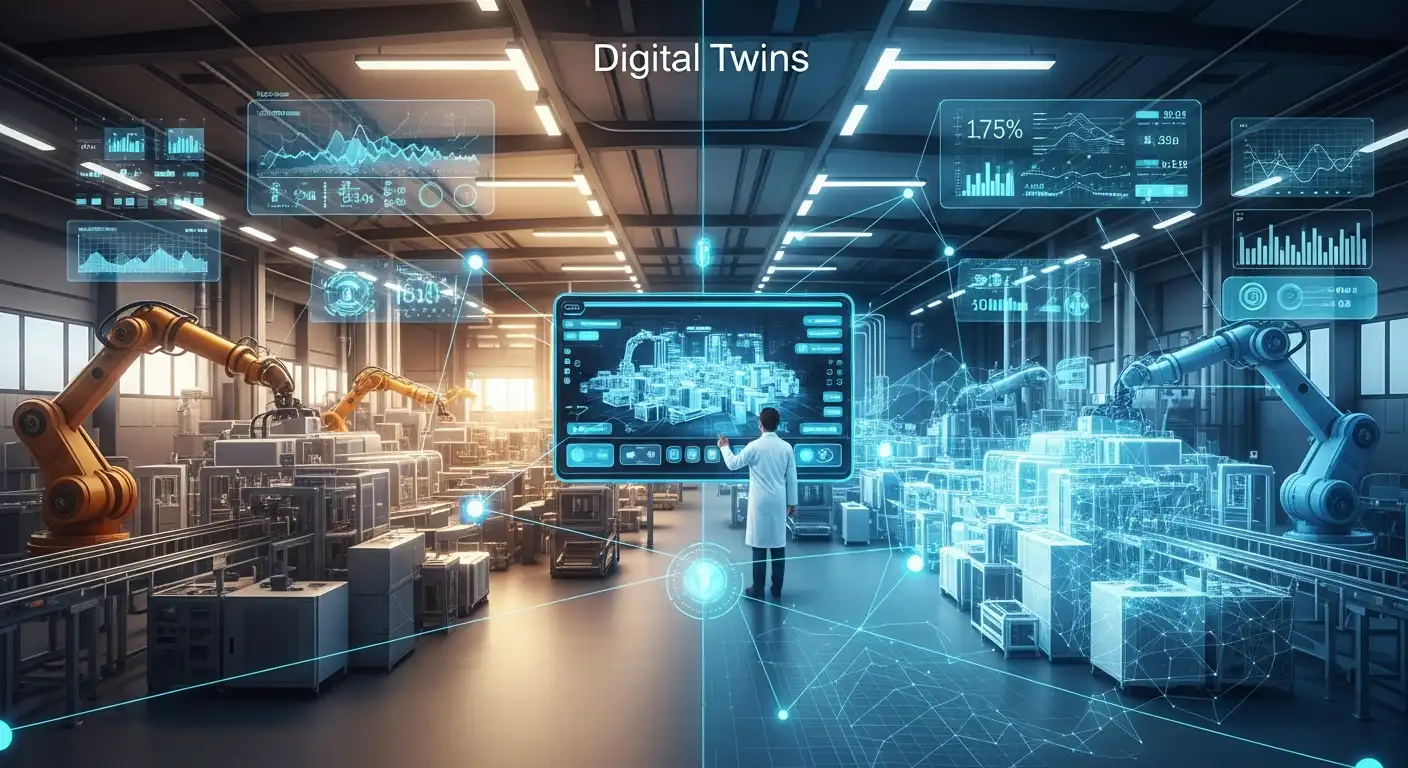
One key area where Digital Twins are making significant strides is manufacturing. By creating virtual replicas of factories, machines, and products, manufacturers can optimize production processes, predict maintenance needs, and enhance product quality. With this technology, manufacturers can simulate different scenarios, identify potential issues before they arise, and streamline operations to improve efficiency and cost-effectiveness.
Digital Twins are transforming how medical treatments are delivered and personalized. By creating digital replicas of individual patients, doctors and other healthcare providers can simulate various treatment options, predict patient responses, and tailor therapies to improve outcomes. They also enable remote monitoring of patients’ health status, facilitating proactive interventions and personalized care plans.
Urban planners and city managers are leveraging Digital Twins to design smarter and more sustainable cities. City planners can optimize resource allocation, improve traffic flow, and enhance public services by modeling entire urban environments, including buildings, infrastructure, and transportation systems. The technology enables city officials to visualize the impact of proposed changes, engage stakeholders, and make data-driven decisions for urban development.
Moreover, Digital Twins are revolutionizing asset management by providing real-time insights into the performance and condition of physical assets such as bridges, power plants, and utility networks. By monitoring these assets through their digital counterparts, organizations can optimize maintenance schedules, minimize downtime, and extend asset lifecycles.
Looking ahead, the future of Digital Twins holds even more promise. Advancements in artificial intelligence (AI), machine learning, and sensor technologies can enhance the capabilities of Digital Twins, making them more intelligent, adaptive, and predictive. As a result, industries will experience unprecedented levels of efficiency, resilience, and innovation.
However, alongside its potential benefits, the widespread adoption of Digital Twins poses challenges related to data privacy, cybersecurity, and interoperability. Addressing these concerns will ensure that digital solutions are redeployed responsibly and ethically across industries.
Digital Twins technology represents a paradigm shift in how we interact with the physical world, offering limitless possibilities for innovation and optimization. The technology is being adopted by many reputable organizations, including Microsoft, RisingMax Inc., IBM, Siemens, Cisco Systems, Rockwell Automation, and Ansys. As organizations continue to embrace this transformative technology, we can expect Digital Twins to play an increasingly central role in shaping the future of various sectors, driving efficiency, sustainability, and progress.