Key Points
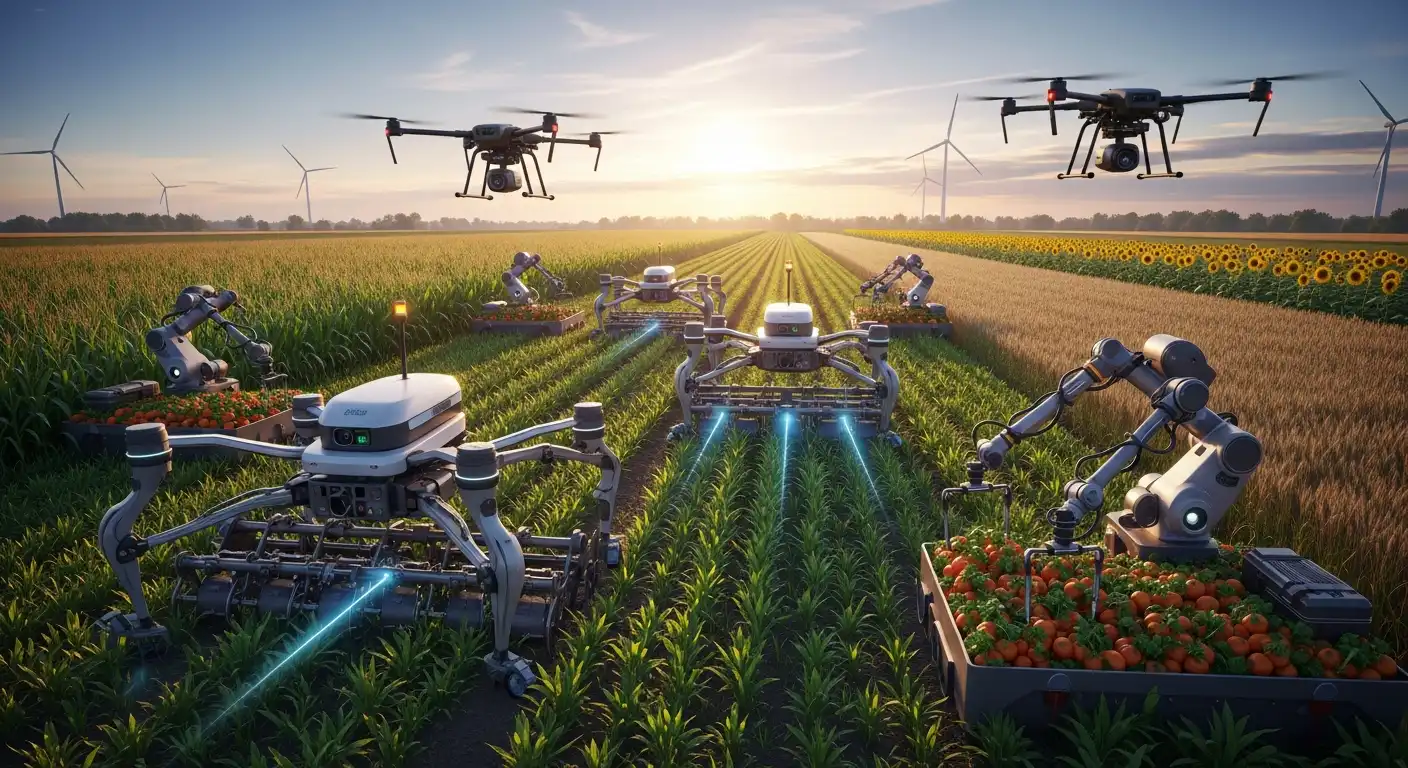
- Advanced agricultural robots are reshaping farming through innovative technologies that boost global efficiency, productivity, and sustainability.
- These robots, equipped with AI and sensors, can autonomously perform tasks such as planting, harvesting, and pest control, reducing the need for manual labor.
- Agricultural robots reduce reliance on heavy machinery, lowering carbon emissions and minimizing soil compaction and erosion.
- As population growth increases food demand, agricultural robots offer a sustainable solution for high-yield, eco-friendly farming.
In a transformative development poised to reshape the landscape of modern agriculture, advanced agricultural robots are emerging as the new frontier in farming technology. These innovative machines have cutting-edge capabilities designed to enhance efficiency, productivity, and sustainability in agricultural practices worldwide.
Powered by advanced sensors, artificial intelligence (AI), and machine learning, these robots are revolutionizing traditional farming methods. With their ability to perform various farming tasks autonomously, from planting and harvesting to monitoring crop health and managing pests, advanced agricultural robots offer a transformative solution to the agriculture industry’s evolving challenges.
One of the key features of these robots is their versatility. Designed to adapt to various agricultural environments and crop types, they can navigate diverse terrains and work seamlessly across different farming operations. These robots, equipped with state-of-the-art sensors and imaging technologies, can collect real-time data on soil conditions, crop growth, and environmental factors, allowing data-driven decision-making to optimize yields and resource usage.
Moreover, advanced agricultural robots are equipped with precision tools and actuators that enable them to perform tasks with unparalleled accuracy and efficiency. Whether applying fertilizers and pesticides with precision targeting or selectively harvesting ripe crops, these robots minimize waste and maximize productivity, improving farmers’ profitability.
In addition to their operational benefits, agricultural robots offer significant environmental advantages. By reducing manual labor and minimizing chemical inputs, these robots help lower carbon emissions and reduce environmental impact. Furthermore, their ability to operate autonomously reduces the reliance on heavy machinery, which can cause soil compaction and erosion.
Adopting advanced agricultural robots is expected to drive sustainable farming practices, with technology playing a central role in addressing global food security challenges. With the world’s population projected to reach 9 billion by 2050, demand for food is expected to surge, placing greater pressure on farmers to increase production while minimizing environmental impact. Agricultural robots offer a promising solution to meet these growing demands while ensuring the long-term viability of farming systems.
Several prominent firms, including Blue River Technology, Agrobot, Abundant Robotics, Harvest CROO Robotics, ecoRobotix, and others, are prioritizing the development of affordable agricultural robots. These investments aim to advance farming automation for improved efficiency and productivity.
As research and development in agricultural robotics continue to advance, the future holds tremendous promise for the widespread adoption of these transformative technologies. By revolutionizing farming practices and ushering in sustainable agriculture, advanced agricultural robots are poised to become indispensable tools for farmers worldwide.