
Key Points:
- Several Amazon engineers testified in favor of a one-year moratorium on large-scale AI data centers during a Seattle City Council hearing on June 3, 2026.
- AWS software engineer Patrick Schloesser criticized the company for spending $200 billion on AI infrastructure while laying off 30,000 employees over eight months.
- The Seattle City Council unanimously approved the data center moratorium to draft new regulations on energy, water, and transparency.
- The clash reflects a broader national trend, as 14 states consider restrictions and $156 billion in AI-linked projects face delays or blockades.
The corporate battle over artificial intelligence has officially entered city halls, exposing a bitter, high-stakes conflict between Big Tech’s astronomical infrastructure spending and the human toll of corporate restructuring. On Wednesday, June 3, 2026, a group of prominent Amazon.com Inc. software engineers publicly broke ranks with their employer during a heated Seattle City Council hearing. The employees testified in strong support of a proposed local ban on large-scale data center construction, openly linking the company’s planned $200 billion capital spending boom to the devastating layoffs of 30,000 corporate colleagues over the past eight months.
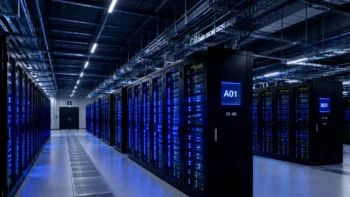
This unprecedented employee rebellion took place as local policymakers moved to put a temporary brake on the rapid, unmonitored expansion of high-density computing hubs. Following hours of public testimony, the Seattle City Council’s Land Use and Sustainability Committee voted unanimously to approve a strict, one-year moratorium on new large-scale AI data centers. This temporary ban gives city planners, utility providers, and environmental scientists a 12-month window to draft comprehensive regulations governing the energy consumption, water usage, and community impacts of future projects, throwing a wrench into the development pipelines of major tech firms.
Among the most vocal critics at the hearing was Patrick Schloesser, a senior software engineer at Amazon Web Services (AWS), the company’s highly profitable cloud computing division. Schloesser delivered a blunt, emotional testimony directly linking Amazon’s massive capital allocations to the human cost of its workforce reductions. He told city council members that it is fundamentally unacceptable for the Seattle-based giant to earmark a staggering $200 billion in total capital expenditures (CapEx) for 2026—with the vast majority flowing directly into data centers and advanced graphics processors—while simultaneously pushing 30,000 corporate workers out the door since October 2025.
Schloesser’s public testimony highlights a highly disturbing systemic trend that is reshaping the global technology ecosystem. As the industry transitions into the capital-intensive “Age of Compute,” major corporations are fundamentally recalculating the value of human labor. Under these new structures, human engineers are no longer treated as primary corporate assets, but as expensive line items that executives can cut to fund the astronomical costs of AI hardware. To put this in perspective, Meta Platforms’ projected 2026 CapEx budget of up to $145 billion dwarfs its entire annual human compensation bill of $27 billion by nearly five times. Consequently, tech companies are literally firing people to buy GPUs.
This “layoff-to-fund-chips” strategy has drawn sharp criticism from other prominent leaders in the AI community. Demis Hassabis, the Chief Executive Officer of Google DeepMind, recently criticized companies that shrink their engineering headcounts to ride the AI wave, calling the logic a complete failure of strategic imagination. Hassabis argued that when advanced coding models make engineers three or four times more productive, the smart business move is to execute three or four times more work, not march valuable developers out the door. He asserted that companies cutting their technical workforces are showing a profound lack of understanding of how to build long-term value, adding that DeepMind would happily hire the highly skilled engineers that other companies are shedding.
The growing backlash in Seattle is part of a much larger, national resistance against the environmental and utility strains of the artificial intelligence boom. Currently, at least 14 states are considering strict legislative restrictions, tax adjustments, or outright moratoriums to limit the environmental fallout of data center development. According to a newly released report by the monitoring group Data Center Watch, local public opposition, regulatory delays, and power grid shortages have successfully delayed or blocked at least $156 billion in AI-linked data center projects globally. This regional pushback is creating a major bottleneck for the tech sector’s infrastructure plans.
Despite this growing resistance, the world’s most powerful tech companies show no signs of scaling back their capital spending. The four primary global hyperscalers—Amazon, Microsoft, Alphabet, and Meta—have collectively committed to spending up to $725 billion on capital projects in 2026. This represents a massive 77% year-on-year increase, with the vast majority of the capital earmarked for raw computing power, data centers, and advanced silicon. To protect their cash reserves while funding this $725 billion infrastructure check, these same four companies have laid off over 142,000 corporate tech workers in 2026 so far.
To combat this unchecked, secretive build-out, the Amazon engineers in Seattle urged the city council to implement strict, non-negotiable guidelines for future data center developers. They demanded that any new projects must legally commit to using 100% renewable energy, secure their own water recycling systems to protect local water tables, and guarantee high-quality, unionized jobs for local construction workers. Furthermore, the engineers urged the city to completely ban the use of non-disclosure agreements (NDAs) during initial project proposals, arguing that tech companies routinely use these secretive legal contracts to bypass public oversight and hide the true environmental impact of their data centers from local communities.
Ultimately, the high-profile clash at the Seattle City Council represents a critical turning point in the history of the digital economy. The open rebellion of Amazon’s own engineers has laid bare the deep, systemic contradictions of the artificial intelligence boom, proving that the tech industry’s race to the stars is trampling over both human labor and environmental sustainability. As the one-year moratorium on large-scale data centers takes effect, the city of Seattle has established a highly brave precedent for local government oversight. Whether Big Tech can reconcile its massive $725 billion computing ambitions with the needs of local communities and its own workers remains to be seen. Still, for now, the message is clear: human beings will not quietly go out the door without a fight.