
Key Points:
- The Albanese government plans to charge all households up to $1.44 per year to fund electric vehicle chargers.
- Critics label the move as climate zealotry that unfairly punishes families who do not own electric cars.
- Opponents highlight massive cost blowouts in previous government energy projects led by Chris Bowen.
- The government claims the fees will start in 2029 and help build 14,000 new public charging stations.
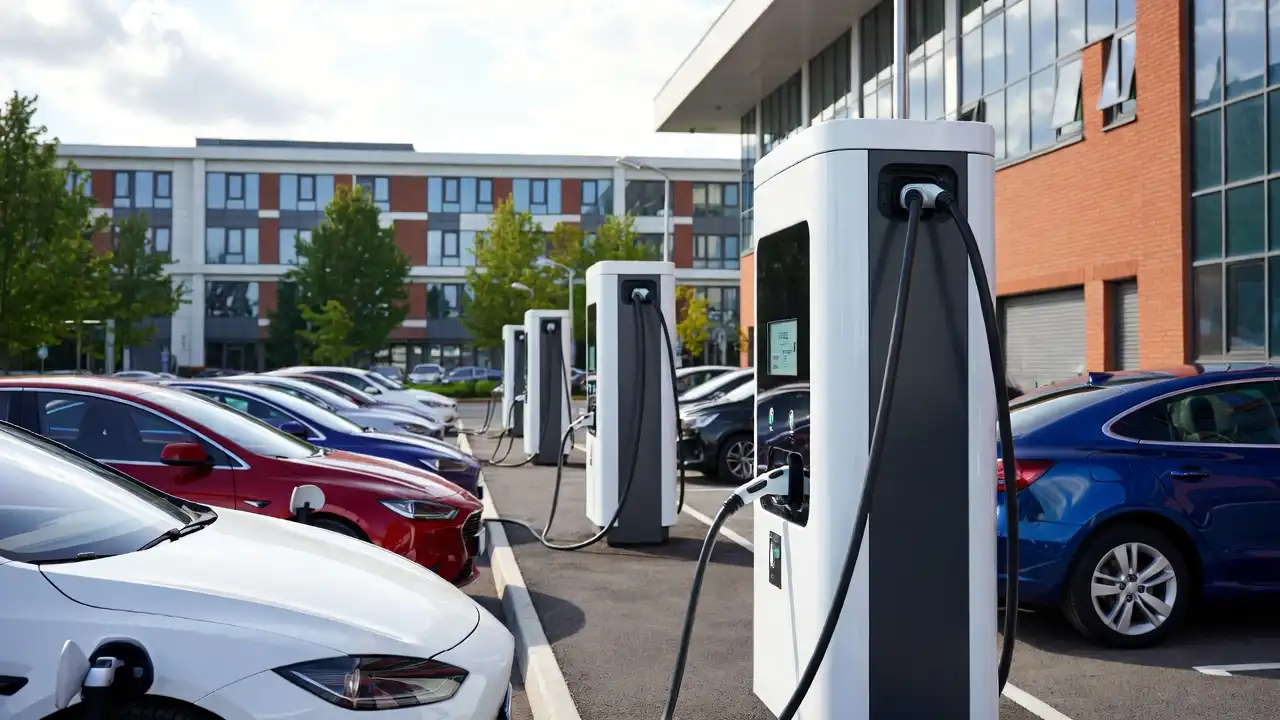
The Albanese government faces heavy backlash over a new plan to fund electric vehicle charging stations. Under this proposal, every household in Australia will pay up to $1.44 per year on their power bills to help build these chargers. This extra fee applies to everyone, even families who do not own an electric car. Critics quickly labeled the move extremely unfair to everyday citizens already struggling with high living costs.
The government wants to speed up the rollout of public chargers in rural and outer suburban areas. Right now, private companies focus mostly on busy city centers where they can easily make a profit. The new model allows local electricity networks to step in and find suitable sites for new charging stations in quieter neighborhoods. The networks will prepare the site and offer it to private operators first. If no business wants the spot, the electricity network will just install the charger itself and pass the cost straight to consumers.
Aidan Morrison, the energy director at the Center for Independent Studies, strongly condemned the plan. He called the strategy a clear example of massive companies cashing in on climate zealotry. Morrison argues that the government punishes everyday Australians with more expensive electricity bills just to eliminate fossil fuels. He believes this policy forces regular families to subsidize the lifestyle choices of wealthier electric car owners.
Morrison also pointed out the bad economics behind building thousands of expensive public street chargers. He noted that most electric vehicle owners simply plug their cars in at home, in their own garages. Home charging uses cheap off-peak power or free energy from rooftop solar panels. Drivers actively avoid public chargers because using them costs much more.
According to Morrison, people use these public stations only when necessary, such as when driving home from a long weekend road trip. Because everyone travels at the same time, this creates massive lines and long wait times at the charging stations. He argues that building a massive network of public chargers makes no financial sense if people only really need them on major holidays.
Political opponents also attacked the financial logic of the entire plan. Shadow energy minister Dan Tehan blasted Energy Minister Chris Bowen for his terrible track record with taxpayer money. Tehan warned that the government promises the cost to households will stay incredibly low, but past projects tell a totally different story. He claims any scheme pushed by Bowen usually turns into an unmitigated disaster for the national budget.
Tehan highlighted several recent massive cost blowouts under the current government. He pointed to a previous $40 million plan meant to build 117 charging stations across the country. The government managed to complete only 45 stations before the entire scheme ran out of money. He also brought up a home battery program that originally cost $2.3 billion but somehow ballooned to a staggering $7.2 billion.
Tehan noted that the fringe benefits tax exemption for electric vehicles also spiraled completely out of control. The government originally said that specific tax policy would cost $90 million per year. Instead, the actual annual cost skyrocketed to $3 billion. Tehan argues that the new charging-station plan will only add more financial chaos to an already messy energy transition.
The Albanese government defends the charging station plan as a vital part of its aggressive environmental agenda. The government plans to slash national carbon emissions by 62 to 70 percent from 2005 levels by the year 2035. To reach these aggressive goals, leaders want to ensure that renewable sources such as wind, solar, and batteries account for 82 percent of the energy grid by 2030.
A government spokesperson tried to calm public outrage over the new household fees. The representative confirmed that the extra charges will not be reflected in household electricity bills until 2029. By that time, the government expects the program to deliver more than 14,000 brand new charging stations across the nation.
These ambitious plans rely heavily on highly optimistic forecasts from major scientific and energy organizations. The CSIRO and the Australian Energy Market Operator currently predict that pure electric vehicles will completely wipe out the sales of traditional gas cars by the mid-2030s. They also expect sales of standard hybrid vehicles to crash around the same time as buyers switch entirely to battery power.
Morrison completely rejects these official predictions. He calls the official sales projections pure fantasy and argues they totally ignore what real car buyers actually want today. Morrison claims officials simply shoehorned these unrealistic numbers to match the government’s narrative about reaching net-zero emissions by 2050. He warns that massive power companies use these fake projections to justify grabbing more cash from families for an unwarranted rollout of street chargers.