

Key Points:
- China saw domestic car sales drop 21.6% to 1.4 million vehicles in April.
- Overall vehicle exports jumped 80.2% as automakers scrambled to find overseas buyers.
- High global fuel prices, driven by the war in Iran, boosted foreign demand for electric vehicles.
- Morgan Stanley expects domestic Chinese car sales to decline by 11% this year.
China’s domestic auto market took another heavy hit in April. Car sales plunged 21.6% compared to the same month last year. Dealerships across the country managed to sell just 1.4 million vehicles over the 30 days. The China Passenger Car Association released this new data on Monday, confirming a brutal seven-month losing streak for domestic vehicle purchases.
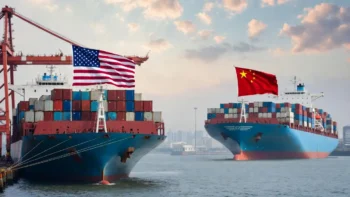
To survive this local market crash, Chinese automakers aggressively target overseas buyers. Factory bosses ship thousands of cars across the ocean every single week to offset the fierce competition back home. This strategy clearly works on the global stage. Overall, car exports from Chinese factories jumped a massive 80.2% over the last year.
The ongoing United States and Israeli war on Iran creates chaos for traditional gas-powered cars. The conflict disrupted global shipping and pushed crude oil prices through the roof. Cui Dongshu, the secretary-general of the China Passenger Car Association, explained that sales of combustion-engine cars completely missed market expectations last month. High fuel costs simply scare everyday drivers away from the dealership lots.
Even alternative-energy vehicles struggle within China’s borders. Electric vehicles and plug-in hybrids currently make up 60.6% of all domestic car sales. However, local sales for these green vehicles still slid 6.8% in April. This specific drop extends a painful losing streak to four consecutive months for the domestic electric vehicle sector.
While local buyers hesitate, international customers eagerly buy Chinese electric cars. Exports for fully electric and plug-in hybrid vehicles absolutely exploded in April, shooting up an incredible 111.8% from a year earlier. The massive spike in global fuel prices caused by the conflict in the Middle East forced foreign drivers to seek cheaper travel options, significantly boosting overseas demand for Chinese battery technology.
BYD perfectly illustrates this massive gap between domestic weakness and export strength. The company holds the title of the world’s largest electric vehicle maker. Yet, even BYD struggles to find enough buyers right now. The company watched its overall global sales downturn stretch into an eighth consecutive month in April, even as it celebrated persistent strength in its overseas shipping numbers.
Major financial institutions closely monitor this changing landscape. Morgan Stanley reviewed the fresh April numbers and adjusted its expectations for the rest of the year. Last month, the investment bank maintained its prediction that overall Chinese car sales will fall by 2% before the end of the current year.
However, the bank dramatically changed its outlook on Chinese exports. Morgan Stanley analysts previously predicted that Chinese car exports would grow by a solid 15% this year. After seeing the massive overseas demand fueled by global oil shortages, the bank more than doubled its export growth estimate to 33%.
The domestic outlook looks much darker. Morgan Stanley economists originally thought the decline in domestic car sales would only hit 6% this year. Now, they expect the local sales drop to deepen to a painful 11%. This updated projection highlights exactly how fast the Chinese consumer market is shrinking.
Automakers inside China fight a ruthless price war every single day. Companies constantly slash window prices to steal customers away from their rivals. This race to the bottom destroys corporate profit margins and forces smaller car brands out of business. Despite these massive discounts, regular Chinese workers simply refuse to spend their cash on major purchases during the current economic slowdown.
Many car companies tried to solve this profit problem by building higher-end luxury models. They hoped rich buyers would still spend money on premium features and massive touchscreens. Unfortunately, this push toward luxury vehicles completely failed to reverse the broader market slowdown. Wealthy buyers also hesitate to upgrade their vehicles right now.
Chinese car manufacturers now face two completely different realities. Inside their own country, they battle shrinking demand, nervous consumers, and vicious corporate rivals. Outside their borders, they completely dominate the global market as foreign drivers scramble to escape high gas prices. Until domestic confidence returns, these massive factories will rely entirely on cargo ships to keep their assembly lines running.