
Key Points:
- A major Wall Street Journal report reveals that global mining firms are successfully breaking China’s decades-long monopoly on heavy rare earth elements.
- Australian producer Lynas has begun refining heavy rare earths, such as samarium oxide, in Malaysia, ending a 30-year non-Chinese production drought.
- To secure its supply chains, the U.S. Pentagon has aggressively backed alternative miners, including signing a key $96 million contract with Lynas.
- U.S.-based MP Materials is rapidly scaling up operations at its Mountain Pass mine in California to provide a robust domestic alternative.
The global technology and defense supply chains are undergoing a massive, highly strategic shift as advanced nations work to secure their industrial independence. On Monday, June 1, 2026, The Wall Street Journal published a landmark investigative report titled “Does the World Need Chinese Rare Earths? Not Necessarily, Say These Companies.” The report outlines a massive, highly strategic shift in the global technology and defense supply chains. A year after Beijing weaponized its global dominance by implementing strict export controls on critical minerals, Western and allied mining firms are successfully proving that the world can survive without Chinese resources. This structural decoupling represents a major turning page in the geopolitical resource war, showing that the West is finally breaking China’s decades-long stranglehold on the building blocks of modern technology.
For more than three decades, China has maintained a near-monopoly over the mining and refining of heavy rare earth elements, which are critical to manufacturing high-strength permanent magnets. These specialized magnets are essential components in civilian electric vehicle motors and wind turbines. Still, they are even more critical for military defense hardware, including stealth fighter jets, nuclear submarines, and autonomous attack drones. Historically, China controlled over 90% of global rare earth magnet production, giving Beijing immense geopolitical leverage. When the Chinese Commerce Ministry restricted exports in April 2025 as leverage in trade talks, many commentators warned that the decision could cripple Western defense manufacturing.
No non-Chinese firm had successfully produced separated heavy rare earths in nearly thirty years. However, Australian miner Lynas Rare Earths has officially shattered that monopoly. At its massive, highly advanced refining facility in the coastal city of Kuantan, Malaysia, Lynas has successfully begun commercial production of separated heavy rare earth elements, including high-purity samarium oxide and dysprosium. Amanda Lacaze, the Chief Executive of Lynas, confirmed the milestone, noting that establishing a reliable, non-Chinese source of heavy rare earths represents a monumental leap forward for global technological sovereignty.
To secure this alternative supply chain, the United States Department of Defense (DoD) has spent the last three years injecting massive amounts of capital into non-Chinese mining companies. Recognizing that a military-adjacent supply chain cannot rely on hostile geopolitical actors, the Pentagon signed a preliminary $96 million contract with Lynas to directly fund construction of its specialized heavy rare-earth separation facility. This direct financial backing ensures that the U.S. military has a guaranteed, non-Chinese source of samarium oxide to manufacture the heat-resistant permanent magnets required for its next-generation guidance systems and missile fins.
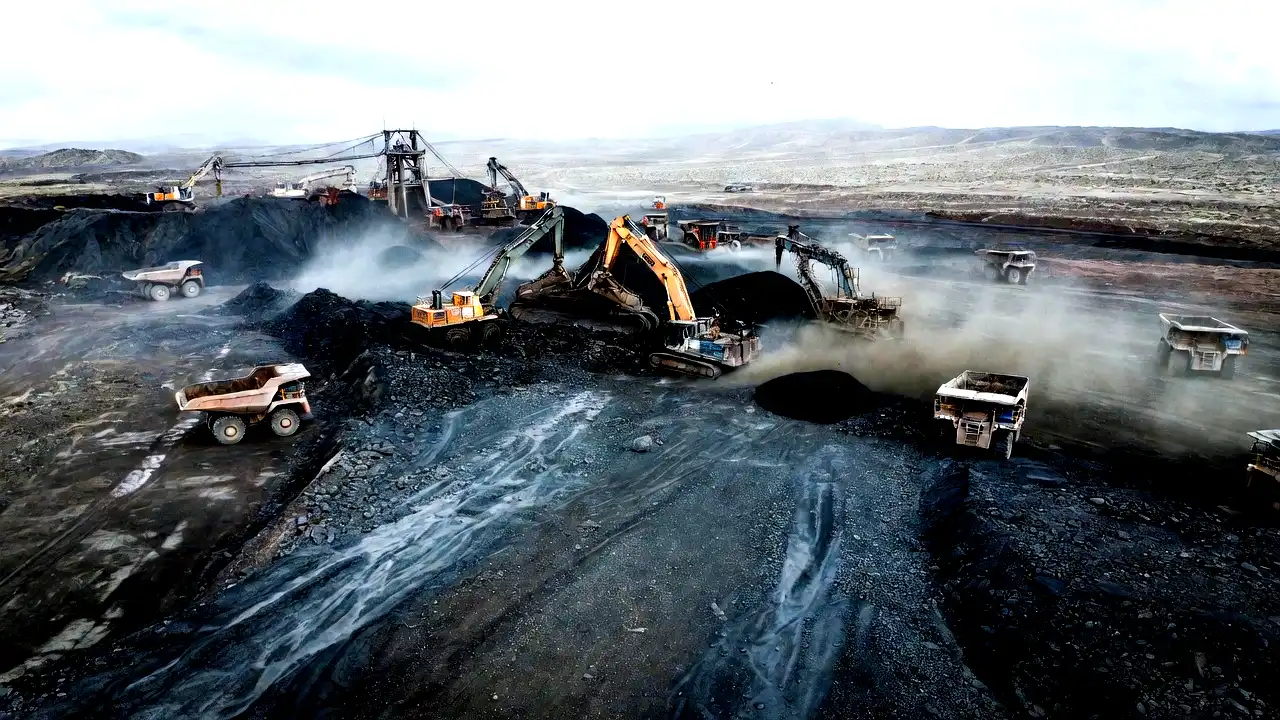
Simultaneously, on the other side of the Pacific, Las Vegas-based MP Materials is staging its own highly successful comeback. The company owns and operates the historic Mountain Pass rare earth mine in California, which was once the world’s primary source of these minerals before Chinese state subsidies drove Western mines out of business in the late 1990s. MP Materials recently reported record-breaking production numbers for the first quarter of 2026. While these new domestic operations currently supply about 1.5% of the global commercial magnet market, the growth of this localized capability represents a major national security success, demonstrating that the company can scale up its domestic refining and magnet-making operations to provide a robust, fully domestic alternative to Chinese suppliers.
While the rapid expansion of these alternative supply chains is a major geopolitical victory, refining rare earths is notoriously difficult and poses notable environmental risks. In Malaysia, Lynas’s operations have sparked intense local political controversy and environmental protests over the disposal of low-level radioactive waste generated during ore cracking. Although the Malaysian government recently renewed Lynas’s operating license for an additional 10 years, local activist groups continue to mount legal challenges, demonstrating that breaking a geopolitical monopoly requires navigating highly complex domestic environmental policies.
Recognizing that its chokehold is beginning to slip, Beijing has attempted to adjust its strategy to maintain influence without triggering a total trade collapse. In late 2025, the Chinese government announced plans to introduce a “validated end-user” (VEU) licensing framework. Under this system, Beijing plans to fast-track export approvals for civilian-focused technology firms in Europe and Asia while completely blocking shipments to companies with direct ties to the U.S. military. However, independent trade strategists argue that, because once a mineral is refined, tracing its final destination on the secondary market is virtually impossible, these export controls are ultimately a waste of resources.
This successful decoupling in the rare earth sector is part of a much greater, multi-billion-dollar effort by Western allies to limit their overall foreign strategic dependencies. Under initiatives like the newly proposed European RESourceEU Action Plan and the U.S. Inflation Reduction Act, democratic governments are spending billions of dollars to build secure, alternative supply chains for critical minerals, including lithium, cobalt, and nickel. This systemic re-shoring effort is gradually transforming the global resource trade, shifting the balance of power back toward diversified, rules-based trading partners.
Ultimately, Lynas’s successful production of heavy rare earths in Malaysia and MP Materials’ record-breaking output in California demonstrate that Chinese rare-earth dominance is no longer an unbreakable monopoly. By investing in global processing infrastructure, securing state-backed military contracts, and developing innovative refining techniques, Western allies have successfully defused one of Beijing’s most potent geopolitical weapons. As the 2026 trading year continues, the physical flow of these critical minerals proves that with enough capital, strategic planning, and political determination, the global technology sector can successfully write its own sovereign future, leaving the threat of resource blackmail in the past.