Key Points
- The future of healthcare lies at the intersection of biology, data science, and computer technology, transforming medical research and treatment.
- Bioinformatics applies computational techniques to vast biological datasets, enabling deeper insights into genomics, proteomics, and metabolomics.
- By identifying genetic variations through bioinformatics, personalized medicine is becoming more effective, offering tailored treatments.
- Computational biology utilizes mathematical models and simulations to investigate biological systems, thereby accelerating drug discovery and disease research.
In a world driven by technological advancements, the future of healthcare lies at the intersection of biology, data science, and computer technology. Bioinformatics and Computational Biology, two rapidly evolving fields, are set to transform the medical research landscape, diagnostics, and treatment strategies.
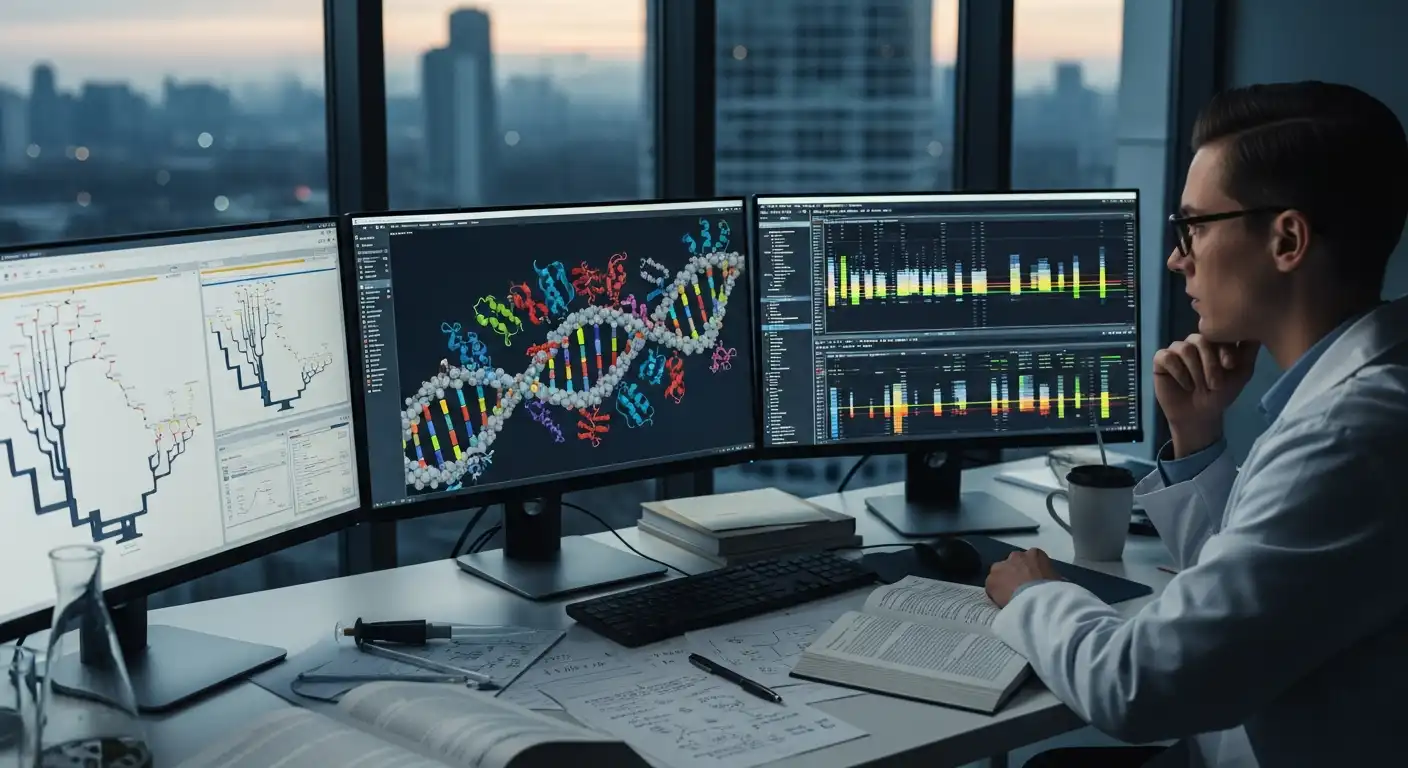
Applying computational techniques to biological data, bioinformatics enables scientists to analyze vast datasets in genomics, proteomics, and metabolomics. This wealth of information enables a deeper understanding of complex biological processes, facilitates the identification of genetic variations, and supports the development of personalized medicine. As computing power continues to grow, bioinformatics is becoming increasingly sophisticated, offering powerful tools to decode the intricacies of living organisms.
One key area where bioinformatics plays a pivotal role is in genomics. Genome sequencing costs have dramatically decreased with the advent of high-throughput DNA sequencing technologies. Bioinformatics tools can swiftly analyze these vast genomic datasets, unravel the genetic basis of diseases, predict predispositions, and guide targeted therapeutic interventions. This personalized approach promises more effective treatments with fewer side effects.
Computational Biology complements bioinformatics by applying mathematical and computational models to simulate biological systems. Through advanced algorithms and simulations, researchers can explore complex biological phenomena, predict outcomes, and design experiments more efficiently. This interdisciplinary approach accelerates drug discovery, facilitates understanding of disease pathways, and aids in the development of innovative therapies.
Bioinformatics and computational biology play a crucial role in tracking and understanding pathogens associated with infectious diseases. Rapid analysis of viral genomes enables real-time monitoring of outbreaks, thereby enhancing our ability to respond promptly to emerging threats. This was particularly evident during the global response to the COVID-19 pandemic, where these technologies played a crucial role in vaccine development and epidemiological studies.
As we look ahead, integrating artificial intelligence (AI) and machine learning into bioinformatics and computational biology is poised to revolutionize data analysis and pattern recognition. Predictive modeling, image analysis, and the identification of subtle correlations in biological data will be further enhanced, opening new avenues for breakthroughs in medical research.
As Bioinformatics and Computational Biology continue to evolve, their impact on healthcare will be profound. From unraveling the mysteries of our genetic code to designing personalized treatment regimens, these technologies are at the forefront of the medical revolution, promising a future where healthcare is not only more precise but also more accessible, efficient, and effective.