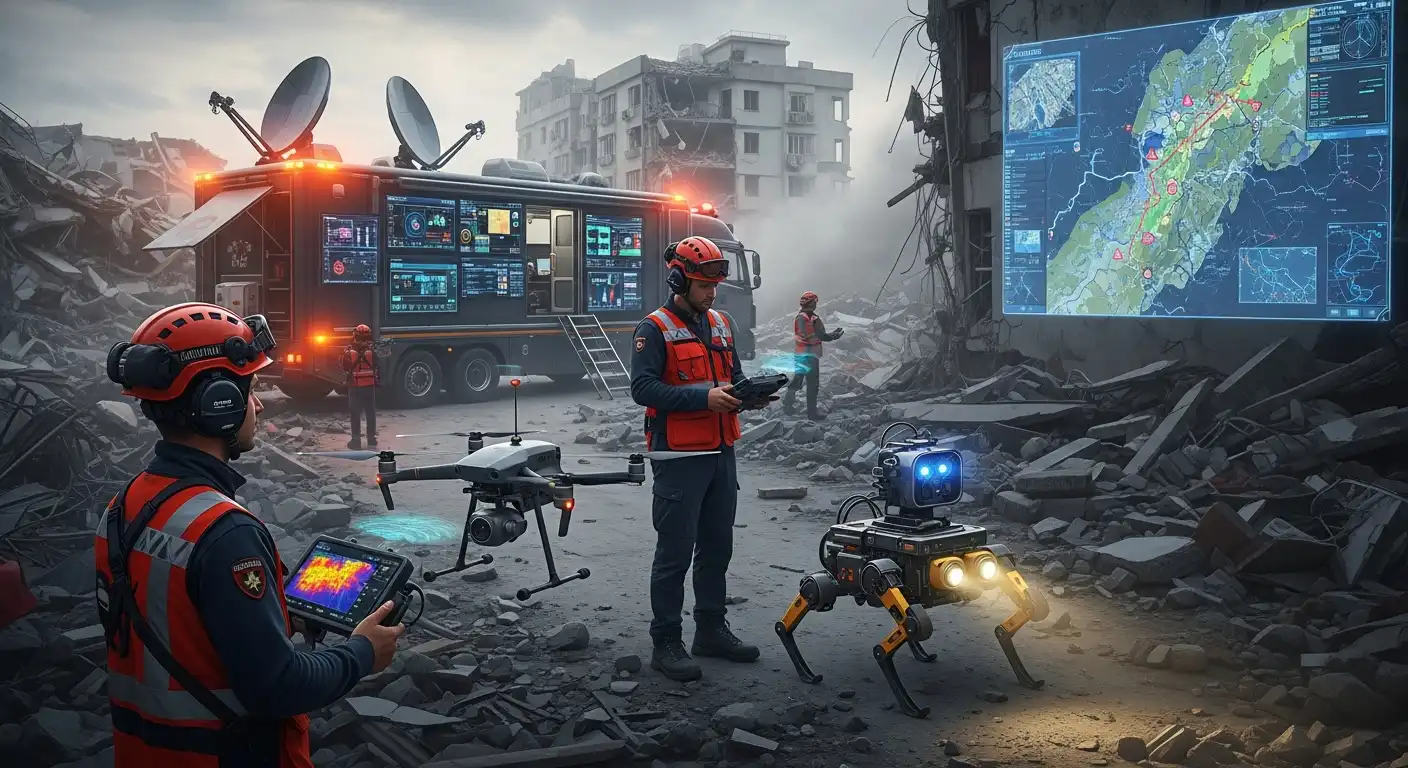
Key Points:
- Swarm intelligence technology utilizes algorithms inspired by natural swarms to coordinate disaster response efforts.
- Autonomous agents, such as drones and robots, collaborate in real time to assess damage, identify survivors, and deliver aid.
- Swarm-based approaches optimize resource allocation, route planning, and task assignment for more efficient and effective response operations.
- Collaboration between different types of responders enhances situational awareness and improves overall response outcomes.
In a groundbreaking development poised to transform disaster response, researchers are harnessing swarm intelligence to create more efficient and effective rescue operations. Utilizing advanced algorithms inspired by the collective behavior of swarms, this cutting-edge technology promises to revolutionize how emergencies are managed and lives are saved.
Traditional disaster response systems often struggle to coordinate large-scale operations, resulting in delays and inefficiencies in reaching affected areas and providing assistance. However, swarm intelligence offers a novel approach to addressing these limitations by enabling autonomous decision-making and adaptive coordination among multiple agents, including drones, robots, and human responders.
At the heart of swarm intelligence technology are sophisticated algorithms that enable autonomous agents to communicate, collaborate, and adapt in real-time, mimicking the decentralized yet highly coordinated behavior observed in natural swarms. These algorithms leverage principles such as self-organization, decentralized control, and local interactions to optimize resource allocation, route planning, and task assignment in dynamic, unpredictable environments.
One key application of swarm intelligence in disaster response is the deployment of unmanned aerial vehicles (UAVs) equipped with sensors and cameras to quickly assess damage, identify survivors, and deliver aid to inaccessible or hazardous areas. By autonomously coordinating their movements, these UAV swarms can cover large geographic areas more rapidly and comprehensively than traditional methods, enabling responders to prioritize critical tasks and allocate resources more effectively.
Furthermore, swarm intelligence technology facilitates seamless collaboration among different types of responders, including human operators, ground robots, and UAVs, by enabling them to share information, coordinate activities, and adapt their strategies in response to real-time environmental feedback. This collaborative approach enhances situational awareness, improves response times, and maximizes the overall effectiveness of disaster relief efforts.
In addition to its applications in immediate response scenarios, swarm intelligence technology also holds promise for long-term disaster preparedness and resilience-building initiatives. By analyzing historical data, simulating various disaster scenarios, and optimizing response strategies through machine learning algorithms, researchers can identify vulnerabilities, develop contingency plans, and enhance communities’ resilience to natural and man-made disasters.
As researchers refine and scale up swarm intelligence technology for disaster response applications, organizations are optimistic about its potential to save lives, minimize damage, and improve outcomes in emergencies worldwide. By harnessing the collective intelligence of autonomous agents, swarm-based approaches offer a paradigm shift in how we respond to disasters, ushering in a new era of agility, efficiency, and resilience in the face of adversity.