
Key Points:
- Egyptian Foreign Minister Badr Abdelatty proposed establishing a dedicated South Korean industrial zone inside the Suez Canal Economic Zone (SCZONE).
- The initiative aims to convince South Korean manufacturers, such as Samsung and LG, to triple their investments in Egypt to access African, Arab, and European markets.
- The proposal emerged during the Korea-Africa Foreign Ministers’ Meeting in Seoul, where diplomats welcomed a plan to convene a Korea-Africa summit in 2029.
- Abdelatty called for de-escalation in the Middle East, emphasizing the critical importance of preserving freedom of navigation in the Red Sea and the Strait of Hormuz.
Egypt is launching a major diplomatic and economic push to attract South Korea’s premier technology and manufacturing giants to the Suez Canal. Speaking in a group interview with South Korean media outlets in Seoul on Tuesday, June 2, 2026, Egyptian Foreign Minister Badr Abdelatty proposed establishing a dedicated Korean industrial zone within the Suez Canal Economic Zone (SCZONE). The high-stakes proposal aims to convince major conglomerates to triple their current investments in the country, leveraging Egypt’s strategic location as a tariff-free gateway to massive African, Arab, and European consumer markets.
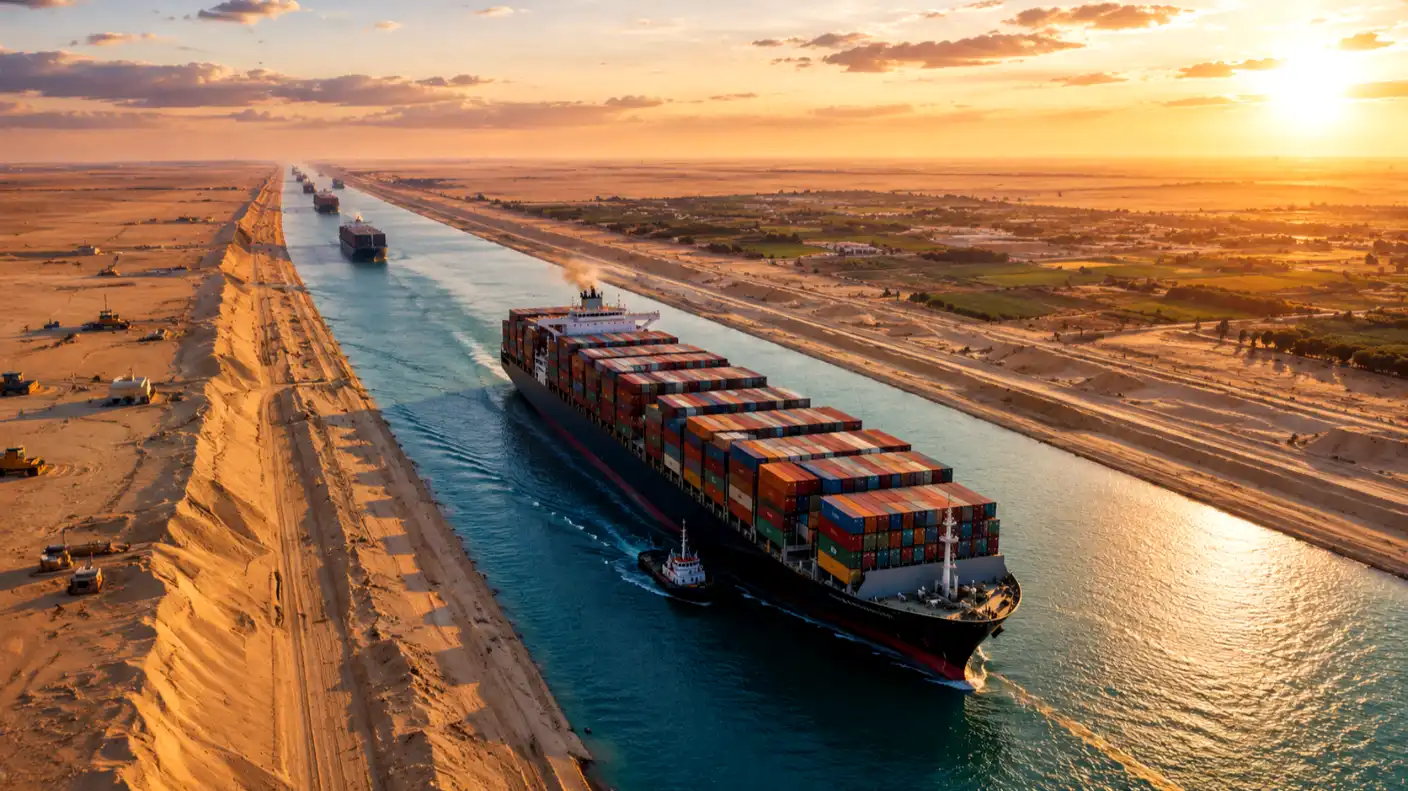
The Egyptian government views the proposed industrial hub as a mutually beneficial initiative designed to solve local employment challenges while drastically expanding global market access for South Korean firms. Under the plan, Korean manufacturers would set up operations directly along the 193-kilometer Suez Canal shipping corridor, which handles roughly 12% of all global trade. By manufacturing goods locally in Egypt, companies can exploit the country’s extensive network of bilateral Free Trade Agreements (FTAs) with African, Arab, and European partners. This setup allows businesses to bypass heavy international tariffs, streamlining the export of high-value products to nearly 1.5 billion consumers worldwide.
Abdelatty presented this economic vision during a wider, historic diplomatic gathering in South Korea. The foreign minister is among more than 50 senior diplomats and foreign ministers from African nations who traveled to Seoul to participate in the Korea-Africa Foreign Ministers’ Meeting on Monday, June 1, 2026. During the summit, African and South Korean officials agreed to strengthen their long-term strategic and economic partnerships. The delegates also formally welcomed a proposal by the South Korean government to convene a landmark, full-scale Korea-Africa Summit in 2029, cementing East Asia’s growing role as a primary development partner for the African continent.
The proposed industrial zone would build on a solid foundation of existing South Korean corporate success in Egypt. Major technology conglomerates, including Samsung Electronics Co. and LG Electronics Inc., already operate massive manufacturing plants in the country, producing millions of smartphones, flat-screen televisions, and home appliances for both local consumption and regional export. Abdelatty argued that the two nations must expand this corporate relationship beyond basic assembly lines. He called for a major, coordinated expansion into advanced technology sectors, including shipbuilding, artificial intelligence (AI), digital transformation, renewable energy, and smart logistics systems.
A central requirement of Egypt’s proposal is a commitment to the transfer of native technology and vocational training. The foreign minister emphasized that African countries are no longer content with simply hosting foreign-owned factories; they are actively seeking to localize industrial capabilities. “We need more cooperation with the Republic of Korea, especially about not only implementing projects, but transferring know-how, transferring technology, and also creating more skillful labor in Africa through vocational training and technical assistance,” Abdelatty stated. By investing in local human capital, South Korean firms can build a highly skilled, cost-effective regional workforce while fostering deep goodwill with local governments.
The push to establish an overland manufacturing and shipping hub in Egypt arrives amid severe, ongoing geopolitical instability in the Middle East. Recent military escalations have heavily disrupted global trade, with the effective closure of the Strait of Hormuz and repeated attacks on shipping lanes in the Red Sea driving up international freight and insurance rates. Abdelatty stressed that Egypt is working closely with neighboring African and Arab nations bordering the Red Sea to strengthen regional cooperation and safeguard commercial shipping. He warned that there is no military solution to any of the current crises, urging all international parties to prioritize diplomacy to preserve the absolute freedom of navigation in these vital maritime routes.
Egypt’s ability to act as a stable, reliable partner for international business stems directly from its carefully balanced, non-aligned foreign policy. Despite the growing polarization of global politics, Cairo maintains strong, productive diplomatic and trade relations with major global powers, including the United States, China, and Russia. Abdelatty explained that this neutral stance allows Egypt to serve as an effective mediator during regional crises. “We have very good relationship with everybody, and we don’t have a hidden agenda,” the minister remarked. “Our agenda is very clear: de-escalation, peaceful coexistence, and promoting of peaceful solutions.”
During his Seoul interview, the Egyptian diplomat also addressed sensitive security issues on the Korean Peninsula, reaffirming Egypt’s steadfast opposition to nuclear proliferation. Abdelatty emphasized that all nations must strictly abide by international nonproliferation norms and remain open to international verification mechanisms overseen by the International Agency (IAEA). He praised South Korea’s “very wise policies” in addressing regional security challenges, stating that diplomacy and de-escalation remain the absolute best ways to resolve complex, long-standing geopolitical standoffs on the peninsula.
Ultimately, the proposal for a dedicated Suez Canal Korean Industrial Zone represents a bold, highly strategic effort to align East Asian technological prowess with Africa’s immense growth potential. By offering a secure, tariff-free manufacturing haven backed by a stable energy grid and extensive global trade agreements, Egypt is presenting an incredibly attractive package to South Korean corporate leaders. As preparations begin for the proposed 2029 summit, the corporate and political worlds will watch closely to see if tech giants like Samsung and LG translate this diplomatic invitation into concrete factory investments, permanently reshaping global trade patterns.