

Key Points:
- Google’s parent company, Alphabet, announced a massive $80 billion equity raise, including a $10 billion private placement with Warren Buffett’s Berkshire Hathaway.
- OpenAI has launched its new “OpenAI Deployment Company” (DeployCo), investing $1.5 billion to embed specialized engineers directly into partner organizations.
- Financial analysts at Daiwa raised their target price on Japanese memory giant Kioxia to 123,000 yen, citing the high-margin AI hardware boom.
- Investment banks note a major shift toward “Physical AI,” as manufacturers prepare to deploy autonomous humanoid robots to optimize factory floors.
The global technology, media, and telecommunications sectors are undergoing a massive structural transformation as the artificial intelligence supercycle forces corporations to redesign their operating models. According to the latest Tech, Media & Telecom market reports, the immense capital and operational requirements of the advanced computing era are triggering unprecedented shifts. From multi-billion-dollar corporate equity raises to highly specialized engineering deployments and a major industrial pivot toward robotics, Silicon Valley and global tech hubs are aggressively repositioning themselves to survive and dominate this high-growth digital landscape.
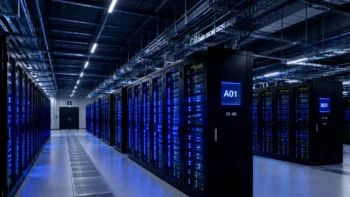
The most shocking evidence of this capital-intensive era is Alphabet Inc.’s sudden decision to dilute its stock. Google’s parent company has announced plans to raise a massive $80 billion in fresh equity capital to fund its rapidly expanding AI data centers and Tensor Processing Unit (TPU) manufacturing pipelines. The capital raise includes a historic $10 billion private placement with Warren Buffett’s Berkshire Hathaway, which will buy a 1.3% stake in the tech giant at a 6.5% discount. This unprecedented move proves that even cash-rich tech monopolies are turning to public markets to protect their liquid assets from being drained by the immense cost of building AI infrastructure.
To help businesses bridge the massive implementation gap, OpenAI is launching an aggressive new corporate venture. OpenAI Chief Revenue Officer Denise Dresser announced on CNBC that the startup has established the “OpenAI Deployment Company” (commonly known as DeployCo). Backed by an initial $1.5 billion private placement, the new venture will embed specialized, high-level AI deployment engineers directly into partner organizations to transform their daily workflows. Dresser explained that the initiative allows OpenAI to quickly increase the engineering capacity in the market, helping traditional enterprises that have fallen behind in technology integration catch up.
The high-stakes demand for physical AI infrastructure is also driving spectacular valuation upgrades across the global semiconductor supply chain. Financial analysts at Japanese brokerage firm Daiwa sharply raised their fiscal 2026–2027 earnings-per-share (EPS) estimates for memory chipmaker Kioxia Holdings by 32% to 35%. Consequently, Daiwa raised Kioxia’s stock target price to an impressive 123,000 yen from its previous 50,000 yen estimate, maintaining an unchanged buy rating. This massive target upgrade reflects Kioxia’s absolute pricing power in the NAND flash market, where high-performance AI data centers are snapping up all available storage capacity.
This technological push is also shifting toward a major new frontier that analysts call “Physical AI.” In a recent research note, Macquarie analysts emphasized that the artificial intelligence industry is rapidly transitioning from generic, digital-only chatbots to physical, embodied robotic systems. They expect global manufacturers to begin deploying highly advanced, autonomous humanoid robots to factory floors over the next two years to optimize operational efficiency and lower labor costs. By embedding advanced software directly into physical machines, this physical AI boom will reshape the global manufacturing supply chain.
This hardware boom is also reshaping the competitive dynamics of the server manufacturing sector. While original design manufacturers (ODMs) serving tier-1 U.S. and Chinese cloud giants are suffering from thin profit margins due to aggressive price squeezing, companies targeting other segments are enjoying much better returns. Analysts at Nomura noted that Lenovo Group Ltd. primarily serves tier-2 cloud service providers and enterprise clients, enabling it to maintain much higher gross margins on its high-end AI servers. This targeted focus has driven Lenovo’s server revenues higher, protecting its bottom line from intense price wars.
Meanwhile, the digital media and e-commerce segments face structural challenges as regional regulatory changes squeeze small businesses. In China, the government’s decision to implement strict e-commerce tax collection is expected to severely reduce the spending and advertising power of Pinduoduo’s massive base of smaller merchants. Consequently, research analysts at Morningstar cut their fair-value estimate on Pinduoduo’s parent company by 8% to $141 per share. This regulatory pressure has dragged down the e-commerce giant’s stock price, proving that policy shifts remain a constant risk for digital platforms.
Despite these e-commerce headwinds, Chinese digital media platforms are finding rapid success in other AI applications. Morningstar analyst Ivan Su pointed out that short-video giant Kuaishou is monetizing its new AI video generation tool, Kling, much faster than the market initially anticipated. While Kuaishou’s primary investment case still rests on its core short-video advertising cash engine, the rapid commercialization of its generative video tools demonstrates that consumer-facing AI software can generate direct revenue, helping the platform diversify its business.
Ultimately, the high-stakes developments across the technology, media, and telecommunications sectors highlight a profound transition in the global economy. By launching record-breaking equity offerings, establishing dedicated deployment ventures like DeployCo, and preparing for a massive shift toward physical AI, the world’s leading tech companies are rewriting the rules of business. While the initial software experiments represent only 1.5% of the overall technology budget, this coordinated capital reallocation is building a highly resilient, automated future. As these corporate giants continue to navigate regulatory and financial hurdles, the final winners of the tech race will be those who can successfully translate these advanced models into real, sustainable corporate revenues.