
Key Points:
- The European Parliament officially voted to reject a Belgian prosecutor’s request to lift the parliamentary immunity of several targeted MEPs.
- Lawmakers argued that the allegations were “too weak,” while critics pointed out behind-the-scenes politicking aimed at protecting allies.
- The credibility of the corruption probe suffered a near-fatal blow last year after prosecutors mistakenly accused Italian MEP Giusi Princi.
- The decision has drawn immediate, painful comparisons to the infamous 2022 Qatargate cash-for-influence scandal.
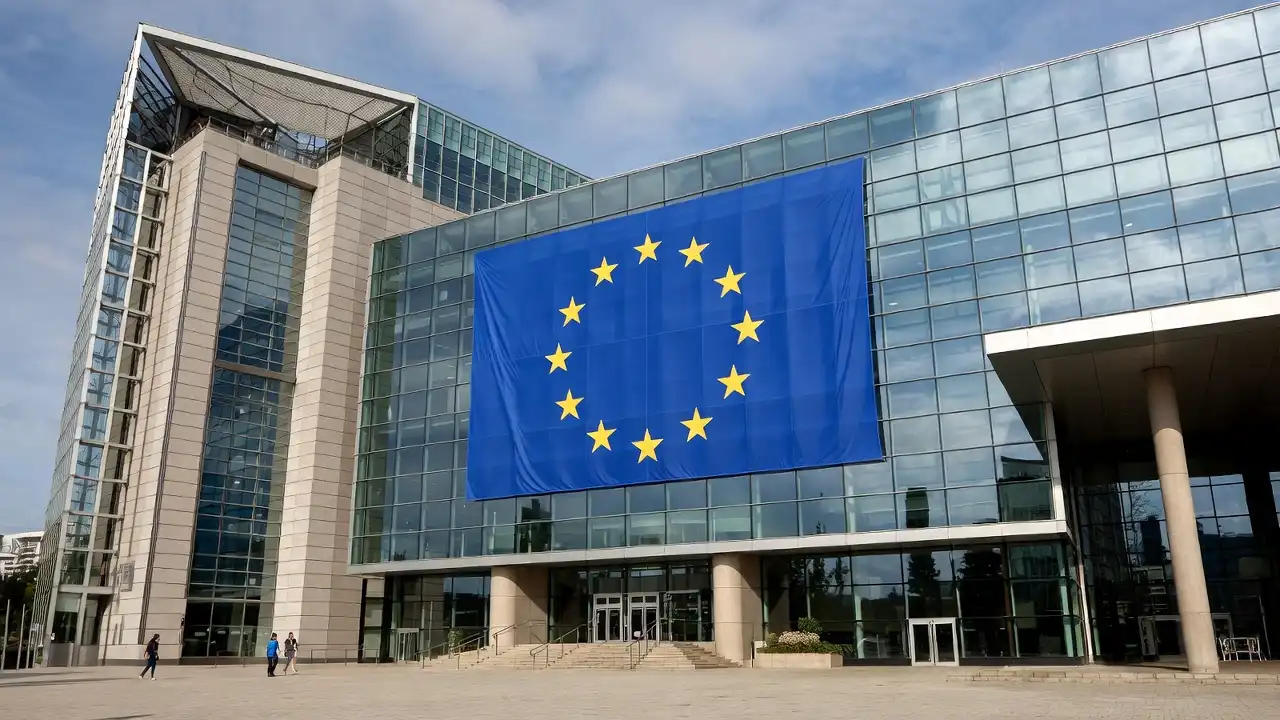
The European Parliament has taken a highly controversial step to protect its own members from a massive international corruption probe. On Wednesday, June 3, 2026, lawmakers in Strasbourg officially voted to reject a request from Belgian prosecutors to lift the parliamentary immunity of several Members of the European Parliament (MEPs) targeted in a bribery scandal involving Chinese technology giant Huawei. The decisive vote effectively shields these politicians from active criminal prosecution, sparking intense debate over whether the legislature is prioritizing self-preservation over democratic accountability and the rule of law.
Lawmakers defending the vote argued that the Belgian prosecutor’s case was far too weak and lacked the concrete, physical evidence required to strip elected officials of their legal protections. Under the parliament’s internal rules, parliamentary immunity serves as a vital shield to protect lawmakers from politically motivated or groundless prosecutions. The majority of MEPs concluded that the current allegations did not meet the high legal threshold required to justify exposing their colleagues to criminal proceedings, choosing instead to maintain their institutional immunity.
However, anti-corruption watchdogs and political critics have quickly denounced the vote, pointing to intense behind-the-scenes politicking. They allege that major center-right and conservative political groups—including the dominant European People’s Party (EPP) and the European Conservatives and Reformists (ECR)—coordinated the vote to protect their own peers from public embarrassment ahead of local elections. Critics argue that invoking parliamentary immunity to block a serious investigation into foreign interference and illicit lobbying severely damages the European Parliament’s public credibility, making it appear more like an exclusive, self-protective club than a transparent democratic body.
The Belgian prosecution’s case suffered a massive, near-fatal blow last year due to a spectacular administrative blunder that severely undermined its credibility. In mid-May 2025, Belgian prosecutors formally requested that the parliament lift the immunity of five MEPs, including Giusi Princi, a 52-year-old Italian politician belonging to Silvio Berlusconi’s Forza Italia party. The prosecutors alleged that Princi had attended a corrupt, closed-door dinner in Brussels with high-level Huawei representatives in June 2024 to help the Chinese firm curry favor among European policymakers.
However, a quick review of public records revealed that the prosecution’s specific allegation was physically impossible. On the exact date of the alleged dinner in June 2024, Princi was not even in Belgium; she was in her native region of Calabria in southern Italy. More importantly, she had not yet been formally appointed to the 27-nation assembly, as she only secured her seat later after another candidate renounced his position. This massive error forced the Brussels prosecutor’s office to backtrack on its initial immunity requests, providing the EPP and other defensive factions with powerful ammunition to portray the entire investigation as a sloppy, incompetent fishing expedition.
This ongoing legal drama is occurring in the shadow of the infamous 2022 “Qatargate” corruption scandal, which severely damaged the European Union’s international reputation. In that previous case, Belgian authorities successfully exposed a massive cash-for-influence network in which foreign governments, including Qatar and Morocco, allegedly paid hundreds of thousands of euros in bribes to European lawmakers and parliamentary aides. Because the public still associates Strasbourg with that previous cash-and-carry scandal, the parliament’s decision to block the Huawei probe has raised immediate, painful comparisons, with critics warning that the institution has failed to learn the lessons of its past ethical failures.
The political sensitivity surrounding the Huawei probe is particularly acute due to the ongoing geopolitical cold war over Europe’s high-tech infrastructure. For years, the United States and several European security agencies have warned that relying on Chinese equipment manufacturers like Huawei to build out European 5G telecommunication networks presents an unacceptable national security risk. They argue that Beijing could co-opt these private systems for espionage or strategic sabotage during international crises. By blocking a criminal investigation into whether Huawei utilized illicit financial incentives to influence European technology policy, the parliament’s vote directly complicates Brussels’ efforts to project a tough, unified stance on Chinese tech security.
In response to the vote, transparency watchdogs are calling for a complete overhaul of the European Parliament’s handling of foreign lobbying and members’ immunity. While these foreign lobbying activities currently account for roughly 1.5% of the overall policy discussion in Brussels, their cumulative impact on national security remains immense. Activists are demanding the creation of an independent, external ethics body with the power to investigate foreign interference, audit corporate-sponsored dinners, and enforce strict, legally binding transparency rules across all European institutions.
Ultimately, the European Parliament’s decision to shield its members from the Belgian corruption probe marks a highly controversial chapter in its ongoing battle with foreign interference. While the spectacular blunder by the Belgian prosecutors provided lawmakers with a convenient legal justification for rejecting the requests, the political fallout from the vote will likely linger for months. As Europe continues to navigate intense technology disputes with China, the perception that its lawmakers are using legal technicalities to block investigations into foreign influence will only fuel public skepticism. For an institution still struggling to move past the ghost of Qatargate, Wednesday’s vote proves that establishing true, transparent accountability remains a difficult and distant goal.