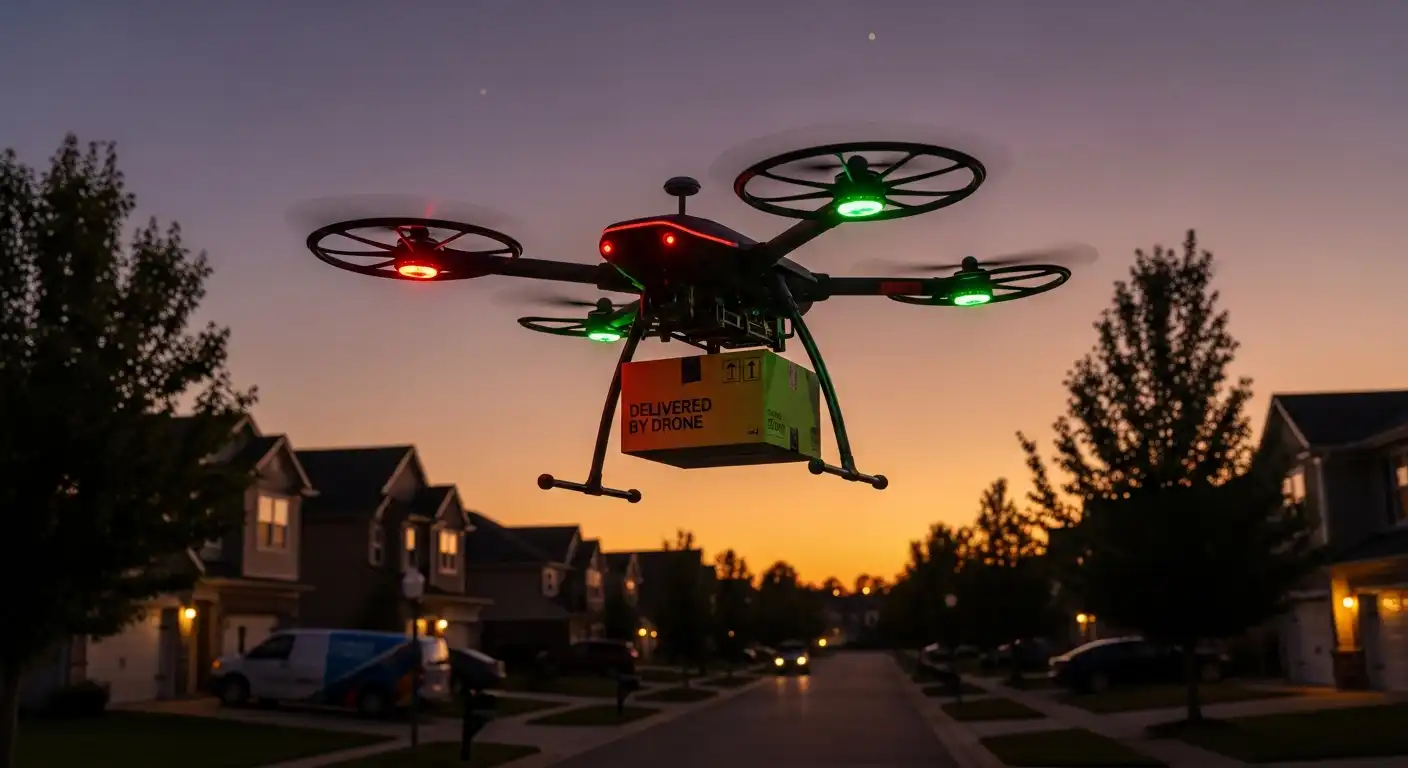
Drone delivery, also known as drone logistics, is a cutting-edge technology that promises to revolutionize the way goods are transported. Drones are unmanned aerial vehicles capable of autonomously carrying and delivering packages to various destinations.
Drone Delivery Facts
The important facts surrounding drone delivery are discussed below.
- Efficiency and Speed: Drone delivery offers the potential for swift and efficient transportation of goods. Drones can navigate through traffic-free airspace and reach their destinations faster than traditional ground-based methods.
- Last-Mile Delivery: Drones are particularly valuable for last-mile delivery, which is often the most time-consuming and costly part of the supply chain. They can access hard-to-reach or remote locations, reducing delivery times and costs.
- Reduced Carbon Footprint: Electric drones produce fewer emissions than traditional delivery vehicles, making them an environmentally friendly option. They can also contribute to reducing the carbon footprint of logistics operations.
- Emergency Response: Drones are used to deliver emergency medical supplies to remote areas or disaster-stricken regions where traditional transportation methods may be hindered.
- Innovation and Research: The development of drone technology has spurred innovation and investment in various sectors, including aerospace, software, and robotics.
Drone Delivery Views
Collaborative efforts in developing safety standards, regulatory frameworks, and responsible practices can help ensure that drone delivery becomes a safe, reliable, and socially acceptable mode of transportation in the near future.
- Safety Concerns: Critics are concerned about the safety of drones, particularly the risk of mid-air collisions, technical malfunctions, or drones falling from the sky and posing hazards to people and property.
- Regulatory Challenges: Drone delivery faces regulatory challenges as aviation authorities strive to create and enforce rules that strike a balance between innovation and public safety and privacy.
- Privacy Issues: The use of drones for delivery raises privacy concerns, as they can be equipped with cameras and sensors that may intrude on individuals’ private lives or collect data without their consent.
- Job Displacement: Concerns exist about potential job displacement in the delivery and logistics sector as automation, including drone delivery, becomes more prevalent.
- Infrastructure and Technical Challenges: Establishing the necessary infrastructure for drones, including landing zones, charging stations, and traffic management systems, presents logistical and financial challenges.
Conclusion
Drone delivery holds significant promise in terms of efficiency, speed, and environmental benefits. It has already demonstrated its value in specific use cases, such as medical supply deliveries and last-mile logistics. However, the technology faces several challenges, including safety, regulatory concerns, privacy issues, and infrastructure limitations.
Governments and industry stakeholders must harness the potential of drone delivery while addressing these challenges, and communities must work together. The evolution of this technology will continue to shape the future of logistics and transportation, presenting both opportunities and challenges for society as a whole.