

Key Points:
- Chicago Federal Reserve President Austan Goolsbee warned that the Bank of Japan risks falling behind the curve on interest rate hikes.
- In an interview in Tokyo, Goolsbee emphasized that keeping rates low while inflation remains above target increases economic risks.
- Japan’s core consumer inflation has consistently exceeded the central bank’s target, driven by energy costs and a weak yen.
- The comments arrive as global markets prepare for the BOJ’s upcoming policy meeting, where traders anticipate a 225-basis-point hike.
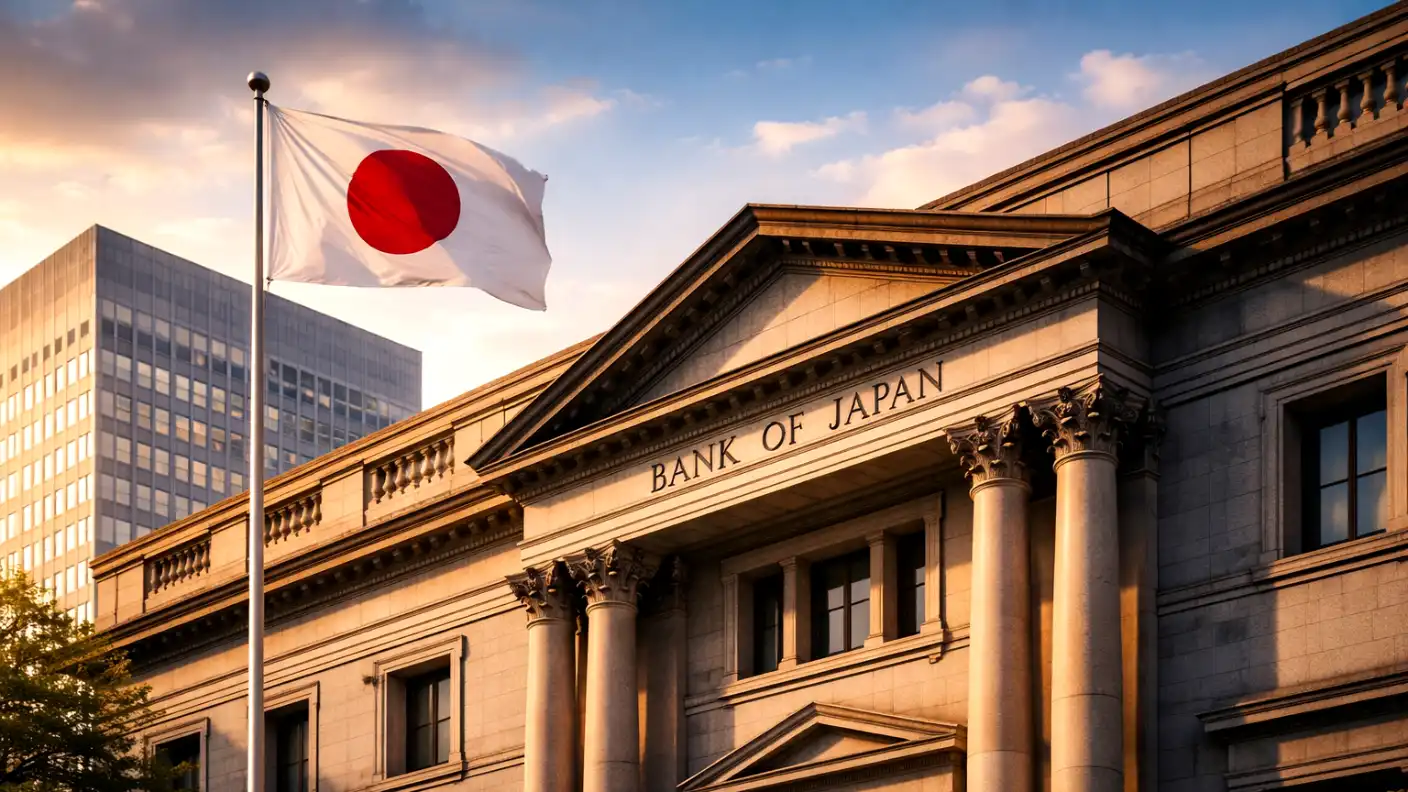
A prominent United States central banker has cautioned the Bank of Japan (BOJ) about the growing dangers of delaying interest rate hikes as domestic inflation persists. Speaking in an exclusive interview with Kyodo News in Tokyo on Wednesday, May 27, 2026, Chicago Federal Reserve President Austan Goolsbee warned that Japanese monetary policymakers risk falling “behind the curve” if they do not act promptly. He emphasized that the longer a central bank allows inflation to run above its official target, the greater the risk of losing control over price expectations.
Goolsbee’s candid assessment directly addresses the delicate transition the BOJ currently faces as it attempts to normalize its monetary policy. He noted that there is always an inherent risk of being behind the curve when managing interest rates. In his discussion, he clarified that as inflation continues to hover above target, the structural risk of delayed action rises exponentially. This warning carries massive weight for global financial markets, as Goolsbee’s position as a key policymaker within the Federal Reserve gives him a front-row seat to the macroeconomic impacts of rapid rate adjustments.
The warning from the Federal Reserve official comes at a highly sensitive time for Japan’s economy, which has grappled with rising consumer prices for months. Japan’s core consumer price index (CPI) accelerated sharply in April, blowing past the BOJ’s long-standing 2.0% inflation target. This persistent inflation, driven primarily by high import costs and a weak yen, has started to change the public’s price-setting behavior, threatening to trigger a permanent wage-price spiral if the central bank fails to tighten monetary policy soon.
Part of Japan’s inflation challenge stems from the severe depreciation of its currency, with the USD/JPY exchange rate currently hovering near the highly sensitive 159 yen level. Because Japan imports more than 80% of its crude oil and almost all of its high-tech components from abroad, the weak yen makes dollar-denominated imports incredibly expensive in local terms. This currency squeeze has directly impacted local technology companies, raising the cost of imported microchips, data center servers, and raw materials by up to 15%, causing many firms to scale back their capital expenditure plans.
This monetary dilemma is unfolding against a backdrop of severe geopolitical instability in the Middle East. The ongoing war-driven blockade of the Strait of Hormuz—the vital shipping lane through which roughly 20% of the world’s daily oil supply flows—has kept global energy costs highly volatile. While early signs of a diplomatic ceasefire between the United States and Iran recently helped Brent crude prices slide back below $100 per barrel, the physical blockade remains fully in place, keeping Japan’s local energy import bill unsustainably high.
Despite these complex headwinds, financial markets are increasingly betting that the BOJ will take decisive action soon. Traders see a growing probability of a rate hike of at least 25 basis points at the central bank’s upcoming two-day policy meeting scheduled for June 15–16, 2026. This potential hike would mark only the second rate increase in nearly two decades, signaling a historic pivot away from Japan’s long-standing policy of negative interest rates and massive monetary stimulus.
The Federal Reserve’s own aggressive rate-hiking cycle provides a powerful precedent for the BOJ to study. To combat runaway inflation, the Fed raised its benchmark interest rate from near zero to over 5% over the past few years, successfully cooling U.S. consumer demand. While rapid rate hikes initially raised concerns about a domestic economic slowdown, the U.S. economy has remained remarkably resilient, demonstrating that a proactive central bank can stabilize prices without causing long-term economic damage.
To cushion households from the immediate impact of rising import costs, the Japanese government is coordinating its fiscal policies with the central bank’s monetary stance. Prime Minister Sanae Takaichi recently announced a supplementary budget exceeding 3 trillion yen (approximately $19 billion) for fiscal 2026 to subsidize household utility bills during the peak summer months. However, economists warn that these temporary fiscal subsidies cannot replace the need for long-term monetary discipline, as keeping interest rates artificially low only fuels currency depreciation and imported inflation.
As the June policy meeting approaches, the Bank of Japan faces a highly delicate balancing act. While raising interest rates too quickly could threaten a fragile domestic recovery, waiting too long risks leaving the central bank permanently behind the curve. By warning Japanese policymakers of these structural risks, Goolsbee has highlighted the shared global interest in Japan’s monetary stability. Successfully navigating this transition is essential not only to protect the domestic purchasing power of Japanese households but also to secure the stability of the broader global financial system.