
Key Points:
- Corporate employees are burning through annual enterprise AI budgets within months due to an out-of-control trend called “token maxxing.”
- Uber Technologies completely exhausted its entire annual budget for autonomous, “agentic” AI use by March 2026.
- To curb costs, Microsoft has restricted employee access to Anthropic’s Claude, steering them instead to its internal coding assistants.
- Chinese AI rival DeepSeek has made its 75% promotional discount permanent, igniting a price war to make AI development sustainable.
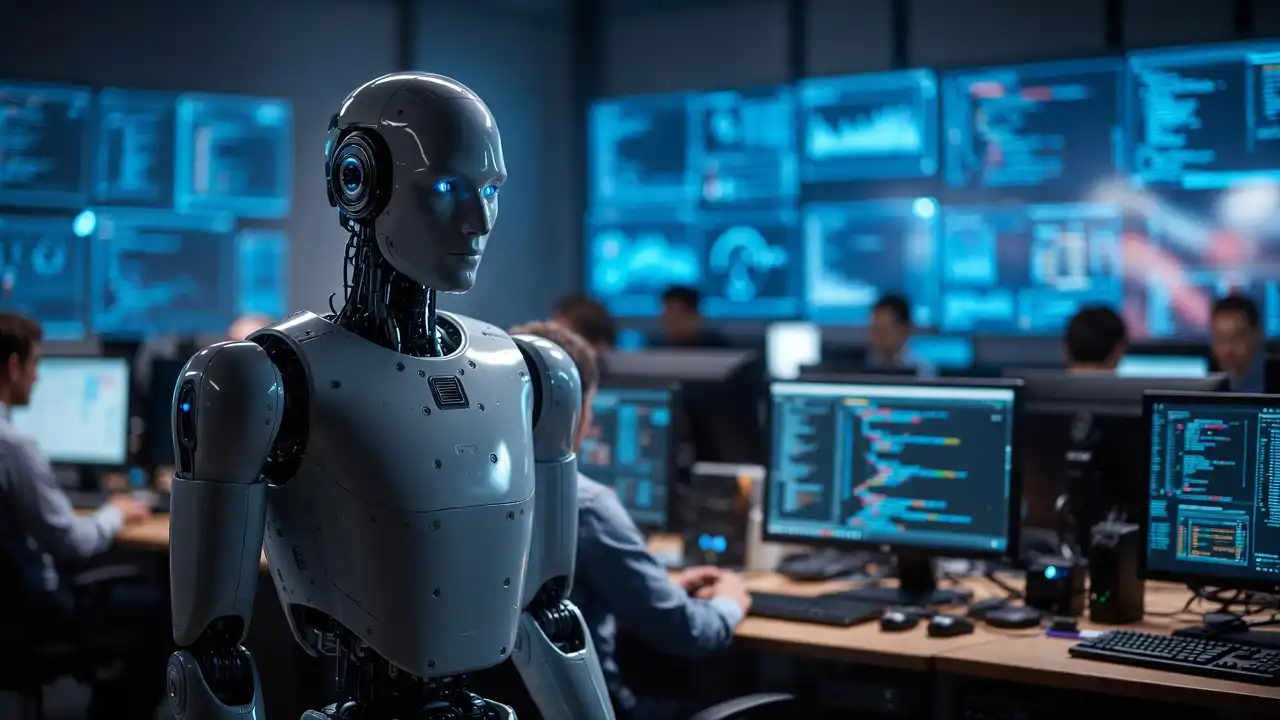
A silent, highly expensive crisis is sweeping through the corporate offices of Silicon Valley and Fortune 500 companies alike. Over the past 18 months, multinational corporations have eagerly deployed advanced generative artificial intelligence tools, expecting to boost worker productivity and streamline complex projects. However, this aggressive adoption has triggered an out-of-control trend known as “token maxxing,” in which employees overutilize high-cost models to meet internal performance goals. While these initial software experiments represent only 1.5% of the overall technology budget, the out-of-control trend has caused corporate AI budgets to vanish in mere months. Consequently, enterprise leaders find themselves in a difficult battle to balance AI budgets that have blown out with the constant pressure to embrace new technology.
The scale of this budget exhaustion became highly visible during a recent corporate review at Uber Technologies Inc. An Uber executive revealed that by March 2026, the ride-hailing giant had already completely blown through its entire annual budget allocated for “agentic” (autonomous) AI use. Uber’s developers had utilized advanced, autonomous software agents so aggressively to write and test code that the firm exhausted its 12-month capital reserves in just 90 days. This rapid budget depletion has forced Uber’s leadership to completely restructure how they allocate and monitors software development resources, proving that unrestricted model access can quickly drain corporate cash.
The physical cost of this technology has created an extraordinary economic paradox where the software now costs more than the person operating it. A software engineer based in Stockholm, Sweden, recently told the New York Times that his monthly usage of Anthropic’s Claude model had reached an alarming rate. “I probably spend more than my salary on Claude,” the engineer admitted, highlighting a bizarre new reality where companies are effectively paying more to lease digital brains than they do to compensate their highly educated human employees. While this high-intensity usage can speed up complex tasks that used to take seven months down to just two weeks, it also creates an unsustainable cost structure for global businesses.
This sticker shock is forcing even the world’s wealthiest tech giants to rein in their workers’ access to external models. Microsoft Corp. recently initiated a major internal pullback by restricting employee access to Anthropic’s Claude software. While Microsoft’s developers had previously enjoyed broad access to the advanced assistant, the resulting token bills became too massive for the firm to justify. To curb these runaway costs, Microsoft has begun steering its internal teams back to its own, cheaper coding assistant, the GitHub Copilot CLI, proving that even a $3 trillion giant must practice extreme fiscal discipline in the AI era.
Rather than banning the technology, some companies are attempting to manage the cost through gamification or unique recruiting incentives. Meta Platforms Inc. recently introduced an internal leaderboard, nicknamed “Claudeonomics,” that ranks employees by daily token consumption and jokingly awards titles like “Token King” or “Token Maxxer.” Meanwhile, at the Computex tradeshow in Taipei, Nvidia CEO Jensen Huang proposed a highly creative solution to attract top-tier engineering talent while managing corporate costs. Huang suggested that tech firms should offer engineers “token budgets” equal to roughly half their base salary as a recruiting incentive, allowing a developer earning $200,000 to receive a $100,000 credit line to run advanced models.
The struggle to manage these out-of-control software bills has also reached the retail sector. Walmart Inc., which employs a massive global workforce of 2.1 million people, recently capped its staff’s usage of its popular internal AI assistant, “Code Puppy.” The software assistant had enjoyed massive demand among both corporate and regional office staff for automating spreadsheets and formatting complex presentations. To prevent an immense cost overrun, Walmart transitioned from an open-ended, unlimited token model to a capped, allocated model. This decision represents a broader corporate shift, as Fortune 500 companies realize they must treat AI tokens as precious, high-cost raw materials rather than free, infinite utilities.
To help companies justify these massive outlays, enterprise software giants are building specialized, budget-tracking tools. Salesforce Inc. recently introduced a highly sophisticated monitoring system designed specifically to track how token consumption ultimately contributes to positive, measurable business outcomes. In the past, companies simply paid flat-rate enterprise software licenses, but the variable-cost nature of generative AI means that every single prompt represents a financial transaction. Salesforce’s new software allows Chief Information Officers (CIOs) to see whether an employee spending $500 on AI tokens is actually generating enough additional revenue or productivity to justify the cost.
While Western tech companies struggle with these high-cost models, a massive disruption from East Asia is poised to reset the economics of the entire industry permanently. On May 31, 2026, Chinese artificial intelligence startup DeepSeek announced that the 75% promotional discount on its advanced V4 Pro model has officially become the permanent, standing price, rather than a temporary promotion. DeepSeek explained that this massive price reduction—which allows companies to process inputs for as little as $0.028 per cache—stems from architectural and system-level efficiency rather than simple market pressure. By offering comparable performance at just one-tenth of the price of Western models, DeepSeek is igniting a brutal price war that could finally make enterprise AI budgets sustainable.
Ultimately, the corporate experiences of Uber, Walmart, and Microsoft in 2026 prove that the initial, unmonitored phase of the enterprise AI boom is officially over. The unbridled enthusiasm of “token maxxing” employees has forced a long-overdue economic reckoning, showing that businesses cannot scale their technology investments without strict budgetary guardrails. As permanent price cuts from competitors like DeepSeek begin to squeeze Western model developers, the industry’s financial framework is shifting rapidly. For global corporations looking to survive this transition, success will no longer depend on simply adopting the most advanced AI, but on managing the physical and computational costs of that technology with absolute discipline.