
Key Points:
- The 2026 World Intelligence Expo in Tianjin spanned 130,000 square meters and showcased breakthrough innovations from over 700 international companies.
- European business executives highlighted China’s rapid integration of artificial intelligence and robotics across major sectors like manufacturing and healthcare.
- Next-generation AI search tools like DeepSeek are transforming industrial research and development by significantly shortening product design cycles.
- A joint survey by the European Union Chamber of Commerce in China and Roland Berger reveals rising confidence among foreign firms in China’s open-source tech ecosystem.
The northern municipality of Tianjin, China, became the global epicenter of technology as it hosted the 2026 World Intelligence Expo from May 28 to 31. Spanning a massive 130,000 square meters, the sprawling event drew crowds to its six themed exhibition halls and a comprehensive central exhibition zone. Over 700 international companies and organizations showcased their latest breakthroughs in artificial intelligence, humanoid robotics, and smart mobility. The massive expo highlighted a rapidly evolving technological ecosystem, demonstrating how quickly research and development in East Asia are moving from theoretical laboratory concepts to real-world industrial and commercial applications.
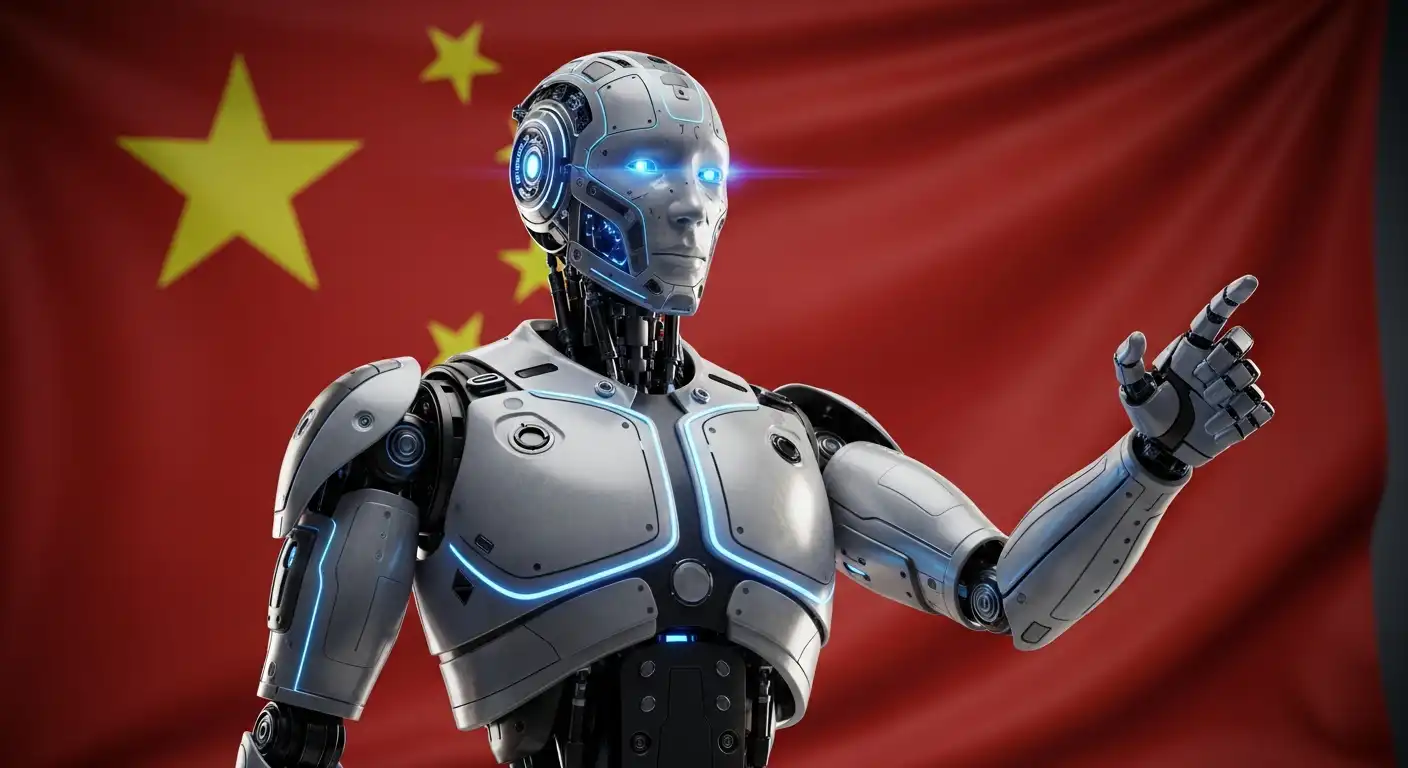
The embodied intelligence exhibition hall emerged as one of the most popular zones, where highly agile humanoid robots actively waved and interacted with curious onlookers. Among the spectators, German digital technology veteran Andrea Ruesinger frequently raised her phone to record the smooth robotic movements. Ruesinger, who first traveled to China nearly 20 years ago to develop corporate software solutions, noted the stark contrast between early digital transformation efforts and today’s AI-driven revolution. She observed that while companies previously struggled with basic software digitization, artificial intelligence now drives full-scale industrial transformation at an unprecedented pace. Ruesinger emphasized that China is currently leading the global robotics sector by rapidly embedding advanced AI models directly into physical machines.
This rapid integration of software and physical hardware has caught the attention of global manufacturing executives who rely on swift technological deployment to remain competitive. Rainer Kern, regional chief financial officer and vice general manager at Karcher China, noted that the speed of artificial intelligence development has completely outpaced most industry expectations. In his view, typical technological cycles used to take three to five years, but today, innovations that engineers considered impossible just six months ago are already entering the market. Kern highlighted how modern AI tools, specifically Chinese open-source platforms like DeepSeek, are dramatically shortening research and development timelines. Businesses now use these advanced tools to analyze large customer databases, track historical purchasing patterns, and predict future market trends efficiently.
The expo’s comprehensive exhibition areas displayed a wide array of active commercial applications beyond traditional factory automation. Visitors explored the low-altitude economy zone, where autonomous electric vertical takeoff and landing (eVTOL) aircraft shared space with next-generation smart logistics drones. Nearby, intelligent connected vehicles demonstrated their advanced sensory systems, displaying how localized AI models can safely guide autonomous cars through complex urban traffic. These real-world displays proved that the integration of artificial intelligence and physical hardware is expanding into everyday consumer services, commercial shipping, and aerospace logistics, transforming how societies move goods and people.
This dynamic, highly active ecosystem is prompting many European companies to seek direct collaboration with local technology developers rather than simply viewing the region as a consumer market. Hendrik Krüger, the general manager of the Hamburg-based digital solutions firm X Control, traveled to Tianjin specifically to seek new industrial partnerships in the maritime and cruise sectors. Krüger explained that his company plans to integrate advanced AI models into its software development, quality assurance protocols, and cybersecurity frameworks. He expressed immense appreciation for the open-source philosophy that many Chinese AI developers have adopted. In his view, this open-source approach fosters international collaboration, enabling foreign developers to build customized enterprise solutions atop highly robust foundational models.
The optimistic outlook of these European executives aligns with a joint business survey recently published by the European Union Chamber of Commerce in China and global consulting firm Roland Berger. The comprehensive report indicates a notable improvement in business confidence among European firms operating in the country. The survey highlights that foreign companies are increasingly establishing and expanding their dedicated research and development centers within China to leverage its highly skilled talent pool, integrated supply chains, and rapid product commercialization pipelines. This strategic shift demonstrates that multinational corporations no longer view local operations solely as assembly lines but rather as crucial engines of global technological innovation.
Despite the overwhelming optimism at the expo, deploying artificial intelligence across massive industrial sectors introduces notable challenges. Engineers and corporate strategists must navigate the delicate balance of data security, cloud processing costs, and system interoperability as they connect thousands of smart devices to central corporate networks. Regulators must also establish clear guidelines governing autonomous systems in public spaces, particularly in the low-altitude economy and autonomous driving sectors, where safety remains the absolute priority. However, the expo demonstrated that developers are actively addressing these hurdles by building secure, localized edge computing platforms that run complex AI tasks directly on physical devices, without relying on external cloud networks.
Ultimately, the 2026 World Intelligence Expo offered a clear, unvarnished window into the future of global industrial development. Jens Eskelund, the president of the European Union Chamber of Commerce in China, summarized the prevailing sentiment by stating that European companies increasingly view China as a critical destination for understanding future technological trends. By combining a massive domestic market with a highly collaborative, open-source research ecosystem, the region has transformed into an indispensable partner for global innovators. As the four-day event in Tianjin drew to a close, one reality became undeniably clear: the next generation of artificial intelligence and robotics will not develop in isolation. Still, it will emerge from the cross-border partnerships on display at the expo.