
Key Points:
- Gold prices hovered around $4,549.70 per ounce as investors balanced stalled U.S.-Iran peace talks with rising expectations of a Federal Reserve rate hike.
- Fresh military actions by Israel against Hezbollah in Lebanon have pushed crude oil prices higher, intensifying global inflation worries.
- The U.S. Dollar Index climbed 0.2% in early trading, creating additional downward pressure on non-yielding precious metals.
- Industrial and precious metals showed mixed results, with silver slipping slightly to $75.815 per ounce while palladium jumped 1.69%.
Precious metal markets opened in the first week of June 2026 on a highly cautious note as geopolitical tensions and shifting monetary policies collided. In early Asian trading on Monday, gold prices remained largely unchanged, hovering around $4,549.70 per troy ounce. Investors are currently weighing stalled ceasefire negotiations between the United States and Iran against mounting global inflation worries. These persistent price pressures have quickly reshaped market expectations, fueling speculation that the Federal Reserve will raise interest rates later this year rather than deliver the rate cuts that analysts originally expected before the outbreak of regional conflict.
The broader commodities complex displayed a highly mixed performance during early morning trading sessions. Gold contracts slipped by 0.94% to sit at $4,549.70 per ounce, while silver futures fell slightly by 0.08% to trade at $75.815 per ounce. Conversely, other precious and industrial metals recorded solid gains. Platinum rose 0.69% to reach $1,942.90 per ounce, and palladium jumped 1.69% to settle at $1,384.00 per ounce. Base metals also showed upward momentum, with copper climbing 0.85% to $6.4430 per pound and aluminum advancing 0.49% to $3,669.50 per ton. This divergent performance highlights how different industrial sectors are pricing in both geopolitical risks and raw manufacturing demand.
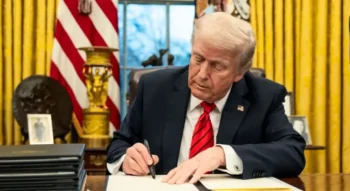
The primary driver behind the cautious market sentiment is the lack of progress in diplomatic negotiations between Washington and Tehran. Although gold ended the previous week with marginal gains on hopes of a temporary truce extension, current reports suggest that negotiations have hit a major roadblock. While diplomats spent last week discussing a potential extension of the temporary ceasefire and the highly anticipated reopening of shipping routes through the strategic Strait of Hormuz, key structural issues remain entirely unresolved. Any final agreement still faces a high hurdle, as it requires personal approval from U.S. President Donald Trump, who has historically taken a highly transactional and unpredictable approach to Middle East diplomacy.
Compounding the diplomatic gridlock is the sudden and rapid escalation of military conflict elsewhere in the region. Israel has significantly expanded its military operations in Lebanon, targeting the Iranian-backed Hezbollah group. This military expansion has dashed hopes of a swift regional de-escalation, raising deep concerns that a broader, direct conflict could erupt. The renewed fighting has also brought regional energy infrastructure back into investors’ crosshairs, who fear that prolonged combat will disrupt supply chains and leave global trade routes highly vulnerable.
Unsurprisingly, crude oil prices rebounded quickly on Monday following the news of Israel’s latest military maneuvers. This price spike has reinforced fears that energy costs will remain stubbornly high, complicating the Federal Reserve’s ongoing battle against inflation. When energy prices climb, they drive up shipping, manufacturing, and distribution costs across the global economy, feeding directly into core consumer price indexes. Consequently, central bankers find themselves in a difficult position, as they cannot easily lower interest rates. At the same time, supply-side energy shocks continue to push overall inflation rates above their official 2.0% target.
This persistent inflationary pressure has forced a dramatic shift in investor expectations regarding U.S. monetary policy. Before the escalation of the Middle East conflict, Wall Street and global markets fully expected the Federal Reserve to implement a series of interest rate cuts in 2026 to support economic growth. Today, those expectations have completely evaporated. Investors are now actively pricing in the possibility of further U.S. monetary tightening, including a potential 0.25% rate hike later this year. Because gold and other precious metals do not yield interest, higher interest rates make holding these non-yielding assets far less attractive, encouraging investors to rotate capital into high-yield government bonds instead.
Adding to the downward pressure on precious metals is the renewed strength of the U.S. dollar. The US Dollar Index, which measures the greenback against a basket of six major global currencies, edged up 0.2% in early Asian trading on Monday. A stronger U.S. dollar automatically makes dollar-denominated commodities like gold and silver significantly more expensive for buyers using other currencies, dampening international retail demand. This currency headwind, combined with competition from high-yield bonds, has offset much of the traditional safe-haven demand that typically supports gold during times of war and geopolitical instability.
This unique combination of a strong dollar and high interest rates explains why gold has struggled to maintain upward momentum in recent trading sessions. Despite its historical role as a hedge against inflation and geopolitical chaos, the yellow metal has failed to secure a sustained breakout. Last week, gold prices plunged to a two-month low before recovering slightly as rumors of a temporary ceasefire offered brief optimism. The current trading range suggests that the market is caught in a tight tug-of-war between physical buyers seeking safety in hard assets and institutional investors trading the macroeconomic interest-rate outlook.
As the trading week progresses, market participants are turning their attention to upcoming macroeconomic indicators and speeches from key Federal Reserve officials. Traders will closely monitor U.S. labor market data, including non-farm payroll releases and wage growth figures, to gauge the underlying strength of the American economy. If the labor market remains stubbornly tight, it will give the Federal Reserve more ammunition to raise rates, which would likely push gold prices below their current support levels. Until diplomats secure a permanent Middle East peace deal in the Middle East or the Fed offers clear guidance on its rate path, the commodities market is set to remain highly volatile and sensitive to every headline.