
Key Points:
- Canadian miner Aclara Resources is developing a vertically integrated heavy rare earth supply chain across Brazil, Chile, and the United States.
- The company will extract high-purity rare earth carbonates from its flagship Carina ionic clay project in Brazil’s Goiás state starting in 2028.
- Aclara recently opened a specialized separation pilot plant in Virginia to validate its clean extraction technology and support a planned facility in Louisiana.
- Backed by five million dollars from the US International Development Finance Corporation, the project bypasses China’s dominant processing networks.
The intense geopolitical struggle to secure the raw materials of the digital age is moving rapidly into the Western Hemisphere. Canadian-listed critical minerals developer Aclara Resources is leading a massive strategic effort to build a completely independent, integrated heavy rare earths supply chain. By tapping into South America’s immense mineral reserves and establishing high-tech processing hubs in the United States, the Toronto-listed miner aims to carve China completely out of the critical materials landscape. This pioneering “mine-to-magnet” strategy represents a vital lifeline for Western defense contractors, electric vehicle manufacturers, and renewable energy developers seeking to escape Beijing’s dominant grip on critical hardware.
Rare earth elements represent the essential, high-performance engines of modern technology, powering everything from smart weapon guidance systems and wind turbines to advanced robotics and electric vehicle drivetrains. However, securing a reliable supply of these materials is a major bottleneck for Western nations. China currently controls nearly 60 percent of global rare earth mining operations and more than 85 percent of international refining and processing capacity. This near-total monopoly has left Western supply chains highly vulnerable to export restrictions, price manipulation, and geopolitical coercion, prompting governments to fund non-Asian sourcing alternatives aggressively.
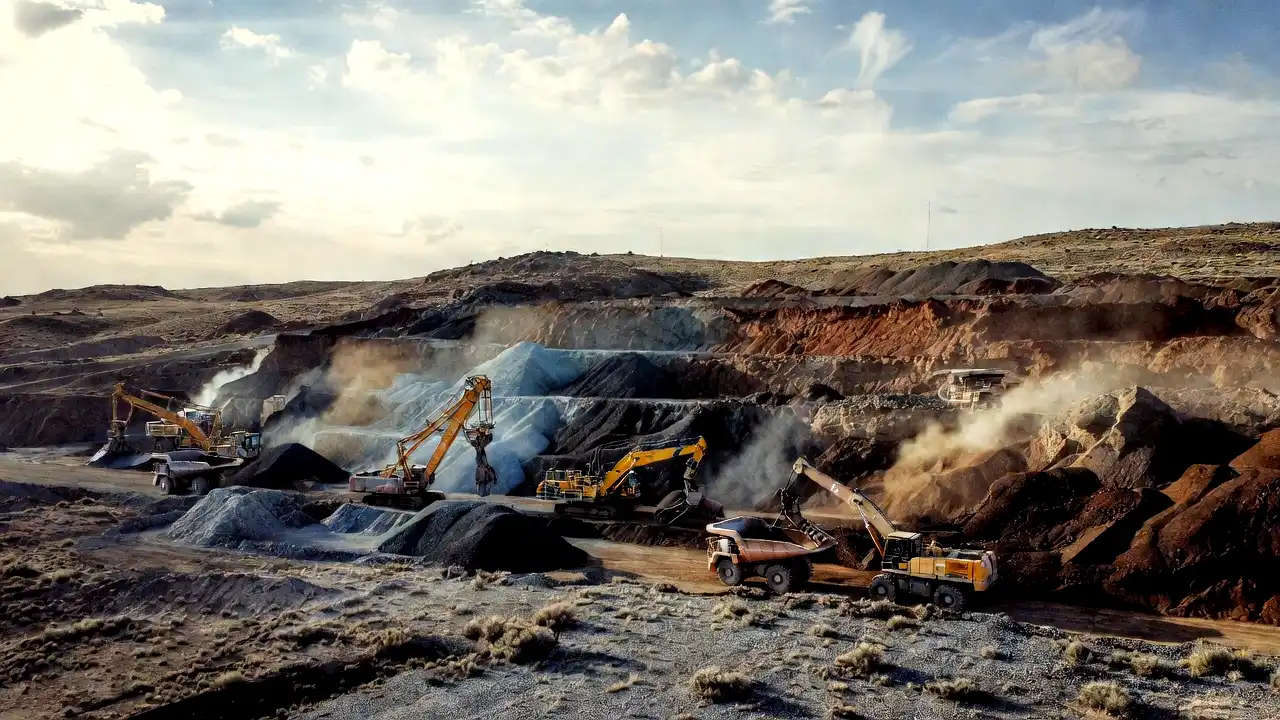
To break this monopoly, Aclara is focusing its efforts on Brazil, which holds estimated rare earth deposits of over 21 million metric tons—ranking as the second-largest reserves in the world after China. The company’s flagship asset, the Carina Project, spans a massive concession area in the mineral-rich state of Goiás in central Brazil. Geologists have identified the Carina deposit as a highly valuable ion-adsorption clay formation. Unlike traditional hard-rock deposits that require expensive, energy-intensive extraction, ionic clay deposits are much simpler and cheaper to mine, closely resembling the unique clay formations that have long fueled China’s dominance in heavy rare earths.
Environmental responsibility lies at the absolute center of Aclara’s value proposition. The company extracts its rare earth elements using its patented “Circular Mineral Harvesting” technology, a clean extraction process designed to minimize environmental impact. This innovative method eliminates the need for blasting, crushing, milling, and explosive chemical treatments. Furthermore, the system recirculates 95% of the water used in the process and recycles 99% of its chemical reagents, all while generating zero toxic tailings. This eco-friendly process addresses a major criticism of traditional rare earth mining, proving that clean tech does not require dirty extraction practices.
The sustainable mining operations at the Carina site will produce a highly valuable intermediate chemical product, mixed rare earth carbonate. This carbonate is heavily enriched in the four key magnetic rare earth elements: neodymium, praseodymium, dysprosium, and terbium. Advanced industries highly seek after these four elements because they are essential for manufacturing permanent magnets that improve the performance of electric motors. Representing an overall investment of about $500 million, the Carina Project will sustainably supply sufficient magnetic material to support the manufacture of approximately 5 million electric vehicles annually.
To prevent these valuable carbonates from being sent to China for final refining—which is the fate of nearly all raw rare earths mined globally today—Aclara is establishing a dedicated processing hub in the United States. Under its “mine-to-alloys” strategy, the company plans to ship the intermediate carbonates from the Brazilian mine to a future, commercial-scale separation facility in Louisiana. This specialized plant will separate the mixed carbonates into individual 99.5 percent-pure heavy rare earth oxides, completely bypassing the Chinese processing bottleneck that has historically frustrated Western defense and automotive manufacturers.
In early 2026, the company took a major step toward validating its proprietary separation technology by officially inaugurating its rare earths separation pilot plant in the United States. Located at the Virginia Tech Corporate Research Center in Blacksburg, Virginia, the now-commissioned pilot facility is actively processing test clays to prove the commercial viability of Aclara’s extraction and refining systems. The Virginia Tech facility expects to produce its first separated light rare earth oxides in May and heavy rare earth oxides in August, providing investors and lenders with the hard data necessary to fund the larger, commercial-scale Louisiana plant.
This strategic “mine-to-magnet” initiative has attracted direct financial and political support from the highest levels of the United States government. The U.S. International Development Finance Corporation (DFC) recently provided a $5 million project development grant to help Aclara complete its definitive feasibility study on the Carina deposit. DFC Chief Executive Officer Ben Black emphasized that securing critical minerals is a paramount matter of U.S. strategic interest and economic prosperity, prompting Washington to explore creative funding avenues and even discuss a minimum price floor to insulate Western mining startups from Chinese price-dumping strategies.
Alongside government backing, Aclara has successfully raised substantial private capital to fund its ambitious developmental pipeline. The company recently completed a highly successful $50 million private placement, bringing in leading industrial partners such as the Chilean steel giant CAP S.A. and Hochschild Mining Holdings. These strategic partnerships have fortified Aclara’s balance sheet as it advances its engineering studies. Even a minor 1.5% increase in global demand for critical minerals can trigger a severe supply-demand imbalance, making the timely completion of Aclara’s feasibility studies highly lucrative for its early backers.
In the end, Aclara Resources’ bold plan to tap Brazil’s vast ionic clay deposits marks a historic transition for the global clean energy economy. By building a fully traceable, vertically integrated supply chain that spans from South American mines to North American processing plants, the Canadian developer is solving the West’s most critical technological vulnerability. As the company continues to operate its Virginia Tech pilot plant and moves closer to constructing its Louisiana refinery, its innovative approach demonstrates that the Western Hemisphere can successfully build its own independent, sustainable, and highly resilient critical-minerals ecosystem for the next century.