

Key Points:
- China launched two separate batches of communication satellites within 24 hours to accelerate the construction of its commercial low-Earth orbit network.
- The latest dual launches successfully propelled the total number of operational satellites in the Spacesail Constellation to 200.
- The Shanghai-backed orbital project aims to deploy more than 15,000 satellites by 2030, directly rivaling SpaceX’s Starlink.
- The Thursday launch from the Taiyuan Satellite Launch Center marked the 648th flight mission of the legendary Long March carrier rocket series.
The commercial space race is entering a hyper-acceleration phase as East Asia moves aggressively to build its own sovereign low-Earth orbit (LEO) internet network. In a massive, highly coordinated logistics feat, China successfully launched two separate groups of internet communication satellites into space within a single 24-hour window. This rapid-fire deployment sequence, which used different rockets from two separate launch pads, brought the total number of active spacecraft in the country’s flagship Spacesail Constellation (also known as the Qianfan, or “Thousand Sails,” constellation) to exactly 200. This milestone underscores China’s determination to establish a highly competitive global satellite broadband network.
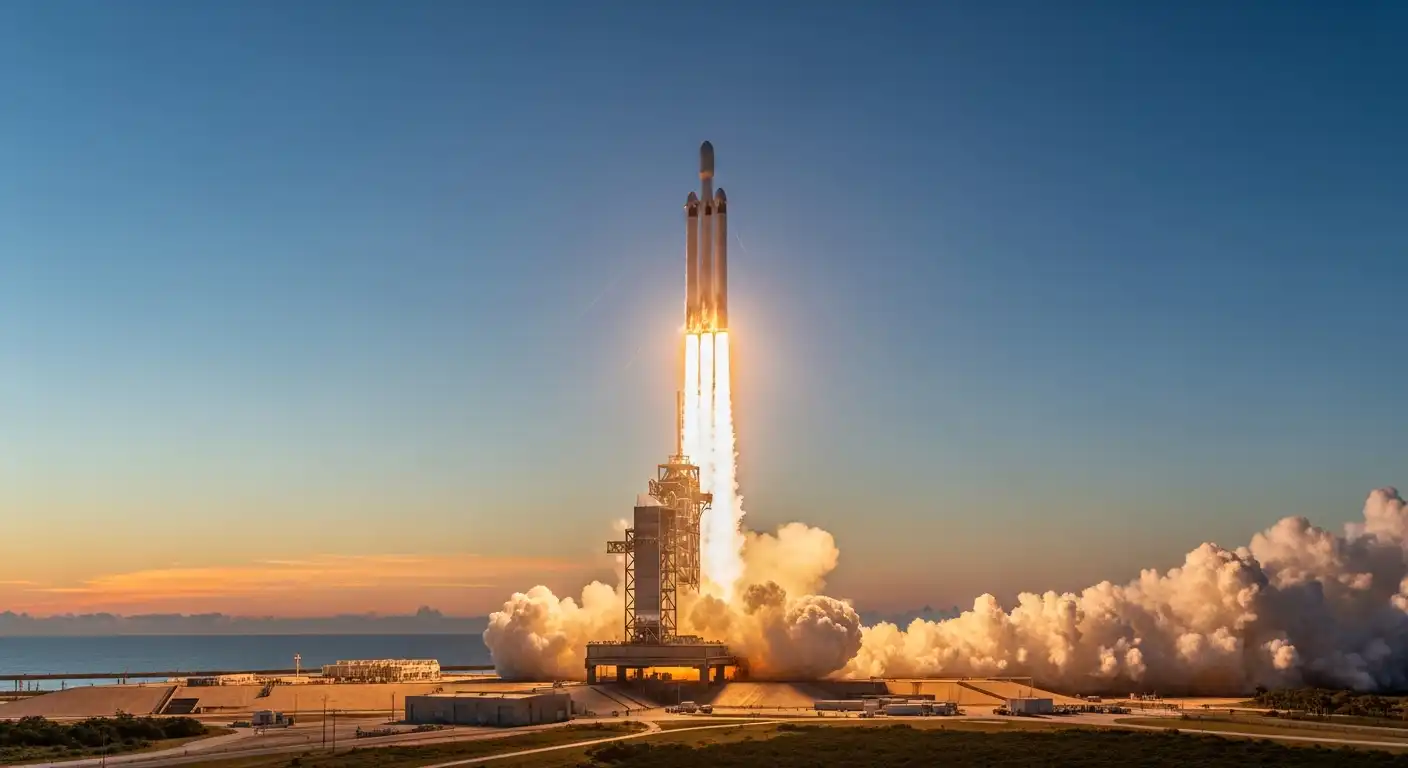
The first leg of the dual-launch blitz took place at the Taiyuan Satellite Launch Center in north China’s Shanxi Province on Thursday, June 4, 2026. At 7:39 p.m. Beijing Time, a modified Long March-6A carrier rocket roared off the pad, carrying 18 polar-orbit communication satellites into their pre-programmed low-altitude trajectories. The modified vehicle, featuring solid rocket boosters to maximize heavy-lift capability, successfully deployed the 11th batch of the first-generation Spacesail network, marking the 648th successful flight mission of the legendary Long March rocket family.
Less than 19 hours later, China’s commercial space sector completed the second leg of the orbital campaign. At 2:34 p.m. on Friday, June 5, 2026, a Long March-8 carrier rocket blasted off from the newly established Hainan commercial spacecraft launch site. The rocket successfully transported the 12th batch of Spacesail communication satellites into their preset orbits, wrapping up a highly synchronized operational week. This dual-launch milestone demonstrates that the country has reached a highly mature, high-cadence launch tempo, enabling it to mass-produce and deploy aerospace infrastructure at a pace that rivals that of Western private companies.
The Spacesail Constellation, also known as the G60 Starlink, is a massive commercial LEO satellite network engineered to deliver secure, ultra-reliable, and high-speed broadband internet services to users worldwide. Shanghai Spacecom Satellite Technology (SSST), a commercial entity backed by the Shanghai Municipal People’s Government and the Chinese Academy of Sciences, directs and operates the megaconstellation. By deploying thousands of active satellites in low-altitude orbits, the company aims to eliminate global communication dead zones, providing continuous internet access to remote deserts, high-seas maritime shipping routes, and polar regions where traditional land-based telecom stations are economically infeasible.
The financial and strategic scale of this orbital project is truly monumental. The Shanghai municipal government raised an initial 6.7 billion yuan (approximately $943 million) in 2023 to establish the manufacturing and launch infrastructure for the network. Since then, private and state-backed investors have poured more than $1.5 billion into the project to expand satellite factory throughput and subsidize frequent launch services. Having a highly reliable and independent LEO network is a key national security priority for Beijing, as it ensures digital sovereignty and secures valuable orbital slots and frequency bands in an increasingly crowded near-Earth space.
To secure its competitive standing, SSST is following an incredibly aggressive multi-phase deployment roadmap. The company’s immediate milestone aims to have 648 active satellites in orbit by the end of 2026, establishing a reliable regional network. Phase 1 calls for 1,296 satellites to be operational by 2027 to provide global coverage, with the long-term roadmap targeting a colossal fleet of over 15,000 low-orbit satellites by the end of 2030. Achieving this 15,000-satellite target requires a sustained, highly efficient launch rate, making high-capacity rockets like the Long March-6A and Long March-8 essential tools for the company’s engineers.
This rapid domestic space expansion also serves as a direct strategic response to Western export controls and geopolitical technology restrictions. By designing, manufacturing, and launching its own flat-panel satellites entirely within its domestic supply chains, China is demonstrating total self-reliance in advanced aerospace engineering. The flat-panel satellites utilize high-capacity Ku-, Q-, and V-band payloads to maximize data transmission rates. This entirely localized manufacturing pipeline ensures that the country’s high-tech space industry can proceed at full speed without relying on imported Western microchips or restricted materials.
Even as global supply chains face volatile shipping and logistics costs, the high strategic value of aerospace hardware ensures that these space programs remain well-funded. Even a minor 1.5% increase in international shipping rates can alter the margins of standard consumer electronics, but high-value satellite components easily absorb these microeconomic shifts. By keeping raw material processing and rocket assembly heavily centralized in major domestic industrial zones such as Shanghai and Shanxi, the program maintains highly predictable capital expenditures, protecting its budget from global trade friction.
The dual launches occur during a period of rising global competition for control of low-Earth orbit. The United States, China, Russia, and the European Union are accelerating the deployment of dedicated LEO communication constellations, recognizing that low-latency satellite internet will be the essential backbone of the future digital economy. While SpaceX’s Starlink currently maintains a massive first-mover advantage with thousands of active satellites already in service, China’s dual-megaconstellation strategy—which includes the government-backed Guowang network alongside the commercial Spacesail project—aims to establish a highly competitive, alternative global standard.
Ultimately, the successful deployment of 36 satellites within 24 hours marks a vital maturity phase for China’s commercial space sector. By pushing the Spacesail Constellation past the 200-satellite milestone, the project has successfully transitioned from an experimental pilot phase into a rapidly expanding operational network. As Shanghai Spacecom Satellite Technology continues to scale its automated production lines and launch cadences over the coming years, this landmark aerospace project will play a critical role in shaping global digital connectivity, ensuring that the next generation of satellite broadband remains a highly competitive, multi-polar field.