

Key Points:
- Tech giants are triggering fears of massive dilution by flooding public markets with nearly $200 billion in new stock.
- Alphabet launched a record-shattering $84.75 billion capital raise, anchored by a $10 billion direct investment from Berkshire Hathaway.
- SpaceX filed for a historic $75 billion initial public offering, valuing the rocket and AI giant at $1.77 trillion.
- Anthropic filed a confidential S-1 for its own public debut after its annualized run-rate revenue reached $47 billion in May 2026.
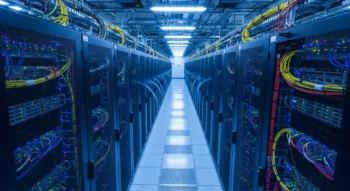
Wall Street has entered a demanding new phase where artificial intelligence is shifting from a software story to an expensive infrastructure race. The days of flashy chatbot demonstrations have passed, and companies now face the physical reality of building data centers, purchasing advanced microchips, and securing massive power grids. To fund these massive operations, tech companies are flooding public markets with historic amounts of new stock. This sudden surge in equity deals is sparking intense anxiety among financial analysts and asset managers. Investors are starting to worry that the sheer volume of shares will outpace market demand, leaving the stock market with far more supply than it can reasonably digest.
Leading the charge is Google’s parent company, Alphabet, which recently executed the largest equity capital markets transaction in history. The tech giant raised $84.75 billion in a multi-layered capital raise to fund its ambitious artificial intelligence plans. This massive offering easily broke the previous global record of $70 billion set by Petrobras in 2010. Alphabet’s capital raise includes three main parts: a $30 billion underwritten public offering of common and convertible preferred stock, a $40 billion at-the-market program starting in the third quarter, and a $10 billion private placement. In this deal, Warren Buffett’s Berkshire Hathaway anchored the funding by committing $10 billion, split evenly between Class A and Class C stock. Despite this massive institutional backing, Alphabet’s stock fell by 1.5% in after-hours trading immediately following the announcement, showing that public investors are highly sensitive to dilution.
Alphabet plans to use this newly raised capital to build out its physical AI networks, which are highly resource-intensive. The company told investors that its capital expenditures could reach between $180 billion and $190 billion in 2026. Many observers found the massive fundraiser surprising, given that Alphabet already holds more than $90 billion in cash on its balance sheet. However, the decision to tap public markets anyway proves just how expensive the AI computing race has become. When even the most profitable tech companies in the world cannot fund their expansion solely through their own cash flow, it signals to Wall Street that the financial demands of artificial intelligence are reaching unprecedented levels.
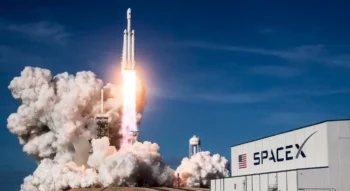
Just days after Alphabet’s announcement, Elon Musk’s SpaceX added heavy fuel to the fire by filing for a historic $75 billion initial public offering. SpaceX plans to market 555.6 million shares at a fixed price of $135 each, skipping the traditional range-setting process. If the deal prices as planned on June 11, SpaceX will reach a market value of almost $1.77 trillion, making it larger than Tesla and bigger than all but six companies in the S&P 500 Index. Accounting for employee stock options, the company’s fully diluted value will exceed $1.8 trillion. SpaceX, which acquired Musk’s AI startup xAI in February at a $1.25 trillion valuation, plans to split the proceeds between its rocket launch programs and its growing artificial intelligence operations. This offering easily bypasses Saudi Aramco’s record $29.4 billion listing in 2019 to become the biggest IPO of all time.
At the same time, AI developer Anthropic, the creator of the Claude assistant, filed confidential paperwork for its own public offering on June 1, 2026. This move followed a massive $65 billion Series H funding round that valued the private company at $965 billion, placing it ahead of OpenAI in private valuation. Anthropic’s financial numbers explain the rush to go public. The company disclosed that its annualized run-rate revenue crossed $47 billion in May, a massive leap from the $9 billion it recorded at the end of 2025. Enterprise sales drive roughly 80% of this revenue, with over 1,000 corporate clients spending more than $1 million annually. This impending IPO is a major win for early backers like Salesforce, whose $5 billion stake represents roughly two-thirds of its strategic investment portfolio.
While these staggering valuations highlight the rapid growth of the AI sector, they are raising serious concerns about stock dilution across Wall Street. Dilution occurs when a company issues new shares, effectively cutting the corporate profit pie into smaller pieces and reducing the value of existing holdings. When Alphabet, SpaceX, and Anthropic hit the market simultaneously, they demand massive amounts of liquid capital. To buy these new shares, investment funds must sell their existing holdings in other sectors. This forced rotation of capital is creating severe downward pressure on the broader market. Last week, the Nasdaq index suffered its largest single-day point drop in history, while the S&P 500 shed $1.8 trillion in value during a brutal market-wide selloff.
The impact of this capital crunch is also hurting other market favorites that previously drove the AI rally. For example, Broadcom recently saw its stock plunge after its AI chip and networking revenues slightly missed high analyst expectations, causing the chipmaker to shed nearly $300 billion in market value. This sharp drop shows how quickly investor patience is wearing thin. Wall Street is no longer giving tech companies a free pass on valuation. Instead, analysts are demanding that these massive capital expenditures translate directly into repeating corporate profits. If a company spends tens of billions of dollars on data centers but shows even a slight delay in revenue growth, investors are quick to sell their shares.
Structural index rules also compound the difficulty of absorbing these massive stock offerings. The S&P index committee recently decided not to fast-track these major new offerings into its benchmark indexes. This decision means that passive mutual funds and exchange-traded funds do not have to buy these stocks to automatically track their benchmarks. Without this forced institutional buying power, active portfolio managers must carry the full burden of purchasing the new shares. This lack of passive index support leaves these massive deals highly exposed to market volatility, forcing companies to find active buyers who are increasingly selective about where they deploy their cash.
The physical reality of the AI buildout is also reshaping the energy sector, driving up costs even further. Building data centers requires vast amounts of electricity, creating a major power bottleneck. Startups and tech giants are struggling to secure sufficient grid capacity, leading to a surge in partnerships with energy providers. For example, companies are increasingly looking toward space-based solar power and clean energy grids to run their high-performance computing facilities. This infrastructure constraint means that tech companies are spending as much on basic electricity and physical land as they are on software development. This physical limitation turns the AI cycle into a capital-heavy business, resembling historic telecom or transportation cycles that eventually suffered from over-investment.
Ultimately, the massive volume of new equity deals represents a critical transition point for the technology sector. Tech giants have officially asked public markets whether they believe in the long-term profitability of artificial intelligence, and investors are responding by pouring hundreds of billions of dollars into these offerings. However, the sheer size of these deals is testing the limits of Wall Street’s buying power. Moving forward, the market will likely reward only the companies that possess genuine pricing power and scarce assets, while punishing those that dilly-dally with unprofitable products. As the market attempts to absorb this historic wave of stock, tech leaders must prove that their expensive factories can generate the cash flows needed to justify these record-breaking valuations.