
Key Points:
- Alataw Pass in China’s Xinjiang region handled a record 10.72 million tonnes of freight from January to April, an 11% year-on-year increase.
- Overland road cargo experienced a massive surge during the four months, jumping 46% to reach 517,000 tonnes.
- The port’s railway network now supports 128 China-Europe freight routes, connecting Chinese industrial hubs with 21 countries across Eurasia.
- By deploying automated “railway fast clearance” systems, the port now processes over 200 types of goods for more than 80 countries and regions.
The overland trade corridors connecting East Asia with the markets of Central Asia and Europe are experiencing an unprecedented surge in volume. Alataw Pass, a major border port in China’s northwest Xinjiang Uygur Autonomous Region, has achieved a major milestone by handling a record 10.72 million tonnes of freight in the first four months of the year. This high-volume performance represents an 11% year-on-year increase, cementing the land port’s position as a crucial corridor for international trade. As maritime shipping lanes face mounting geopolitical tensions and soaring insurance costs, these land-based networks are successfully proving their value as highly reliable alternatives for global supply chains.
The total freight volume of 10.72 million tonnes highlights the growing capacity of China’s westbound logistics infrastructure. During the January-April period, both rail and road networks at the border crossing operated at maximum capacity to handle the immense flow of goods. Local customs officials noted that the 11% year-on-year growth reflects a steady, long-term expansion of overland trade. This sustained growth is transforming Xinjiang from a remote border region into a highly active hub for global trade, allowing inland manufacturing cities to bypass congested coastal ports and ship their products directly to Eurasian markets.
While railway transport has historically dominated border trade, road cargo has recently emerged as a rapidly growing segment. The latest shipping data reveal that road cargo at Alataw Pass jumped by an astonishing 46% over the four months, reaching 517,000 tonnes. This massive surge reflects the growing popularity of cross-border trucking services, which offer high flexibility and faster transit times than traditional rail services. By utilizing advanced digital logistics platforms and standardized container trucks, e-commerce firms and high-value equipment manufacturers can move their goods across borders with minimal delays, providing a vital tool for just-in-time manufacturing.
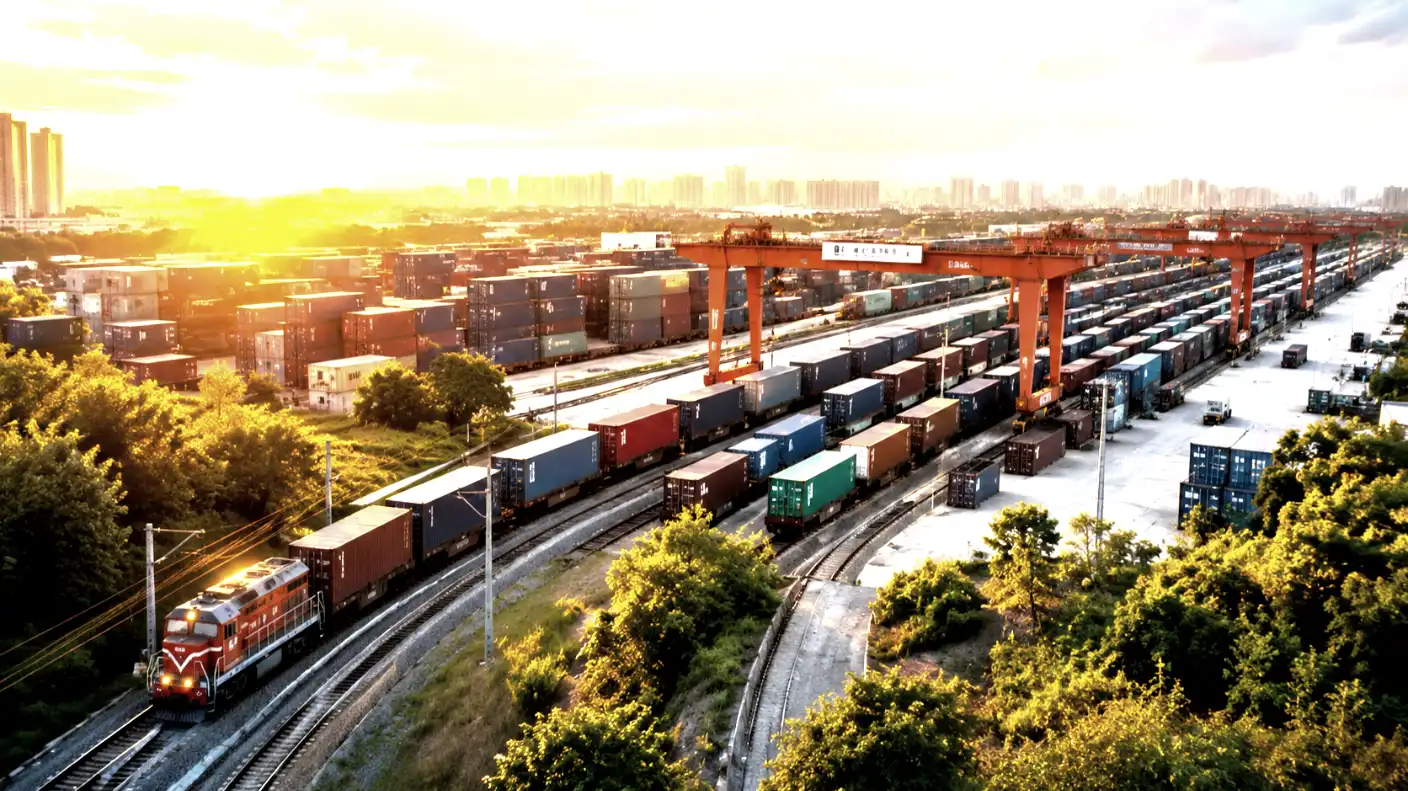
The railway port at Alataw Pass continues to lead the entire country in China-Europe freight train services, serving as the central engine of the overland corridor. The port currently supports 128 distinct China-Europe (Central Asia) freight train routes, connecting manufacturing hubs across China with 21 countries, including Germany, Poland, and Kazakhstan. On average, the railway station handles more than 20 trains per day, with peak daily volumes reaching up to 35 trains. This high-frequency rail network provides a continuous, high-capacity pipeline for transporting heavy industrial machinery, automobile components, and consumer electronics across the Eurasian landmass.
This massive increase in daily train traffic has only been possible due to deep technological upgrades in border-clearing procedures. Historically, customs inspections at international borders involved slow, manual paperwork, physical container checks, and hours of costly waiting time. Today, Alataw Pass Customs has eliminated these bottlenecks by deploying an automated “railway fast clearance” system. This digital workflow allows rail operators to share electronic cargo manifests with customs officials well before the train arrives. By utilizing intelligent image recognition and automated inspection systems, customs officers can clear incoming trains in under two hours, significantly reducing storage costs for shipping companies.
Thanks to these streamlined customs procedures, the diversity and geographical reach of the goods passing through Alataw Pass have expanded dramatically. The land port now routinely processes more than 200 distinct categories of goods, ranging from heavy industrial equipment and electric vehicles to daily household necessities and agricultural products. This vast inventory travels to over 80 countries and regions worldwide, illustrating that the border crossing has evolved from a simple bilateral trade portal into a highly integrated global transit hub that directly supports international manufacturing supply chains.
The rapid expansion of overland cargo routes at Alataw Pass is directly tied to ongoing disruptions in global maritime shipping. Geopolitical conflicts and military blockades in vital waterways—such as the Red Sea and the strategic Strait of Hormuz—have forced international shipping lines to divert their container ships around the southern tip of Africa. These detours add up to 20 days to transit times and significantly drive up fuel and insurance costs. Facing these volatile maritime realities, global manufacturers are increasingly turning to overland rail and road networks, which offer fixed schedules, predictable transit times, and protection from maritime security risks.
This shift toward overland trade is also driving a major economic transformation across landlocked Central Asian nations like Kazakhstan. By serving as the primary gateway for the Belt and Road Initiative, Alataw Pass is transforming these historically isolated regions into vital transit corridors for global commerce. Local logistics hubs and dry ports on both sides of the border are attracting billions of dollars in foreign investment, fueling job creation and infrastructure development across the region. This collaborative, cross-border development proves that modern trade corridors can successfully distribute economic benefits to historically neglected inland territories.
Ultimately, the record-setting performance of Alataw Pass during the first four months of the year underscores the growing maturity of the global land-port ecosystem. By handling 10.72 million tonnes of freight and scaling its road cargo operations by 46%, the border crossing has demonstrated its ability to meet the demands of modern international trade. As global supply chains face ongoing geopolitical instability and rising energy costs, the demand for highly automated, reliable overland routes will continue to grow. For Alataw Pass, the future is incredibly bright; as the primary steel artery of the Eurasian landmass, this high-tech gateway will continue to play an indispensable role in stabilizing global commerce for decades to come.