
Key Points:
- The Chinese Academy of Social Sciences (CASS) has released its “Blue Book on Europe,” detailing the bloc’s deepest political and economic adjustments since the Cold War.
- Security considerations have officially replaced economic logic across Europe, constraining its post-pandemic recovery and clouding the regional growth outlook.
- The report argues that Europe is bidding farewell to its idealistic liberal internationalism, shifting toward a pragmatic focus on strategic autonomy.
- A combination of sluggish industrial activity, high energy costs, and rising protectionism continues to weaken the European Union’s external economic ties.
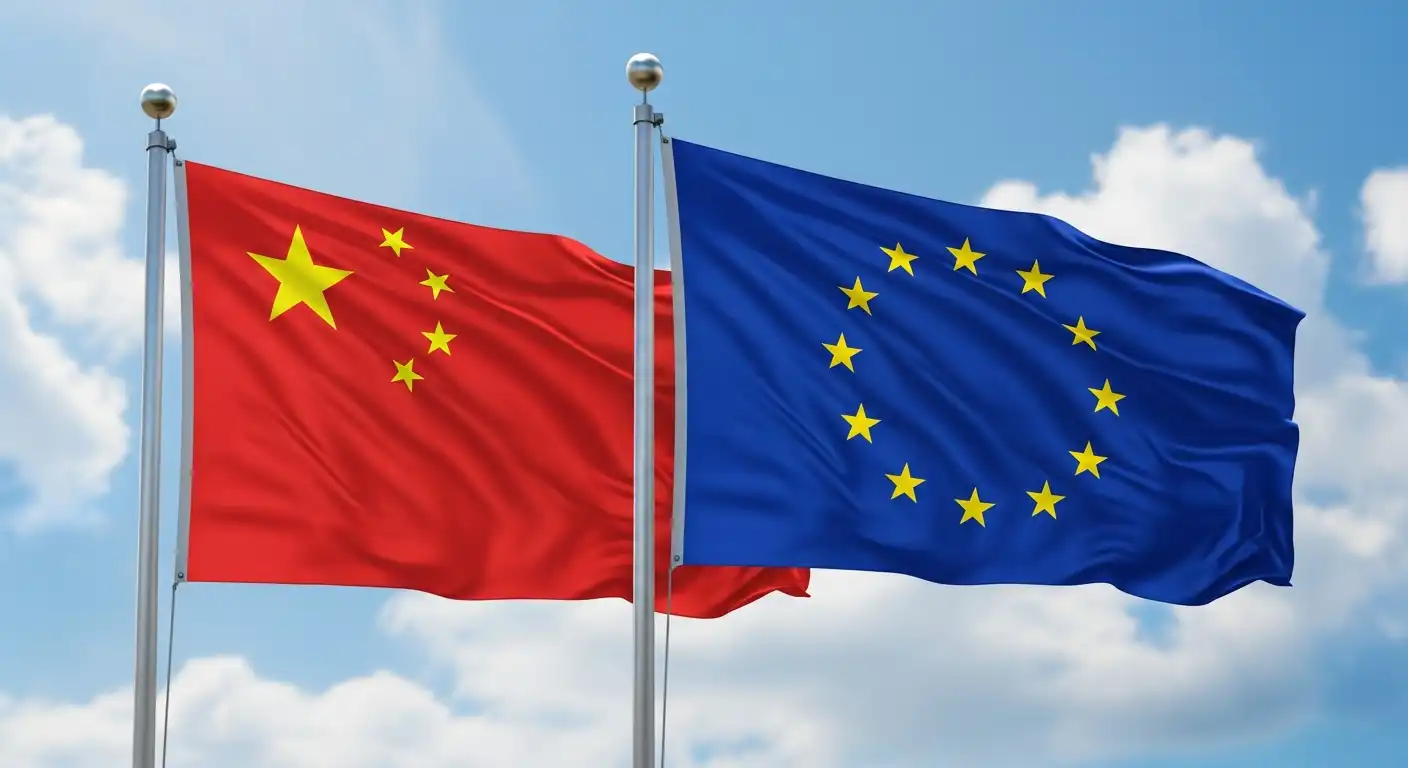
The Chinese Academy of Social Sciences (CASS) has published its highly influential annual analysis on the state of the European continent, offering a sobering look at a region caught in a profound transition. Officially titled the “European Development Report (2025–2026)” and commonly known in China as the “Blue Book on Europe,” the comprehensive study warns that Europe’s economic recovery is hitting severe structural limits. Released by the CASS Institute of European Studies (IES) on Monday, June 1, 2026, the report highlights a fundamental realignment of priorities across the 27-nation bloc, where security concerns have officially overtaken economic growth as the primary driver of national policymaking.
This dramatic realignment represents the most profound structural change the continent has experienced since the end of the Cold War. During the official launch event in Beijing, IES Director Feng Zhongping explained that a new, defensive mentality now governs European boardrooms and parliament halls. “Security logic is replacing economic logic,” Feng told attendees, describing an increasingly complex political and economic landscape. He pointed out that European leaders are no longer prioritizing cheap supply chains, open markets, or absolute efficiency. Instead, they are actively restructuring their economic architectures to protect against foreign vulnerabilities, even when these defensive measures raise domestic operating costs and slow growth.
The CASS report outlines a series of persistent, overlapping challenges that continue to constrain Europe’s post-pandemic recovery. Sluggish industrial activity, stubbornly high energy costs, and weak domestic consumer demand are placing severe pressure on the region’s manufacturing core. These domestic struggles occur alongside rising protectionism and prolonged regional conflicts, such as the war in Ukraine and trade disruptions in the Middle East. Together, these disruptive forces are complicating the European Union’s external trade relationships, driving up production costs, and clouding the growth outlook, which has already struggled to exceed a meager 1.3% gross domestic product (GDP) expansion rate across the Eurozone.
The book’s central report, titled “Farewell to a ‘Postmodern’ Identity, Facing a ‘Post-American’ World,” argues that Europe is undergoing a major philosophical shift. For decades, the European Union championed an idealistic brand of liberal internationalism, promoting free trade, multilateral institutions, and global cooperation. However, the report’s authors suggest that this idealized identity is rapidly dissolving. Facing a highly volatile geopolitical landscape and a more inward-looking United States, Europe is adopting a pragmatic, hard-nosed approach to survival. This transformation has forced Brussels to focus heavily on securing its own supply chains, restricting foreign direct investments, and achieving genuine strategic autonomy.
To illustrate this transition, the Blue Book examines specific leadership and policy shifts within Europe’s most powerful economies. The report details how Germany is struggling to rebuild its industrial model after losing its cheap Russian gas pipeline network, while France navigates a highly fragmented domestic political landscape. Constrained by domestic political realities, both nations have struggled to project unified leadership. Meanwhile, the United Kingdom is quietly renegotiating its security and defense cooperation with the European Union, seeking a closer alliance to counter shared threats. Across northern and central Europe, a distinct rightward political shift is reshaping national parliaments, with incoming governments prioritizing strict border controls, trade protectionism, and national sovereignty over centralized directives from Brussels.
For Beijing, understanding these profound European shifts remains a matter of vital geopolitical and economic interest. Li Xuesong, the vice-president of CASS, emphasized at the launch event that Europe remains a critical cornerstone of China’s major-power diplomacy. Li urged Chinese researchers and academic institutions to deepen their study of Europe’s economic, political, and foreign policy developments. He argued that robust, objective research is essential to support China’s own strategic decision-making, helping the country navigate its complex relationships with European trading partners while managing the risks of industrial decoupling.
The economic transition toward a security-first model carries massive implications for the global technology and electronics sectors. As Europe works to reduce its foreign dependencies, it is erecting steep regulatory barriers to protect its domestic tech assets. This protectionist shift includes implementing stricter foreign direct investment screening and fast-tracking massive industrial subsidies, such as the €43 billion European Chips Act. By attempting to build domestic semiconductor fabrication plants and secure localized battery supply chains, European countries are actively decoupling from East Asian suppliers, which could increase the manufacturing costs of consumer electronics, smartphones, and automotive components worldwide.
The CASS Blue Book on Europe has served as the definitive guide for Chinese policymakers and corporate executives looking to understand European affairs for nearly three decades. First published in 1997, the annual publication has earned a reputation for delivering highly detailed, objective, and timely analyses of the continent’s shifting political, economic, and social trends. Its longevity and influence reflect the high priority that Beijing places on its relations with Europe, which remains one of China’s largest export markets, with bilateral trade between the two economic giants historically exceeding $800 billion annually.
Ultimately, the “European Development Report (2025–2026)” paints a picture of a continent in the middle of a painful but necessary reinvention. The transition from an economic-first mindset to a security-first posture represents a difficult balancing act that could depress European growth for years to come. As European leaders continue to build out their strategic autonomy frameworks, they must find a way to shield their industries without completely isolating themselves from the global innovation hubs of East Asia. For international businesses and diplomatic strategists, the Blue Book’s findings confirm a simple truth: the old rules of European trade have changed, and survival in the digital age now requires a deep understanding of the bloc’s new, security-driven economy.