Key Points:
- Chinese electric vehicle makers are focusing on overseas markets to increase profitability amid weak domestic sales.
- The ongoing Middle East crisis and rising oil prices are strong catalysts for electric vehicle sales in Europe.
- State-owned GAC Group plans to export a new hybrid SUV boasting a massive 1,240km range.
- Experts predict Chinese carmakers could triple their overseas production by 2030 to maximize global profit margins.
Chinese electric vehicle manufacturers are looking far beyond their own borders for future profits. At the massive Beijing auto show this week, major EV makers clearly shifted their focus toward overseas markets. These companies are banking heavily on current opportunities created by the ongoing Middle East crisis to boost their overall profitability. They desperately need the extra cash because domestic car sales in China remain incredibly weak.
Phate Zhang, the founder of the Shanghai-based data provider CnEVPost, explained the desperate pivot. He noted that going global has quickly become the top choice for Chinese EV builders, who currently struggle to break even at home. He pointed out that the chaotic crisis in the Middle East is actually acting as a strong catalyst for bolstering their overseas deliveries. As gas prices spike worldwide, foreign consumers are seeking cheap electric cars.
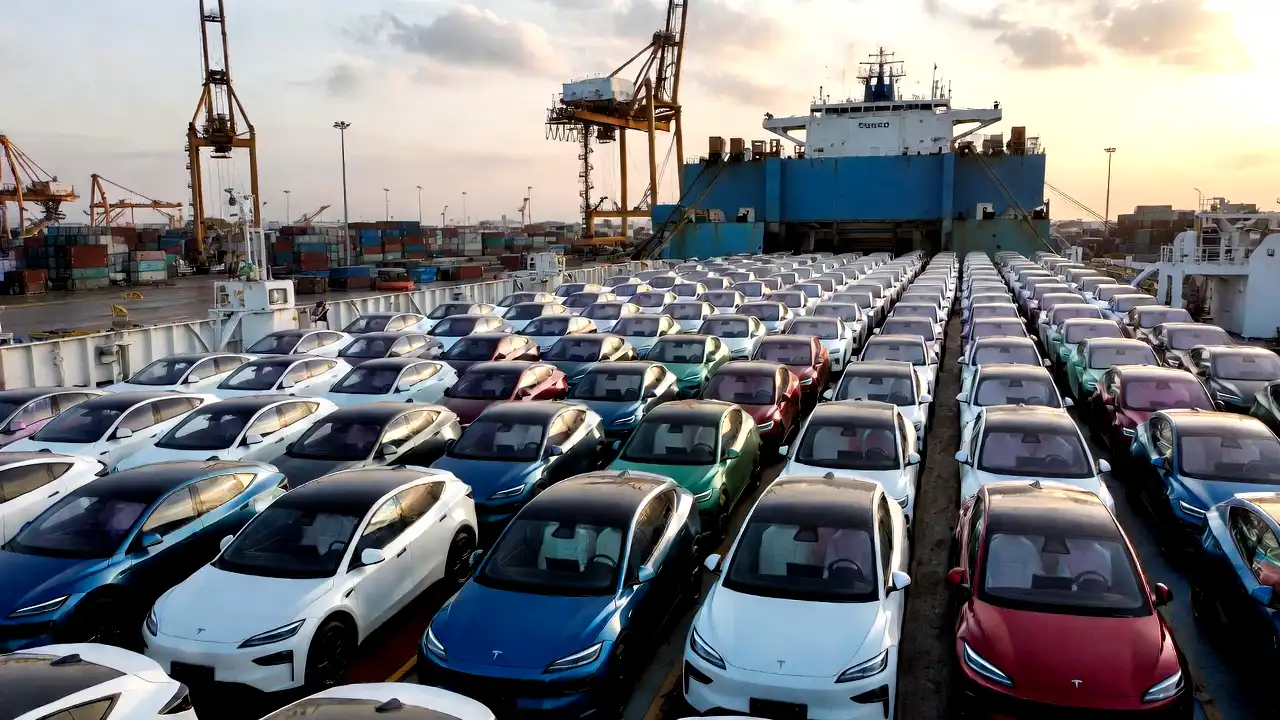
The pivot was obvious on the showroom floor. Nearly all the major EV assemblers taking part in Auto China, which is widely considered the world’s largest car show, brought cars built specifically for export. They either unveiled brand new models designed expressly for overseas markets or proudly announced massive new growth targets for specific markets in Europe and Latin America. Chinese companies love these foreign markets because their cars can command much higher retail prices there than back home.
State-owned GAC Group led the charge. The massive company announced it would aggressively expand into overseas markets with three brand-new models. This lineup includes a highly advanced hybrid SUV boasting an incredible range of 1,240 kilometers on a single charge. In a public statement on Friday, the company noted that the global automotive industry currently faces historic opportunities driven by technological convergence and rapid energy transformation. GAC believes internationalization is a critical leap that will ultimately determine its future survival.
The massive Beijing car show runs from Friday through May 3. To handle the massive crowds and exhibits, organizers are holding the event simultaneously at two large venues: the China International Exhibition Center and the Capital International Exhibition Center. According to the organizers, a total of 1,451 different car models are on display, with 181 making their absolute global debuts. To accommodate all these cars, organizers expanded the exhibition area to 380,000 square meters, nearly 50% larger than the previous edition in 2024.
Global politics are heavily influencing the cars on display. There is currently no clear end in sight for the war involving the US, Israel, and Iran. Furthermore, the critical Strait of Hormuz remains completely closed to shipping traffic. Because roughly a fifth of the world’s oil and natural gas is normally transported through that strait, global energy prices are skyrocketing. This panic is rapidly driving up the popularity of battery-powered cars in major markets like Europe. With Brent crude oil recently rising above the psychologically significant $100-per-barrel mark, many buyers are shying away from conventional gas-powered cars.
Guangzhou-based automaker Xpeng wants to capitalize on this panic. The company announced it aims to rapidly accelerate its overseas expansion this year, focusing heavily on Europe. That specific region already accounted for more than half of the company’s total exports last year. Brian Gu, the president of Xpeng, told reporters at a media briefing that his company is aiming to more than double its sales in Europe this year.
The financial motivation behind this massive export push is simple math. On the Chinese mainland, the average net margin per vehicle currently stands at about 5,000 yuan, which is roughly $732. This tiny margin represents the gap between the final selling price and the car’s actual production cost. However, Nick Lai, the head of auto research for Asia-Pacific at JPMorgan Chase, sees a much brighter future abroad. He recently stated that the profit margin could easily rise fourfold to a massive 20,000 yuan when companies sell those same Chinese cars in overseas markets at much higher retail prices.
Even legacy automakers operating in China are joining the massive export push. Nissan CEO Ivan Espinosa confirmed that his company will begin exporting highly competitive models developed and produced directly in China. He called this a totally natural next step as the company tries to serve customers in many different destinations around the world, where consumer expectations are evolving more dramatically than ever before.
The financial world expects the export trend to continue. A massive Morgan Stanley report released early this week predicted that Chinese carmakers would export an average of 1.2 million units a year between 2026 and 2028. This massive number actually represents a 17% jump from the bank’s previous forecast. Furthermore, the global consultancy firm AlixPartners published a new report finding that Chinese carmakers and their massive parts suppliers aim to make international markets their primary profit driver. To achieve this goal, these companies plan to triple their total overseas production by 2030.