
Key Points:
- Japanese conglomerate SoftBank Group is committing €45 billion (about $52 billion) over the next five years to construct massive AI data centers in France.
- The company plans to eventually increase this investment to €75 billion (approximately $87 billion) to establish 5 gigawatts of computational capacity.
- French state-owned energy giant EDF and engineering firm Schneider Electric will serve as crucial infrastructure partners for the project.
- SoftBank founder Masayoshi Son credited France’s reliable nuclear power generation and President Emmanuel Macron’s personal pitch for securing the deal.
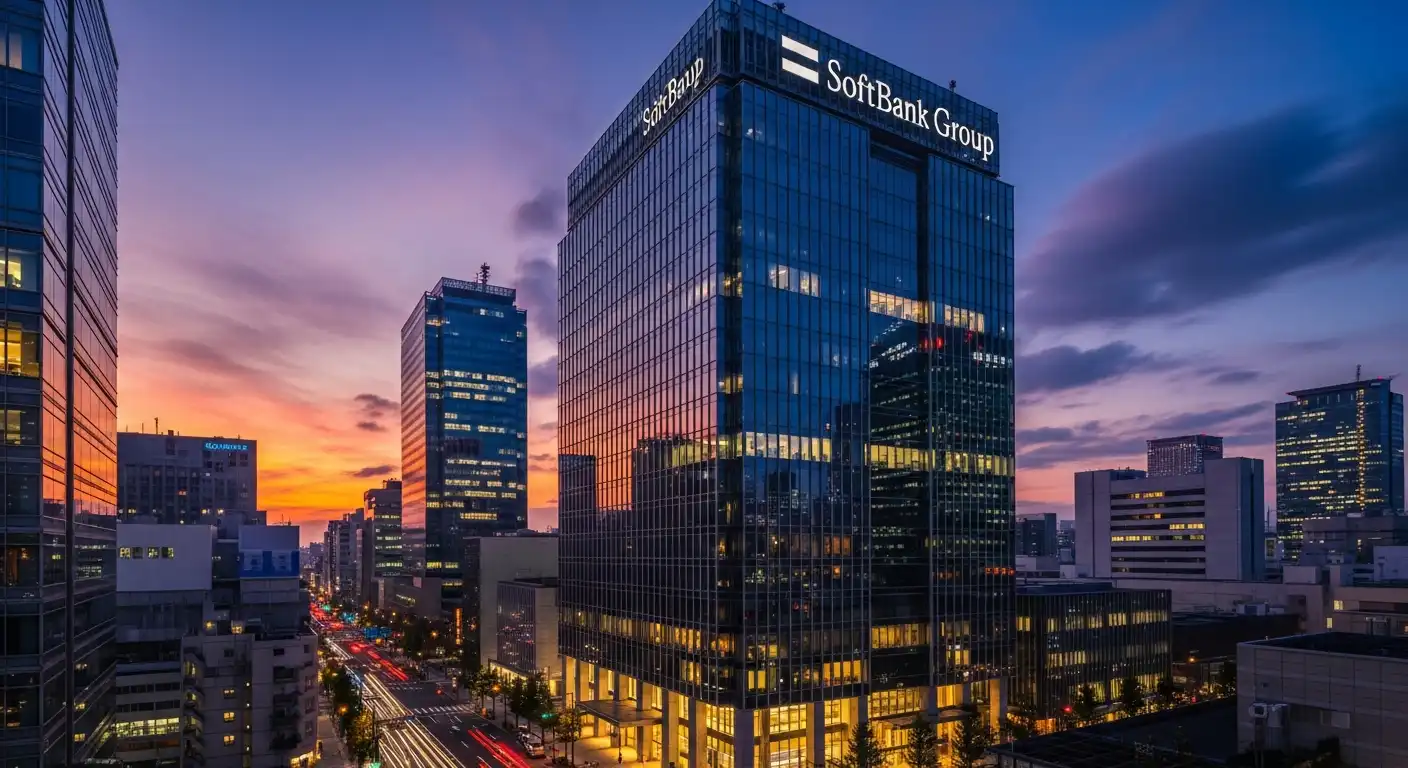
Japanese conglomerate SoftBank Group has announced a historic plan to construct a massive network of artificial intelligence data centers in France. The company plans to invest €45 billion, which equals roughly $52 billion, over the next five years to build up Europe’s computational infrastructure. SoftBank founder and Chief Executive Masayoshi Son unveiled the ambitious timeline ahead of the annual Choose France business summit, a prestigious gathering that French President Emmanuel Macron created in 2018 to court foreign capital. If successful, this multi-billion-dollar initiative will be the largest single AI infrastructure project in European history, positioning France as a central powerhouse in the next generation of digital technology.
While the initial phase focuses on a five-year timeline, SoftBank intends to expand the project’s scope significantly over the coming decade. The total investment could eventually rise to €75 billion, or approximately $87 billion, as the company adds more locations across the country. This expanded funding will allow SoftBank to build and operate a massive 5 gigawatts of data center capacity. Initially, the company will develop 3.1 gigawatts of capacity, spreading its operations across multiple regions to ensure a stable grid connection and efficient workload distribution.
Masayoshi Son highlighted France’s strong energy sector as the decisive factor in his company’s investment decision. Artificial intelligence data centers require massive, uninterrupted power to cool high-performance computing servers. Son explained that France’s status as a major producer and exporter of reliable nuclear energy makes it the perfect fit for these heavy power demands. “The fact that the country is a producer and exporter of energy is absolutely decisive for investments in AI infrastructure, especially for data centers,” Son remarked in a weekend interview. This energy profile gives France a distinct advantage over other European countries that still rely on unstable energy grids or fossil fuels.
The deal also reflects the successful diplomatic efforts of President Emmanuel Macron. Son revealed that Macron personally proposed the data center initiative during a recent bilateral meeting in Tokyo. The Japanese billionaire, who frequently receives pitches from corporate chiefs and local politicians, found himself deeply impressed by a head of state taking such a direct role in economic negotiations. Son noted that Macron’s hands-on commitment to France’s economic success convinced him to shift SoftBank’s infrastructure focus, which had previously concentrated almost exclusively on the United States, Japan, and parts of Asia.
To bring this gargantuan project to life, SoftBank is partnering with key French industrial giants. State-owned nuclear power company EDF has agreed to hand over one of its decommissioned power plants to SoftBank, which will retrofit it into a high-tech data center. Additionally, French engineering firm Schneider Electric will serve as a lead technology partner. Schneider Electric plans to supply the specialized electrical modules and cooling systems required to run the facilities safely. However, the companies have not disclosed the specific financial terms of this corporate partnership.
The physical construction of these massive computer complexes will begin in the northern region of Hauts-de-France. SoftBank has already selected the first two sites for development: one in the coastal industrial hub of Dunkirk and another in the rural commune of Le Bosquel. According to the company’s current development roadmap, the Le Bosquel facility will become operational by 2028, followed by the Dunkirk site in 2031. SoftBank expects to identify additional sites across the country further down the road to handle the remaining capacity.
This massive private investment arrives at a crucial moment for the European Union, which has spent years pushing for greater tech independence from the United States and China. European leaders worry that relying entirely on foreign cloud providers compromises the continent’s data sovereignty and leaves domestic businesses vulnerable to geopolitical shifts. By housing Europe’s largest AI infrastructure project within French borders, the initiative directly supports Brussels’ goals of developing localized computing clusters. It ensures that European startups and research institutions can train advanced machine-learning models without sending sensitive data overseas.
The French data center push is just one component of SoftBank’s broader global AI investment strategy. Under Son’s leadership, the group has steadily transitioned from a general technology investor into a dedicated infrastructure developer. Earlier in 2026, the company announced that it holds an 11% stake in OpenAI, the creator of ChatGPT, following a series of investments totaling more than $30 billion. This existing software footprint explains why SoftBank is so eager to secure physical computing power; without a massive network of high-performance servers, the group cannot maximize the value of its high-profile software partnerships.
Despite the current excitement, executing a project of this scale presents notable logistical and political hurdles. Connecting gigawatts of new demand to the national power grid will require close cooperation with regional utility regulators, who must balance industrial needs with domestic consumer demands. Furthermore, environmental groups in France frequently oppose large-scale data centers due to their high water usage for cooling systems and their impact on local ecosystems. SoftBank and its partners must navigate these regulatory and public relations challenges carefully to ensure construction timelines remain on track over the next five years.
Ultimately, SoftBank’s $52 billion commitment represents a massive vote of confidence in France’s economic future and regulatory framework. By leveraging the country’s reliable nuclear energy supply and securing strong partnerships with local industrial leaders, the Japanese conglomerate is building the physical foundation for Europe’s future in artificial intelligence. As the Choose France summit begins, global tech leaders will watch closely to see if this historic partnership can deliver on its promise of European tech sovereignty and pave the way for a new era of global computing power.