
Key Points:
- Blue Origin’s New Glenn rocket exploded during a routine static-fire test, causing severe damage to Launch Complex 36 in Florida.
- Industry experts and sources project flight delays of at least 6 months while engineers rebuild the damaged facility.
- The setback directly disrupts Amazon’s efforts to deploy 48 Project Kuiper internet satellites to challenge SpaceX’s Starlink.
- The incident complicates NASA’s Artemis program, which relies on the heavy-lift rocket to launch the Blue Moon lunar lander.
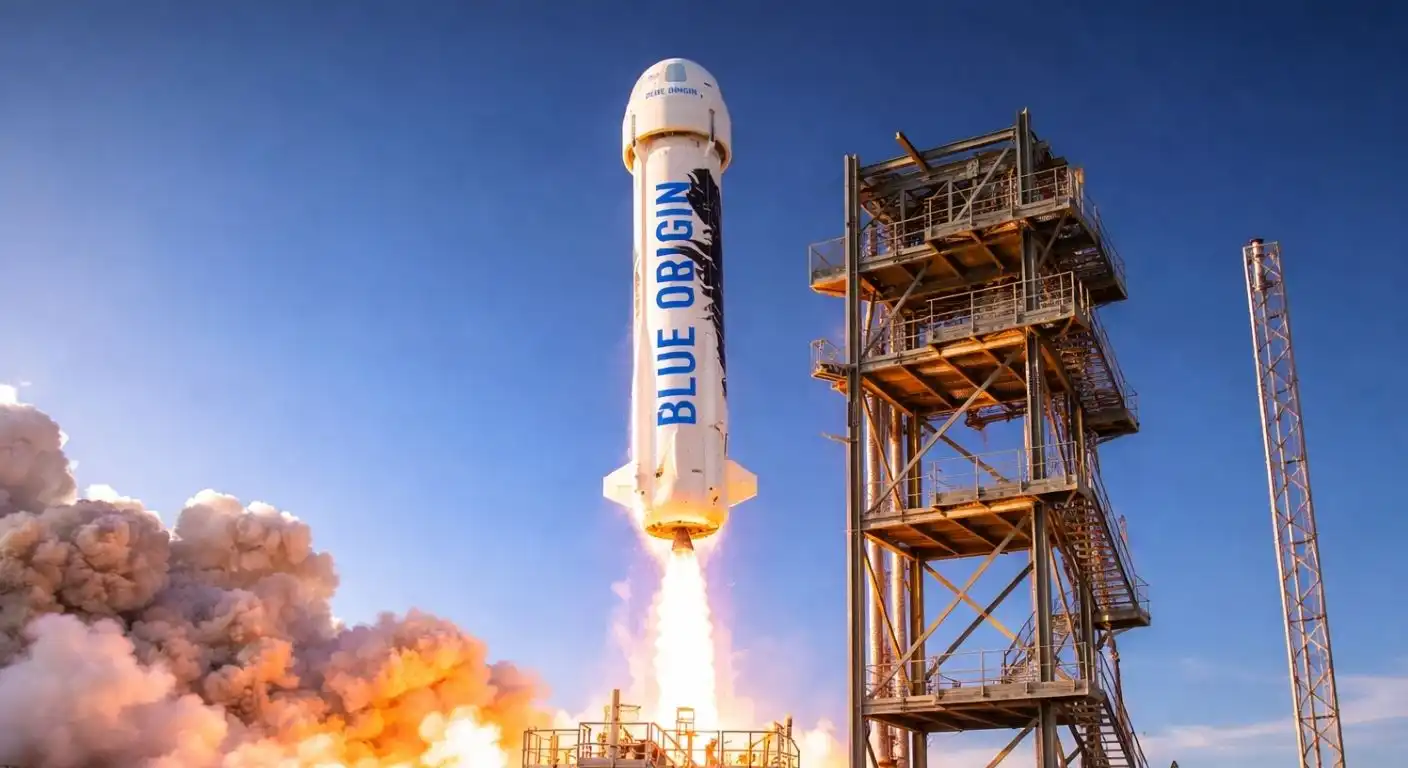
A massive explosion on Thursday night destroyed Jeff Bezos’s Blue Origin New Glenn rocket during a routine static-fire test in Florida. The uncrewed booster, nicknamed “No, It’s Necessary,” erupted in a spectacular fireball that lit up the night sky over Cape Canaveral. The sudden blast at Launch Complex 36 has completely scrambled commercial flight schedules and left Blue Origin dealing with a heavily damaged launch pad. Sources close to the company indicate that this setback will cause months-long delays, halting progress on both Amazon’s satellite ambitions and NASA’s upcoming lunar missions.
Company and industry insiders report that the explosion practically destroyed the primary launch facility. The intense heat and force shattered a major lightning tower at the pad and severely dented another. Nearby support infrastructure, including fuel storage tanks and water systems, also sustained extensive damage. Rebuilding the site represents a monumental engineering challenge. Sources familiar with the situation estimate that the recovery process will take at least 6 months, and potentially much longer. Because Launch Complex 36 is Blue Origin’s only active orbital pad in Florida, the company cannot easily shift upcoming missions to a backup facility.
This recovery timeline presents a much harder path than previous industry accidents. For example, when a Falcon 9 rocket exploded on a launch pad in 2016, SpaceX spent over a year repairing the site. However, SpaceX resumed customer flights in just 4.5 months after successfully transitioning its operations to a second active pad in Florida. Blue Origin does not have a secondary orbital pad ready to handle the New Glenn. The company must finish rebuilding its sole Florida facility before any rocket can launch, leaving customers and partners waiting indefinitely.
The company had scheduled the 321-foot rocket to fly the following week to deploy 48 internet satellites. These satellites belong to Project Kuiper, Amazon’s low Earth orbit constellation. Amazon designed Project Kuiper to serve as a direct competitor to SpaceX’s Starlink network, which currently dominates the global satellite broadband market. Fortunately, workers had not yet loaded the satellites onto the rocket when the engines fired, keeping the hardware safe in a nearby integration building. Nevertheless, the lack of a working rocket halts Amazon’s deployment schedule and delays its ability to offer commercial broadband services.
The fallout from the explosion extends to other commercial space players that purchased rides on the heavy-lift vehicle. Companies like AST SpaceMobile rely heavily on New Glenn to launch their direct-to-device communication satellites. Following the news of the explosion, investors grew anxious, and AST SpaceMobile’s stock price experienced a sudden dip. Market analysts warn that the launch pad damage could push AST SpaceMobile’s commercial constellation deployment from the fourth quarter of 2026 into the first quarter of 2027. Despite the delay, some investment firms maintained their positive outlook, keeping a $108 price target on the stock and emphasizing its long-term potential.
The launchpad disaster abruptly halted a weeks-long stock market rally for space-related companies. It provided a sobering reminder of the extreme physical and financial risks inherent in rocket development. This setback comes at a highly delicate time for the wider aerospace market. Investors are closely watching the industry as SpaceX prepares for a massive initial public offering that could value Elon Musk’s company at more than $2 trillion. The New Glenn explosion highlights how difficult it is to master heavy-lift launch vehicles and further strengthens SpaceX’s current monopoly over commercial orbital launches.
The failure also creates massive headaches for NASA’s lunar exploration timeline. Blue Origin recently secured a major contract to develop the Blue Moon lunar lander, a vehicle designed to transport astronauts to the Moon’s surface. NASA also selected Jeff Bezos’s company to launch the initial phases of a planned $20 billion moon base. Because the Blue Moon lander requires the lifting power of the massive New Glenn rocket, any delay to the launch vehicle threatens the entire Artemis schedule. NASA Administrator Jared Isaacman stated that safety teams will conduct a thorough evaluation of the timeline, noting that spaceflight remains incredibly unforgiving.
In the wake of the incident, rivals and executives offered their perspectives. Elon Musk expressed his condolences on social media, wishing the Blue Origin team a speedy recovery, and later posted the Latin phrase “Ad astra per aspera,” which translates to “through hardships to the stars.” Jeff Bezos openly acknowledged the severity of the situation, calling it a very rough day for his space venture. However, he remained determined, promising that his team would rebuild whatever needed rebuilding and return to flight status as soon as possible because the journey is worth the effort.
Engineers and federal safety inspectors are now focused on finding the root cause of the engine test failure. Blue Origin must thoroughly investigate the data to ensure that a similar anomaly does not occur on future boosters. At the same time, construction crews must clean up the debris scattered across Cape Canaveral and begin the long process of reconstructing the launch pad. Rebuilding the infrastructure and proving the rocket’s reliability will test the space company’s resilience. Until Blue Origin completes these steps, the race to build a viable alternative to SpaceX remains on hold.