

Key Points:
- The Strait of Hormuz is more than a vital energy corridor; it also houses undersea cables that carry up to 20% of global internet and financial data.
- A recent report by Yardeni Research warns that potential disruptions could add a new geopolitical risk premium to technology infrastructure investments.
- Iran has recently threatened to impose licensing fees, taxes, and joint-venture demands on U.S. tech giants whose cables traverse the 25-mile strait.
- While satellites exist, over 95% of international data flows through submarine fiber-optic cables, carrying over $10 trillion in daily transactions.
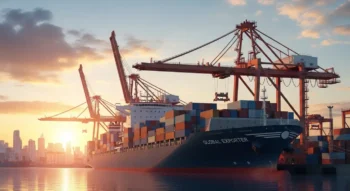
The world’s most critical maritime chokepoint is no longer just a vital shipping lane for crude oil and liquefied natural gas. According to a landmark tech report released by Yardeni Research on Saturday, May 30, 2026, the Strait of Hormuz has emerged as a potential bottleneck for global internet infrastructure. The analysis reveals that the subsea fiber-optic cables running through the narrow, highly contested waterway handle as much as 20% of all global internet and financial data flows. This profound digital reliance has triggered a critical, high-stakes internet vulnerability in the Strait of Hormuz, forcing major technology corporations and financial institutions to reassess their global infrastructure risk.
This critical digital highway serves as the primary communications link connecting the economies of Europe, the Middle East, and Asia. While public attention remains focused on the oil tankers blocked by the ongoing conflict, the physical reality is that the modern digital economy runs on highly vulnerable physical hardware resting on the ocean floor. To power the massive artificial intelligence data centers currently under construction in the Gulf states, tech companies depend heavily on these undersea pipelines. Any physical damage, cyberattack, or political interference targeting these cables would trigger immediate, catastrophic economic consequences across multiple continents.
The immediate threat to these networks has escalated due to recent rhetorical maneuvers from Tehran. Over the past few weeks, Iranian state-affiliated media channels have circulated detailed maps of subsea cable routes, landing stations, and regional data hubs in the Persian Gulf. Lawmakers in Iran have floated a highly controversial plan to begin charging Western technology giants—specifically naming Google, Meta, Microsoft, and Amazon—annual licensing fees and taxes for using the cables that traverse the 25-mile-wide (40km) strait. This aggressive attempt to establish a “digital toll gate” represents a major push by Tehran to leverage its geographic position to generate hundreds of millions of dollars in sovereign revenue.
Additionally, Iran’s proposed regulatory framework would force these multinational tech companies to operate under the laws of the Islamic Republic, potentially compelling them to enter into joint-venture partnerships with state-owned telecom entities. While international legal experts debate the validity of these maritime claims under the United Nations Convention on the Law of the Sea, the threat alone has introduced significant market anxiety. Yardeni Research warned that concerns over potential cable disruptions could add a new, permanent “geopolitical risk premium” to technology infrastructure investments, similar to the impact that Middle Eastern tensions have historically had on global energy markets.
Most consumers mistakenly believe that the modern internet relies primarily on advanced satellite networks like Starlink. In reality, the global network of more than 500 undersea fiber-optic cables carries over 95% of all international data traffic. These delicate strands of glass, thinner than a standard garden hose, carry an estimated $10 trillion in daily financial transactions worldwide, supporting everything from real-time bank transfers and stock markets to cloud computing and automated manufacturing logistics. Because the global economy is so deeply integrated with these physical lines, even a minor, localized cable cut can disrupt trade flows, slow network speeds, and potentially reduce global GDP growth by up to 1.5% annually.
Faced with these severe infrastructure risks, Big Tech companies are desperately searching for alternative routing options. However, building redundant data lines is an incredibly slow and capital-intensive process. Analysts estimate that developing alternative paths—such as overland fiber-optic routes through Saudi Arabia, secure Red Sea connections, or new terrestrial links through Oman—would require substantial investments exceeding $15 billion. Furthermore, these complex engineering projects will take several years of physical construction and diplomatic negotiations to complete, leaving the global technology sector highly exposed to the current bottleneck in the near term.
The danger is no longer theoretical, as cable operators are already facing severe operational challenges in the region. Due to active military operations and naval blockades in the Persian Gulf, specialized cable repair and maintenance ships cannot safely operate in the conflict zone. Under normal deep-water conditions, repairing a severed subsea cable takes an average of 40 days. However, in an active war zone, there is no definitive end to a fault, leaving severed cables damaged indefinitely and forcing telecommunication networks to reroute traffic through already-congested secondary channels.
As the United States and Iran continue their high-stakes ceasefire negotiations, the security of these subsea cables must remain a primary concern for international diplomats. If the two nations successfully sign a treaty and reopen the Strait of Hormuz, the reduction in geopolitical risk will likely stabilize both energy and technology markets. However, if the diplomatic efforts fail and the conflict escalates further, the global economy could face an unprecedented dual crisis: a severe energy supply shock and a catastrophic digital communications blackout. Protecting these silent, underwater lifelines has officially become the most critical security task of the digital age.