
Key Points:
- EAEU leaders met in Astana for a two-day summit, projecting that mutual trade within the bloc will exceed the $100 billion mark in 2026.
- Despite global market volatility, mutual trade surpassed $95 billion (exceeding €80 billion) in 2025, marking an expansion of over 6%.
- Kazakh President Kassym-Jomart Tokayev identified artificial intelligence and shared digital markets as vital priorities for the bloc’s future.
- The EAEU’s combined GDP reached $3.02 trillion in 2025, representing a 16.6% increase over its 2020 economic footprint.
Leaders of the Eurasian Economic Union (EAEU) gathered in Kazakhstan’s capital, Astana, for a high-profile two-day summit to review their economic progress and map out a highly integrated digital future. Speaking at a meeting of the Supreme Eurasian Economic Council on Friday, May 29, 2026, Kazakh President Kassym-Jomart Tokayev projected that mutual trade within the bloc is on track to surpass the historic $100 billion mark this year. The summit coincided with a highly symbolic date, marking exactly 12 years since the heads of state signed the EAEU’s founding treaty in Astana on May 29, 2014.
The optimistic projections follow a highly resilient economic performance by the five-nation bloc over the past year. Despite persistent global market volatility and external economic pressures, mutual trade between the EAEU member states—Russia, Belarus, Kazakhstan, Armenia, and Kyrgyzstan—surpassed $95 billion (exceeding €80 billion) in 2025. Tokayev explained that the trade bloc expects to increase this mutual trade volume by more than 6% throughout 2026, successfully pushing the aggregate trade turnover past the crucial $100 billion threshold for the first time in the union’s history.
In addition to growing trade volumes, the EAEU’s macroeconomic fundamentals continue to demonstrate stable, upward momentum. The combined gross domestic product (GDP) of the union’s member states reached a massive $3.02 trillion in 2025, representing a substantial 16.6% expansion compared to its economic footprint in 2020. Over the same five-year period, the bloc’s overall industrial production surged by 18.9% to $1.69 trillion, while agricultural output increased by 12.4% to $167.5 billion. Looking ahead, Tokayev noted that economists project a stable combined GDP growth rate of approximately 2.5% for the 2026–2027 period.
This solid economic base has allowed the EAEU to attract growing international attention as a reliable regional trading partner. Russian President Vladimir Putin addressed the summit, highlighting that numerous foreign states and prominent regional organizations are actively seeking closer economic ties with the bloc. He noted that the EAEU has intensified free trade negotiations with India and successfully signed trade agreements last year with Mongolia, the United Arab Emirates, and Indonesia. These agreements will help lower trade barriers and secure new, high-volume export corridors for the bloc’s industrial and agricultural goods.
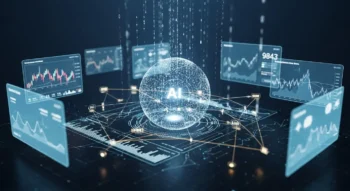
However, to maintain this competitiveness in a slowing global economy, the bloc’s leaders must quickly pivot toward next-generation technologies. President Tokayev identified digitalization, artificial intelligence, and shared digital markets as the absolute key priorities for the EAEU’s future development. He pointed out that global investments in AI have already exceeded $1 trillion, and estimated that its long-term contribution to the global economy could surpass $7 trillion in the coming decades. By integrating these advanced technologies into regional supply chains, the bloc can significantly improve its logistics efficiency and lower cross-border transit costs.
To illustrate the commercial potential of this digital transition, Tokayev pointed to Kazakhstan’s own rapidly growing technology sector. The country’s domestic investments in innovative, digital projects have surged more than fivefold in recent years, with over half of that capital flowing directly into the software and IT sectors. Consequently, Kazakhstan’s annual IT exports have exceeded $1 billion, proving that digital services can act as a highly profitable, resilient alternative to traditional commodity exports. The president urged other member states to replicate this high-tech focus to build a more competitive, unified digital marketplace.
The push for digital integration also matches the ongoing development of the International North-South Transport Corridor. The EAEU is actively investing in smart logistics software, automated customs clearance, and high-speed rail lines to link Russian and Central Asian factories directly to markets in the Middle East and South Asia. By replacing slow-moving, paper-based customs checks with standard digital interfaces, the bloc expects to reduce cross-border transit times by up to 30%, allowing logistics firms to move cargo between Europe and Asia in just under 15 days.
Despite these highly ambitious tech and logistics roadmaps, the union’s leaders face some near-term operational challenges. Belarusian President Alexander Lukashenko urged member states to fully and faithfully implement the “Eurasian Economic Path” development plan without further delays or references to objective difficulties. He warned that the union’s true power lies in its internal unity, emphasizing that member states must work together to eliminate remaining internal trade barriers and protect their shared markets from external geopolitical pressures.
As the Astana summit draws to a close, the EAEU’s successful transition into a highly integrated, tech-forward economic bloc represents a major geopolitical shift. While the global economy is projected to slow to 3% this year, according to the International Monetary Fund, the EAEU’s coordinated focus on AI, digital corridors, and expanded free-trade alliances is helping its members weather the storm. By successfully combining resource-rich economies with advanced digital infrastructure, the union is building a resilient, self-sustaining trading bloc capable of navigating the complex realities of the modern global economy.