
Key Points:
- The Shenzhou-22 return capsule successfully delivered 41 kilograms of scientific samples from the Tiangong space station.
- The payload contains samples from 23 space experiments, including human artificial embryos, brain organoids, and advanced alloys.
- Researchers at the Chinese Academy of Sciences began analyzing how microgravity influences embryonic development at the molecular level.
- Materials science findings will aid the development of next-generation structural steels for aerospace and high-end manufacturing.
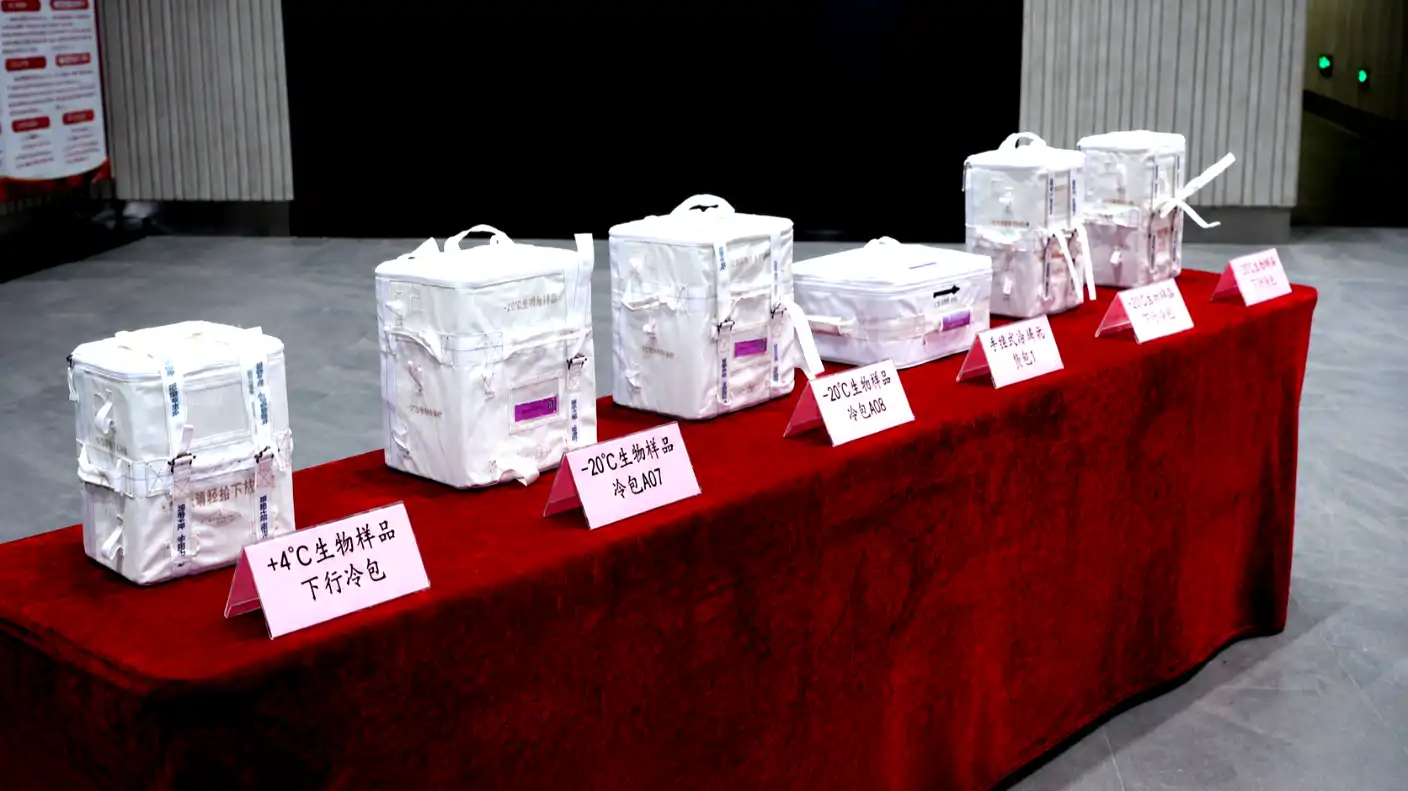
China’s ambitious space program has achieved another major scientific milestone, bringing a vast treasure trove of orbital research back to Earth. On Friday, May 29, 2026, the return capsule of the Shenzhou-22 crewed spacecraft successfully touched down, carrying 41 kilograms of scientific experiment samples from the Tiangong space station. This highly anticipated payload contains materials from 23 distinct space science experiments, representing a massive step forward in China’s drive to master microgravity biotechnology, advanced materials science, and extraterrestrial manufacturing.
Among the returned cargo, nine life science samples have captured the immediate attention of the global scientific community. Technicians quickly transferred these delicate specimens—including human artificial embryos and lab-grown brain organoids—to the Space Utilization Engineering and Technology Center of the Chinese Academy of Sciences (CAS) in Beijing. Scientists confirmed that the samples arrived in excellent physical condition, allowing researchers to begin detailed molecular-level analyses immediately.
Using advanced molecular biology tools such as transcriptome sequencing and proteomics, CAS researchers aim to elucidate exactly how the microgravity environment of low Earth orbit influences embryonic development and stem cell behavior. Because gravity strongly influences cell division, structural alignment, and tissue growth on Earth, studying these processes in space offers an unparalleled view of the fundamental mechanics of life. The molecular insights gathered could eventually support long-term human survival, reproduction, and healthcare during future deep-space exploration missions.
The biological payload also includes advanced 3D-grown tissues, specifically kidney organoids. Scientists will evaluate these lab-grown organ structures to see how spaceflight conditions impact cellular health. A key focus of the study is to test whether specific, targeted gene knockouts can successfully suppress kidney fibrosis—the excessive, harmful accumulation of scar tissue—in microgravity. Since astronauts frequently experience accelerated tissue degradation and organ strain in space, this research could yield breakthroughs in both aerospace medicine and terrestrial treatments for chronic organ diseases.
Beyond biological specimens, the Shenzhou-22 capsule returned 12 materials science samples that could revolutionize terrestrial and aerospace manufacturing. These specimens include next-generation titanium alloys, high-strength and high-toughness steels, and relaxor ferroelectric single crystals. By processing these metals in a microgravity environment, researchers can eliminate “element segregation”—the uneven settling of heavier elements due to gravity—and minimize solidification defects. The findings will help engineers design stronger, lighter materials for aircraft, precision sensors, and medical ultrasound imaging.
The remaining two cargo samples belong to advanced combustion experiments, which researchers will analyze with a fine-toothed comb. Scientists will study flame-synthesized semiconductor nanomaterials and analyze the formation characteristics of carbon nanoparticles in zero gravity. By understanding how fire behaves in the absence of gravity-driven convection, researchers can support the development of highly efficient energy systems, extraterrestrial nanomaterial factories, and robust space fire-prevention technologies.
The successful return and immediate distribution of these samples highlight the highly polished logistical capabilities of the China Manned Space Agency (CMSA). Following the Friday evening landing in the Inner Mongolia Autonomous Region, recovery teams quickly extracted the payload. They transported a portion of the space station lab cargo directly to Beijing by Saturday. This rapid, seamless transport chain is vital for delicate biological samples, which can quickly degrade if kept outside controlled laboratory environments for too long.
China’s massive, state-directed investment in its space program backs this continuous stream of orbital research. Analysts estimate that Beijing spends over $12 billion annually on its civil space and Tiangong operations, allowing the country to maintain a permanent national space laboratory. By launching regular crewed rotations and cargo supply runs, China is building a highly sustainable orbital R&D platform that has already accelerated national patent filings in advanced metallurgy and biotechnology by an estimated 1.5% over the past year.
As Chinese scientists begin their detailed, multi-system analyses of the returned Shenzhou-22 cargo, the Tiangong space station is proving its worth as a premier global laboratory. By successfully leveraging the unique environmental conditions of microgravity to solve complex biological and material bottlenecks, China is slowly rewriting the rules of modern science. These space-based breakthroughs will not only secure China’s technological sovereignty in aerospace engineering. Still, they will also yield real-world innovations that improve medical treatments, industrial manufacturing, and clean energy systems back on Earth.