
Key Points:
- Nearly 90% of surveyed chief economists expect global economic growth to slow down over the next 12 months due to persisting geopolitical tensions.
- Approximately 94% of respondents anticipate rising global inflation, fueled largely by supply chain disruptions and the closure of the Strait of Hormuz.
- Financial markets face increased volatility, with 80% of economists predicting turbulence in private debt and 75% expecting swings in public debt.
- Despite macroeconomic struggles, 92% of economists expect corporate AI adoption to expand, though they remain cautious about near-term productivity gains.
The global economic landscape has taken a sharp turn for the worse, raising fresh alarms for international trade and domestic markets. According to the latest Chief Economists’ Outlook report released by the World Economic Forum on Saturday, a vast majority of the world’s leading financial experts believe that a downturn is imminent. Specifically, nearly 90% of the surveyed chief economists expect global economic growth to slow down significantly over the next 12 months. This pessimistic view highlights how quickly market sentiment can shift when geopolitical conflicts and supply chain bottlenecks collide, threatening to undo progress made during the post-pandemic recovery.
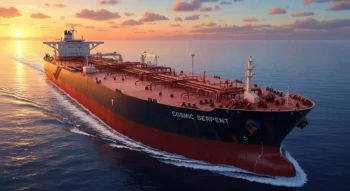
The severity of this projected slowdown depends heavily on the duration of current international conflicts. Economists emphasize that if these geopolitical disruptions ease relatively quickly, the global economy could still regain its footing and build positive momentum. However, prolonged standoffs will undoubtedly place increasing pressure on trade networks. A primary catalyst for this anxiety is the recent closure of the Strait of Hormuz. This vital maritime corridor handles a massive portion of the world’s oil and liquefied natural gas shipments. This closure has triggered a cascade of economic challenges, forcing shipping companies to reroute vessels and causing dramatic delays in the movement of essential goods.
As shipping lanes clog and energy costs climb, inflation is once again emerging as a primary threat to global stability. The World Economic Forum survey reveals that about 94% of the responding chief economists expect global inflation to accelerate in the coming year. This inflationary surge is not affecting every region in the same way. The Middle East and North Africa are currently bearing the brunt of the immediate economic fallout from regional conflicts. Meanwhile, Sub-Saharan Africa is facing the most severe inflationary pressures of any major global region, as rising food and fuel costs strain local economies to their limits.
In Europe, the combination of sluggish growth and rising costs has heightened the dreaded risk of stagflation. European policymakers face the difficult task of taming inflation without completely halting an already weak economy. In stark contrast, India and the United States are showing remarkable resilience. Strong domestic demand, robust consumer spending, and healthy levels of corporate investment are helping these two economic powerhouses withstand external shocks. While they are not entirely immune to global pressures, their large internal markets provide a critical cushion that smaller, trade-dependent nations lack.
The turbulent macroeconomic environment is also spilling over into global financial markets, creating deep concern among institutional investors. Nearly 80% of the economists surveyed by the World Economic Forum foresee greater instability in private debt markets over the next 12 months. Signs of strain are already emerging in the private credit sector, which grew rapidly during the decade of low interest rates. Furthermore, around 75% of the respondents expect volatility in public debt markets to increase as governments struggle with high borrowing costs, while 68% anticipate larger, more unpredictable swings in global equity markets.
Despite this widespread economic anxiety, corporate enthusiasm for technology—particularly artificial intelligence—remains remarkably strong. The survey shows that 92% of the chief economists expect businesses to continue expanding their adoption of artificial intelligence over the next year. Companies view AI as a vital tool to streamline operations, cut overhead costs, and find new efficiencies during difficult times. This continuous flow of capital into tech infrastructure suggests that organizations are prioritizing digital transformation as a long-term survival strategy, even as they trim budgets in other departments.
However, the report also reveals a growing sense of realism regarding how quickly these massive tech investments will pay off. Economists are becoming increasingly cautious about the timeline for AI to deliver major, measurable productivity gains across the broader economy. While the software is advancing rapidly, integrating these systems into complex corporate workflows takes considerable time, training, and capital. Many businesses are discovering that rewriting legacy systems and training staff on new artificial intelligence tools is a slow process, meaning that the expected macroeconomic benefits of AI may not materialize for several years.
Ultimately, the World Economic Forum’s latest report paints a picture of a deeply divided global economy navigating a highly unpredictable period. While advanced technologies like artificial intelligence offer a glimmer of hope for future efficiency, they cannot single-handedly solve the immediate challenges of closed shipping lanes, soaring energy prices, and volatile debt markets. Navigating the next 12 months will require careful coordination between central banks and corporate leaders. As geopolitical tensions dictate the flow of goods and capital, the line between a manageable economic slowdown and a severe global recession remains incredibly thin.