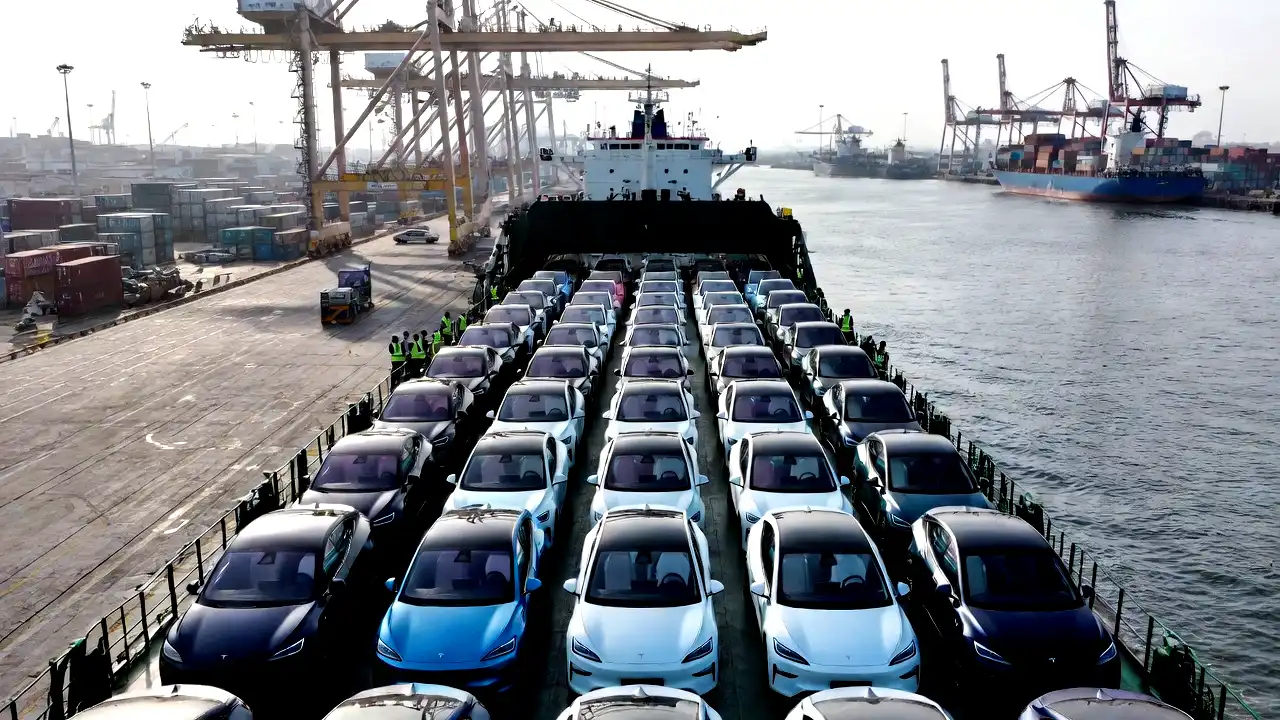
Key Points:
- A new survey shows 55% of European drivers are now open to purchasing a Chinese-branded vehicle.
- Outright rejection of Chinese cars dropped dramatically to just 21%, down from 46% two years ago.
- Spain and Hungary lead the market trend with 75% of consumers willing to buy Chinese cars.
- Drivers increasingly prioritize modern technology, such as battery range and infotainment systems, over traditional brand loyalty.
European drivers are rapidly changing their minds about where they buy their cars. More than half of the drivers across the continent now say they would happily consider buying a vehicle from a Chinese brand. This massive change in consumer behavior threatens to rewrite the rules of the European automotive market completely.
Financial firm Bernstein recently analyzed a large survey to track these changing attitudes. Consulting firm Horváth and Partner surveyed 4,400 consumers to gather the data. The results showed that 55% of European drivers are now open to buying Chinese vehicles. This number jumped significantly from late 2023, when only 43% of drivers felt the same way.
The old resistance to the quality of Chinese manufacturing is quickly disappearing. Two years ago, 46% of European buyers said they would completely reject any car made by a Chinese brand. Today, that number has dropped to just 21%. Drivers simply do not carry the same negative bias against these imported vehicles anymore.
Consumers in southern and eastern Europe show the highest excitement for the new brands. In Spain and Hungary, a massive 75% of car buyers said they are willing to purchase a Chinese vehicle. Italy follows close behind, with 64% of drivers expressing interest. These numbers show that Chinese brands already hold a strong position in several major regional markets.
Even Germany, the traditional heart of the European car industry, is feeling the pressure. German drivers proudly hold deep loyalty to domestic giants like Volkswagen, Mercedes, and BMW. Despite this hometown advantage, 46% of German consumers now say they would consider a Chinese car. Domestic brands can no longer rely on blind loyalty to retain their local customers.
Industry experts point to a growing value gap as the main reason for this market shift. Chinese manufacturers spent years perfecting their battery technology and software integration. They now include high-end features as standard equipment on their base models. European car makers still charge expensive premium prices for those exact same features.
What drivers want in a new car is also fundamentally changing. People still care about classic features like physical safety and long-term reliability. However, buyers now place a much higher priority on new technology. Drivers want lightning-fast charging speeds, massive battery range, and smooth infotainment screens that connect easily to their phones.
Chinese brands like BYD, MG, and NIO build their cars specifically to meet these new tech demands. Consumers notice this effort and view these brands as highly competitive options. The cars deliver the exact digital experience that modern drivers expect without breaking the bank.
The survey revealed that 13% of all car buyers now say they will definitely buy a Chinese vehicle for their next purchase. That specific group of guaranteed buyers doubled in size over the last two years. Chinese brands have officially moved from being a niche curiosity to a mainstream choice for the average family.
European automakers face a serious problem. The latest data proves they have a rapidly closing window to defend their historic market share. Chinese companies no longer rely on dirt-cheap prices to win over customers. The current competition is a direct, head-to-head battle over advanced technology, modern features, and consumer trust. If local car makers do not catch up quickly, they will lose their own home market.