
Key Points:
- Nvidia CEO Jensen Huang officially unveiled the “RTX Spark” at Computex 2026, marking the company’s historic entry into the consumer PC market.
- Developed jointly with Microsoft and MediaTek, the Arm-based “superchip” combines Nvidia’s Grace CPU and Blackwell GPU architectures.
- Featuring 1 petaflop of AI compute and 128GB of unified memory, the processor runs advanced, personal AI “teammate” agents locally.
- The announcement triggered a 4% rise in Nvidia shares, pushing its market cap past $5 trillion, while rivals Qualcomm and Intel fell sharply.
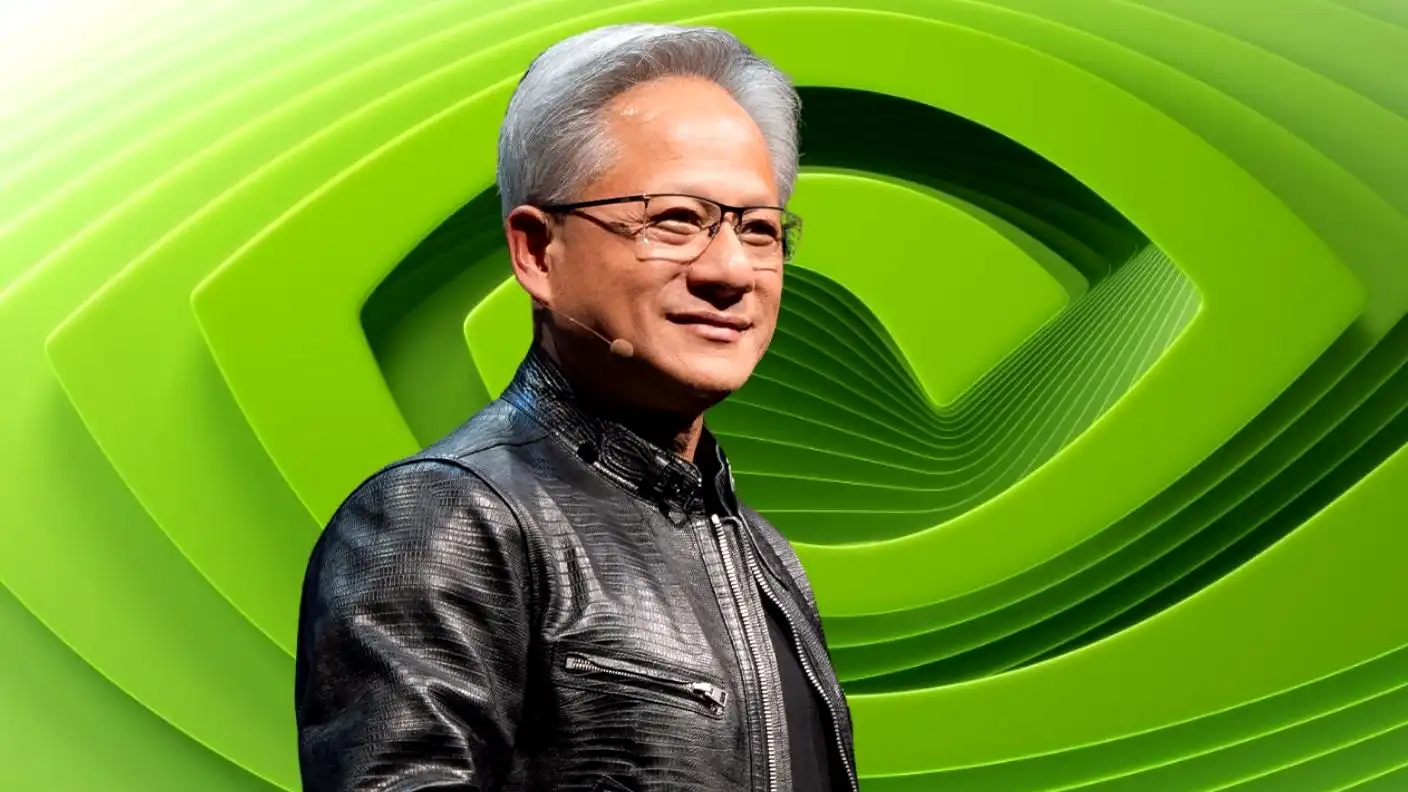
For the past decade, Nvidia Corp. has remained content to let other semiconductor companies manufacture the processors that power consumer laptops. At the same time, it has focused on dominating data centers and graphics cards powering the generative AI boom. That comfortable arrangement has officially ended. At the Computex 2026 technology exposition in Taipei, Taiwan, on Monday, June 1, 2026, Nvidia CEO Jensen Huang unveiled the “RTX Spark”—an Arm-based system-on-chip designed specifically for Windows 11 laptops. In doing so, the Silicon Valley giant fired a direct, high-caliber warning shot across the bow of traditional personal computer (PC) giants like Apple, Intel, Qualcomm, and AMD, permanently altering the competitive dynamics of the global tech industry.
Nvidia has designed the RTX Spark “superchip” to serve as the hardware foundation for a brand-new era of “personal AI agents.” Unlike traditional consumer laptop processors that rely on slow, remote cloud servers to handle AI workloads, the RTX Spark equips personal computers with massive local AI computing capabilities. The advanced processor delivers up to 1 petaflop of dedicated AI compute power and features a massive 128GB of unified memory. According to Nvidia, this processing muscle allows on-device AI software to transition from a simple digital tool into a highly collaborative, autonomous “teammate.” These local agents can scan massive files, navigate multiple software programs simultaneously, and execute complex workflows with minimal human supervision.
The launch represents a monumental shift in how the tech industry views the personal computer. During his keynote address, Jensen Huang emphasized that the creation of the RTX Spark marks the first time in 40 years that the tech industry has fundamentally reimagined the PC. He compared the upcoming hardware shift to the evolution of mobile communications in the late 2000s. “This reinvention of the computer is as big a deal as the reinvention of the phone into what we now know as the smartphone,” Huang told the packed audience in Taipei. By shifting complex machine-learning workloads away from energy-hungry cloud data centers and running them directly on local consumer devices, Nvidia is making advanced AI a common, accessible home utility.
The financial markets reacted immediately to the historic announcement, rewarding Nvidia while punishing its direct competitors. In early Monday trading in New York, Nvidia’s shares gained 4%, pushing the company’s total stock market valuation above a staggering $5 trillion and cementing its status as the most valuable public company on Earth. Conversely, the news triggered a brutal selloff for other major chipmakers. Qualcomm’s stock plunged 8.6%, while PC pioneer Intel suffered a 6.3% decline. Investors clearly realize that Nvidia’s entry into the consumer processor market introduces a highly disruptive force with the financial power and engineering talent to reshape the entire industry.
To ensure widespread market adoption, Nvidia developed the RTX Spark in close collaboration with Microsoft and mobile chip designer MediaTek. The resulting system-on-chip combines Nvidia’s Grace CPU and Blackwell GPU architectures into a single, highly efficient package. Major hardware manufacturers have already committed to integrating the superchip into their premium consumer lineups. Lenovo, HP, Dell, and Microsoft Surface plan to launch an entirely new line of RTX Spark-powered Windows laptops in the autumn of 2026, with models from Asus, MSI, Acer, and Gigabyte expected to follow shortly after. This rapid industry adoption places Nvidia in direct competition for the 75% of the global PC market that Gartner notes Lenovo, HP, Dell, and Apple currently dominate.
Nvidia’s aggressive move into the consumer laptop space poses an immediate, direct threat to Apple’s highly successful M-series processor lineup. Since Apple transitioned its Mac computers away from Intel chips to its own proprietary Apple Silicon in 2020, the company has enjoyed a near-monopoly on high-performance, energy-efficient Arm-based laptops. However, the introduction of the RTX Spark, combined with Microsoft’s optimized Windows on Arm software ecosystem, gives Windows PC manufacturers a highly competitive alternative. Because Nvidia’s chip boasts superior graphics and AI processing capabilities, premium Windows laptops will finally have the hardware muscle to challenge the MacBook’s dominant position in the creative and professional markets.
The launch also represents a critical inflection point for Intel, the historic king of the PC market. For decades, Intel’s x86 processor architecture reigned supreme as the industry standard, built in tandem with Microsoft’s Windows software under the famous “Wintel” partnership. However, Intel’s performance has slipped in key areas like battery life and integrated graphics over the past several years. After Microsoft made it possible to run its Windows operating system on alternative processor architectures in 2021, the door opened for rivals to exploit Intel’s vulnerabilities. By delivering an Arm-based chip that combines incredible battery efficiency with 128GB of memory, Nvidia is effectively dismantling Intel’s long-standing industrial dominance.
Despite the massive technical and financial triumphs of the Computex keynote, Nvidia must still navigate highly complex geopolitical waters. Just one day before Huang’s address, the U.S. Department of Commerce announced strict new export control rules designed to close a major trade loophole. The new federal regulations are specifically designed to stop Middle Eastern and Southeast Asian intermediaries from shipping advanced AI semiconductors, including those manufactured by Nvidia, to Chinese military and tech companies. While tightening trade restrictions limit Nvidia’s global enterprise revenues, the company’s rapid expansion into the consumer PC market provides a massive, highly stable domestic revenue stream that remains insulated from international trade wars.
Ultimately, the unveiling of the RTX Spark marks a historic turning page for the global semiconductor industry. By bridging the gap between high-level data center computing and local consumer devices, Nvidia has officially brought the “Age of AI” directly into the home. As the autumn 2026 release date approaches, the physical reality of these advanced, teammate-like computers will force the entire technology sector to adapt. Whether Apple can defend its premium silicon niche or Intel can salvage its shrinking PC market share remains to be seen. For now, Nvidia’s bold leap into personal computing confirms that the future of technology is no longer bound to remote servers but is comfortably wrapped inside the laptops on our desks.