
Key Points:
- Oura officially unveiled the Oura Ring 5 on May 28, 2026, reducing the wearable’s overall physical footprint by a massive 40%.
- The new titanium smart ring measures just 6.09 millimeters wide and 2.28 millimeters thick, making it nearly identical in size to a standard wedding band.
- Despite the size reduction, Oura maintained a one-week battery life and improved biosensing accuracy using twelve refined signal pathways.
- The launch coincides with Oura’s confidential filing for an initial public offering (IPO) as the broader smart ring market grew by 51% last year.
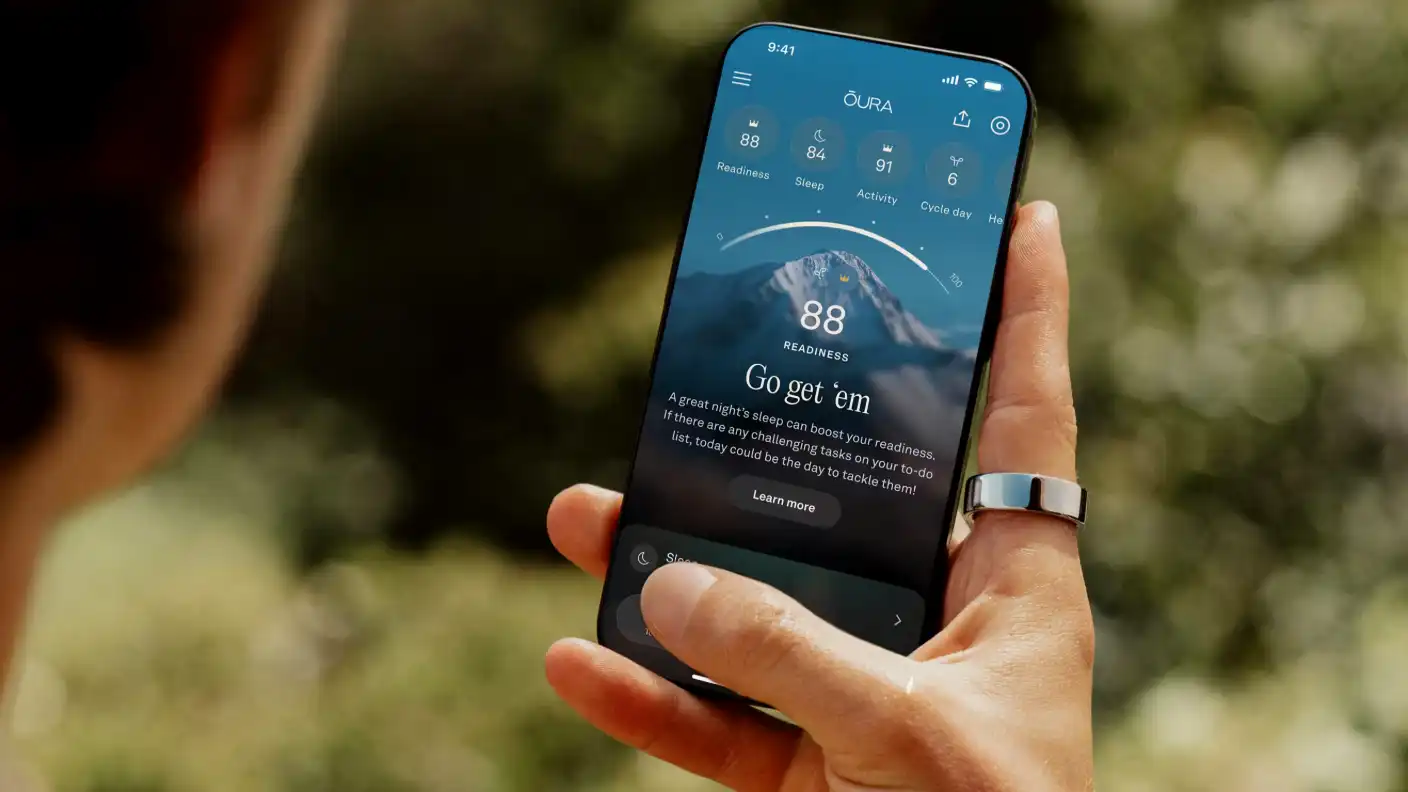
Oura officially unveiled the Oura Ring 5 on Thursday, May 28, 2026, setting a new benchmark for wearable technology design. By shrinking its flagship health tracker by a whopping 40% compared to previous generations, the Finnish-founded, San Francisco-based company has solved one of the biggest complaints in the smart ring market: bulkiness. The Oura Ring 5, which starts shipping on June 4, 2026, brings the physical dimensions of health-tracking tech much closer to standard, everyday jewelry.
The physical profile of the Oura Ring 5 is genuinely tiny, measuring just 6.09 millimeters wide and 2.28 millimeters thick. Oura crafts the ring from scratch-resistant, non-allergenic titanium, giving it a uniform, sleek thickness that mimics a traditional wedding band. The company also upgraded the hardware’s durability, ensuring the ring is dust-proof and waterproof to a depth of 100 meters under the strict IP68 rating. Pre-orders are currently open, with base finishes like silver and black starting at $399, while premium finishes like gold, brushed silver, stealth, and deep rose retail for $499.
Shrinking a wearable device by 40% while preserving a week-long battery life represents a massive engineering achievement. To hit these targets, Oura completely redesigned the ring’s internal mechanical, electrical, and optical architecture. The company managed to decrease the physical size of the battery pack while maintaining a continuous seven-day battery life. Additionally, engineers overhauled the sensing setup, replacing the raised bumps of the previous generation with recessed, flat sensor domes. The new configuration features twelve refined but stronger signal pathways and more powerful LEDs to ensure better skin contact and clear, continuous readings.
Interestingly, Oura claims that this smaller form factor actually delivers higher reading accuracy than the bulkier fourth-generation model. The twelve-pathway sensing architecture automatically optimizes data collection based on the ring’s rotation throughout the day. This smart tracking system delivers a 30% increase in blood oxygen sensing accuracy and dramatically reduces data gaps in heart-rate monitoring during sleep and workouts. The company also emphasized that the new, stronger LEDs produce much clearer readings across a wider variety of skin tones and finger shapes than any previous wearable on the market.
To complement the shrunken hardware, Oura is packaging the Ring 5 with a suite of advanced preventative healthcare software tools. The company’s new “Health Radar” system, developed in collaboration with over 40 in-house doctors and clinical researchers, continuously monitors biometric signals in the background to flag cardiovascular and respiratory patterns before they escalate into serious issues. The most notable addition is a blood pressure signal feature, which tracks subtle cardiovascular patterns during deep sleep, when the body’s baseline signals are clearest, to alert users to signs of cardiovascular strain.
The software updates also include a new Nighttime Breathing analysis tool that provides a 30-day rolling view of sleep-related breathing disturbances. This tool integrates with a new corporate partnership with sleep-health pioneer ResMed, allowing users who spot chronic breathing issues to connect with affiliated healthcare providers through the Oura app. Additionally, the app now includes “GLP-1 Insights,” a dedicated dashboard that allows millions of people taking weight-loss medications like Ozempic to track their doses, log side effects, and monitor how these treatments affect their sleep and resting heart rates.
Oura’s decision to prioritize physical miniaturization stems directly from years of customer feedback, particularly from female buyers who often found previous smart rings too chunky for dainty fingers. Tom Hale, Chief Executive Officer of Oura, noted in an interview that the size reduction has triggered immense excitement. Hale explained that while some men previously complained that the bulkier design felt “too much of a statement,” many women found the old models simply too big to wear comfortably during daily tasks or weightlifting. The new, slimmer profile directly resolves these comfort and aesthetic complaints.
The high-profile product launch arrives during a period of massive commercial momentum for the private company. Oura holds a major market share of the growing segment, which accounts for roughly 1.5% of the overall global wearables sector. The company has sold more than 5.5 million devices to date and experienced a staggering 100% year-over-year revenue growth last year. This rapid expansion coincides with a broader explosion in the smart ring market, which saw a nearly 51% jump in global shipments in 2025. To capitalize on this dominant market position, Oura recently filed confidentially for an initial public offering (IPO), planning to make its stock-market debut later this year.
Ultimately, the Oura Ring 5 represents a major turning page for the wearable technology sector, proving that comfort and high-level medical tracking can coexist in a tiny, stylish form factor. By listening to customer feedback, engineering a 40% size reduction, and introducing groundbreaking medical features like sleep apnea and blood pressure monitoring, Oura has firmly consolidated its position as the king of the smart ring market. As the June 4 shipping date approaches and the company prepares for its landmark IPO, the Oura Ring 5 is poised to show that the future of personal health monitoring is no longer bound to the wrist, but wrapped comfortably around the finger.