
Key Points:
- Jeff Bezos’s Blue Origin suffered a major setback on May 28, 2026, when its heavy-lift New Glenn rocket exploded during a routine static fire test in Florida.
- The massive fireball destroyed the 320-foot-tall vehicle and caused severe damage to Launch Complex 36, Blue Origin’s only active launchpad for New Glenn.
- The disaster delays a planned June launch of 48 Amazon internet satellites, widening the gap with Elon Musk’s rapidly expanding Starlink network.
- The incident threatens NASA’s $20 billion moon base construction timeline and deepens the U.S. government’s near-total reliance on SpaceX’s flight systems.
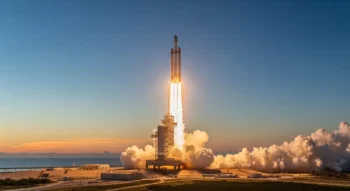
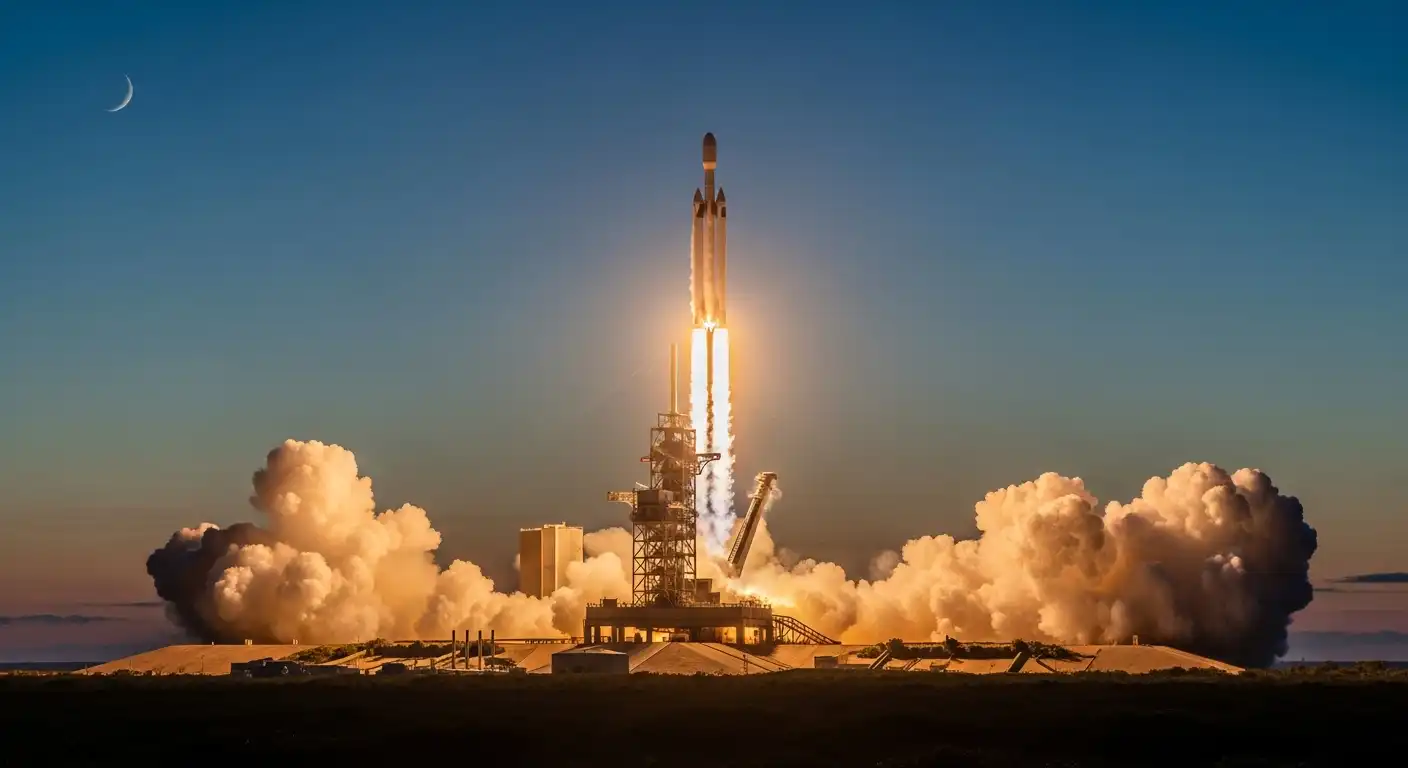
A towering New Glenn rocket belonging to Jeff Bezos’s Blue Origin space company exploded in a spectacular fireball on Thursday night, May 28, 2026. The uncrewed vehicle met its end at approximately 9:00 p.m. EDT at the Cape Canaveral Space Force Station in Florida. The disaster occurred during a routine prelaunch static-fire test, a standard procedure in which engineers ignite the first-stage engines while keeping the rocket bolted securely to the pad. Instead of a successful test, a massive anomaly at the base of the 188-foot-tall first stage ignited a catastrophic chain reaction, engulfing the entire 320-foot-tall rocket in towering flames that lit up the night sky for miles.
Fortunately, the strict safety protocols in place during such tests kept all launchpad workers far away from the danger zone. Blue Origin confirmed on social media that no personnel sustained injuries. Jeff Bezos shared his reaction shortly after the accident on X, calling the explosion a “very rough day” but vowing that his team would rebuild the damaged site and get back to flying. Meanwhile, Elon Musk, the founder of the chief competitor SpaceX, offered his condolences. Musk replied to Blue Origin’s announcement on X, saying he was sorry to see the setback and wishing them a quick recovery.
While the lack of human casualties brought immense relief, the physical and financial damage to Blue Origin’s operations is severe. The explosion hit Space Launch Complex 36-A, which serves as the company’s only active launchpad for the New Glenn rocket. News helicopters flying over the pad after the blast showed multiple active fires, a destroyed erector-gantry, and a collapsed lightning tower. Rebuilding a specialized launchpad of this magnitude can easily cost up to $1 billion and take several months. Because Blue Origin has no secondary launch facilities for this rocket, the accident effectively grounds New Glenn for the foreseeable future. In contrast, SpaceX possesses multiple pads in both Florida and California to maintain its flight schedule.
The immediate business victim of the launchpad explosion is Amazon’s commercial satellite division. Blue Origin was gearing up for an early June mission to deploy 48 internet satellites into low Earth orbit for Amazon’s “Leo” broadband constellation, a project designed to compete directly with SpaceX’s dominant Starlink network. Fortunately, the 48 satellites remained safely inside a storage hangar and were not on board the rocket during the test. However, the destruction of the booster and the launchpad puts Amazon’s orbital broadband plans on hold, allowing Starlink to strengthen its near-monopoly on space-based consumer internet.
The disaster also carries serious consequences for the U.S. government and the national space program. Just days before the explosion, NASA selected Blue Origin for a highly publicized contract to launch the first of three planned missions this year to begin construction of its $20 billion moon base. Additionally, Blue Origin is locked in a fierce competition with SpaceX to build a crewed lunar lander for the Artemis IV mission, which NASA planned for 2028. With New Glenn’s primary launchpad now in ruins, NASA officials face mounting questions about whether the private company can meet its tight federal deadlines.
NASA Administrator Jared Isaacman addressed the incident publicly on X, seeking to reassure the aerospace community while acknowledging the gravity of the setback. Isaacman noted that spaceflight remains an unforgiving endeavor and that developing a heavy-lift rocket capability is extraordinarily difficult. He promised that NASA would work closely with its commercial partners to conduct a thorough investigation, assess the near-term impacts on federal programs, and ultimately return to flying. Nevertheless, the accident highlights the federal government’s growing reliance on SpaceX, as no other private contractor possesses a comparable launch cadence.
The intense competition between Elon Musk and Jeff Bezos has also shifted into a highly speculative new frontier: orbital artificial-intelligence data centers. Recent reports from late 2025 and early 2026 reveal that both companies are racing to bring heavy computing power to space. Blue Origin has spent over a year assembling a specialized engineering team to design space-based data centers. Meanwhile, SpaceX is pitching upgraded, AI-capable Starlink satellites as part of a share sale that could value the aerospace firm at over $800 billion.
Supporters of orbital data centers argue that placing servers in low Earth orbit offers unique thermodynamic and financial advantages. Satellites can tap into continuous, uninterrupted solar power 24 hours a day, bypassing the massive electricity and water demands that terrestrial data centers place on local grids. However, many industry experts remain deeply skeptical about the economic viability of space-based computing. Managing intense heat in a vacuum, shielding delicate server components from cosmic radiation, and absorbing high launch costs represent major technical hurdles that terrestrial facilities do not have to face.
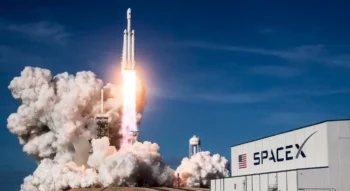
The vast operational gap between the two space giants became even more apparent just hours after the accident. While Blue Origin’s team surveyed the smoking ruins of Launch Complex 36, SpaceX successfully launched a Falcon 9 rocket carrying 29 Starlink satellites into orbit from a nearby pad. In 2025, SpaceX achieved an unprecedented 170 orbital launches with a success rate over 99%, while Blue Origin has logged only a handful of flights with New Glenn. This staggering difference in operational tempo means that any delay for Blue Origin further cements Musk’s undisputed control of the commercial launch market.
Ultimately, the New Glenn explosion reminds the commercial space industry that the road to orbit remains incredibly steep. As Blue Origin engineers analyze telemetry data to determine the root cause of the anomaly, the company must also accelerate construction of its planned second launchpad. Jeff Bezos’s space ambitions depend on a rapid recovery from this “very rough day.” For now, the fiery destruction of New Glenn leaves the U.S. government and global commercial clients more dependent than ever on SpaceX to keep their orbital dreams alive.