
Key Points:
- The newly arrived converter platform, weighing roughly 25,000 tonnes and measuring 44 meters high, covers an area equivalent to a standard football field.
- Acting as the central hub for 163 turbines, the facility will collect, step up, and transmit 2,000 megawatts of clean offshore wind energy.
- The platform utilizes advanced ±500-kilovolt flexible direct current (DC) technology, cutting electricity transmission losses by 60% compared to traditional alternating current.
- Once fully operational, the station will deliver roughly 6 billion kilowatt-hours of clean electricity annually to help power China’s regional grid.
A monumental engineering milestone has arrived off the coast of South China’s Guangdong Province. The world’s largest offshore converter station, known as the “Haifeng Heart” (or “Heart of Offshore Wind”), completed its 1,090-nautical-mile journey from east China’s Jiangsu Province. The massive steel structure has been anchored at its permanent home within the Qingzhou offshore wind farm in Yangjiang. Construction crews plan to launch the float-over installation process on Thursday. This critical project represents a massive step forward in offshore power transmission, bridging the gap between deep-sea energy resources and land-bound consumers.
Shanghai Zhenhua Heavy Industries (ZPMC) built the colossal structure, which features an eight-story steel platform measuring 85.5 meters long, 82.5 meters wide, and 44 meters high. The deck area matches a standard football pitch, and its total height equals a 15-story residential building. Because its 25,000-tonne weight far exceeds the lifting capabilities of domestic marine cranes, the maritime engineering team will use a specialized float-over method to lower the platform onto its pre-installed steel jacket. This technique relies on natural tidal movements and precise control of ballast water to slide the heavy deck into place.
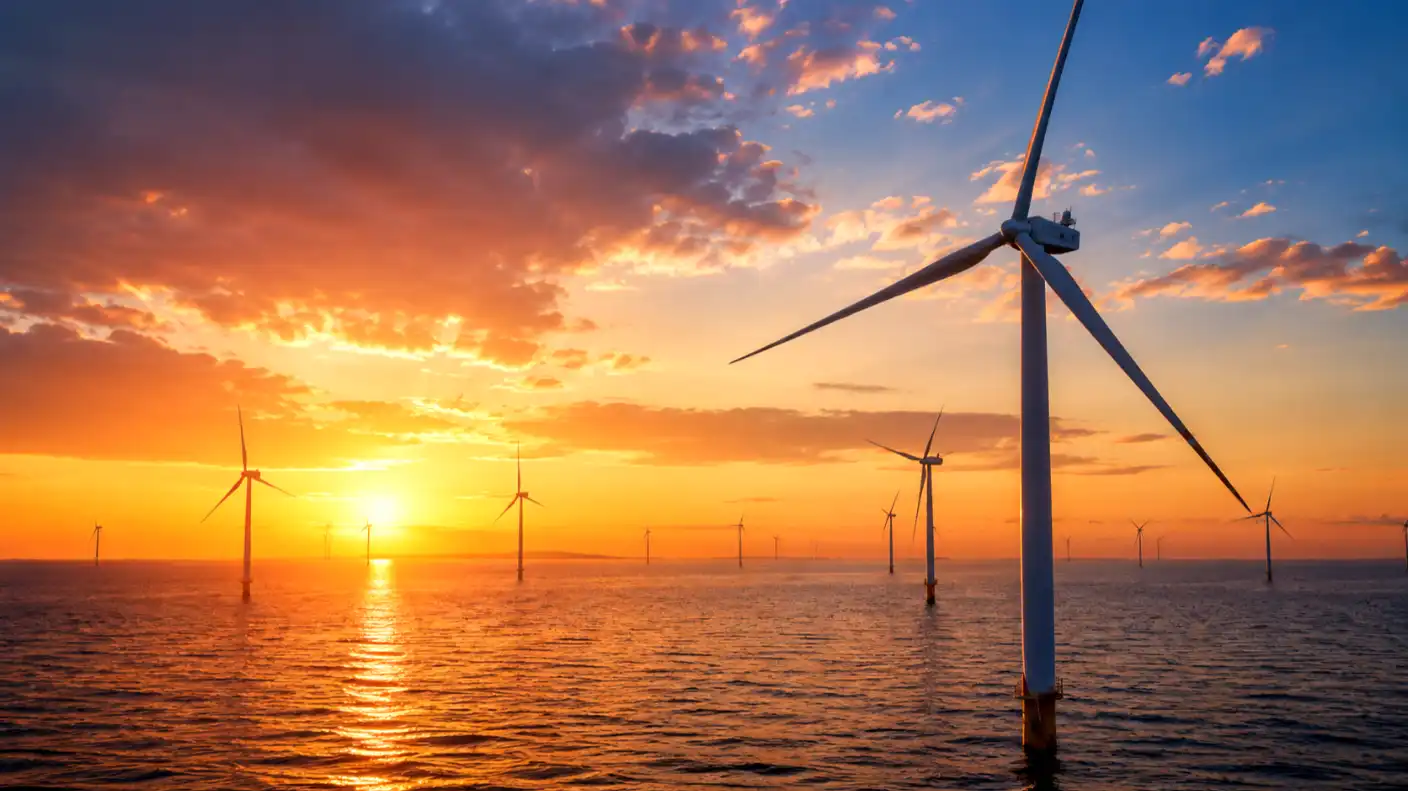
As offshore wind farms move further into deeper waters, long-distance power transmission becomes a major hurdle. Standard wind turbines produce alternating current (AC) power, but transmitting AC electricity over long subsea distances incurs significant energy losses. The Haifeng Heart acts as the central power brain, collecting 66-kilovolt AC electricity from 163 wind turbines scattered across the Phase V and Phase VII sections of the Three Gorges Yangjiang Qingzhou wind development. The platform’s onboard equipment steps up this voltage and converts it into ±500-kilovolt high-voltage direct current (DC) before sending it to the mainland.
The technical breakthrough in flexible DC transmission provides an immense boost to overall grid efficiency. Compared with traditional AC transmission systems, this advanced DC method reduces transmission losses by an impressive 60%. This massive reduction in lost power means a much higher percentage of the energy generated at sea actually reaches the onshore grid. This marks the world’s first deployment of a ±500-kilovolt, 2,000-megawatt flexible DC offshore converter station, setting a new global benchmark for marine energy systems.
To handle this massive power flow, the project introduces several other engineering breakthroughs. Shippers and technicians will deploy ±525-kilovolt DC subsea cables for the very first time, overcoming serious insulation and deep-water pressure challenges. The platform also features a highly integrated, compact design that packs complex electrical, ventilation, and fire-safety systems into a limited footprint. This compact engineering layout significantly reduces overall construction costs and the total marine area required for the project.
The financial investments in these deep-water wind farms show a strong national commitment to clean energy infrastructure. The developer, China Three Gorges Corporation, is investing a total of 41.17 billion yuan (approximately $5.7 billion) to construct the Qingzhou Phase V, Phase VI, and Phase VII offshore wind projects. These adjacent wind farms will have a combined capacity of 3,000 megawatts (3 gigawatts), establishing one of the world’s largest offshore wind hubs. By pooling resources and using standardized technology, the developers are successfully driving down the cost of deep-sea wind power.
Once the installation and testing phases wrap up, the Haifeng Heart will begin delivering approximately 6 billion kilowatt-hours of clean electricity annually to major industrial load centers in Guangdong. This immense volume of renewable energy will power millions of homes in the region, providing a reliable alternative to traditional coal-fired power plants. Integrating this massive clean power supply into the regional grid supports China’s broader environmental goals of reaching peak carbon dioxide emissions before 2030 and achieving complete carbon neutrality by 2060.
Building the massive platform on time required a highly efficient manufacturing strategy. ZPMC utilized a modular onshore fabrication model, assembling different sections of the platform in parallel at their Nantong shipyard. This approach allowed engineers to safely install internal cabling, transformers, and heavy electrical components on land before final assembly. By bypassing the harsh weather and logistical limitations of offshore construction sites, the team slashed development times and guaranteed higher quality standards for the sensitive electrical equipment.
The global market for offshore wind infrastructure is expanding rapidly. Industrial analysts project that total spending on non-turbine offshore infrastructure—including subsea cables, foundation jackets, and offshore converter stations—will capture roughly 75% of marine wind investments over the next few decades. This shift presents a massive $770 billion market opportunity for specialized engineering firms and heavy equipment manufacturers. Developing large-scale projects such as the Qingzhou wind farm enables domestic manufacturers to gain invaluable technical expertise, positioning them as global leaders in deep-sea energy technology.
The successful deployment of the Haifeng Heart marks a new era for renewable energy transmission. By addressing the long-distance transmission losses that have historically limited deep-sea wind projects, this project demonstrates how modern high-voltage technology can unlock vast wind reserves far from the coast. As coastal cities around the world look to phase out fossil fuels, highly integrated, flexible DC converter platforms will serve as the essential backbone for the next generation of clean, reliable, and high-capacity electrical grids.