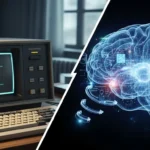

Artificial intelligence sensors have become vital components in today’s technology landscape, engineered to simulate human-like intelligence in machines. These sensors enable devices to continually improve their performance and adapt to changing conditions by learning from their surroundings. Over recent years, AI sensor technology has advanced remarkably, with modern sensors now capable of identifying and analyzing intricate data patterns, thereby supporting sophisticated decision-making processes.
AI sensors are utilized across a wide range of industries, including healthcare, automotive, smart homes, and industrial automation. They serve as the sensory interface for AI systems, collecting crucial environmental data that enables machines to understand, predict, and even operate autonomously. As foundational elements, these sensors serve as the eyes and ears of intelligent systems, enabling seamless, adaptive interactions with the world.
Understanding the versatility of AI sensors
AI sensors come in various forms, each tailored to specific applications and environments. Image sensors are the most widely used AI sensors, capturing visual data for applications such as surveillance, autonomous vehicles, and smartphones. Modern image sensors are equipped with on-chip AI processing, enabling them to perform tasks such as object and facial recognition and scene analysis in real time. For example, Sony’s Intelligent Vision Sensor integrates AI processing within the sensor unit, enabling high-speed, real-time object tracking without relying on external processors.
Moreover, proximity sensors detect the presence of objects, while ultrasonic sensors measure distance by emitting and detecting sound waves. AI integration enables these sensors to provide contextual awareness, allowing for features such as obstacle detection in robotics, smart locks, and smart building systems. For instance, TDK’s InvenSense SmartSonic ultrasonic Time-of-Flight (ToF) sensor offers room-scale presence sensing and long-range obstacle detection for smart homes and buildings.
On the other hand, temperature sensors monitor environmental or device temperatures and use AI to predict overheating, optimize energy use, or trigger cooling systems across various applications, including industrial machinery and smart thermostats.
How AI sensors are transforming healthcare, automotive, and smart cities
AI sensors are deployed across a wide range of industries, enabling innovative solutions and enhancing operational efficiency. According to Allied Market Research, the artificial intelligence sensor market is predicted to grow at a CAGR of 41.8% from 2023 to 2032. AI-based medical sensors are revolutionizing patient monitoring, enabling early disease detection and supporting clinical decision-making. Wearable sensors continuously track vital signs and use AI to detect anomalies, alerting healthcare providers only when necessary. This improves patient outcomes and reduces the burden on healthcare systems.
Moreover, in the automotive sector, AI sensors are essential for autonomous driving, predictive maintenance, and driver monitoring. LiDAR, radar, and camera sensors feed data to AI algorithms, enabling vehicles to navigate complex environments, recognize traffic signals, and avoid obstacles. AI-driven driver monitoring systems assess alertness and detect fatigue, enhancing road safety.
Furthermore, AI sensors optimize energy usage by monitoring occupancy, temperature, and lighting levels. Smart thermostats learn user preferences and automatically adjust settings, while connected sensors detect leaks, monitor air quality, and enhance security. These applications contribute to energy savings and improved comfort.
On the other hand, IoT sensors and AI work together to monitor public spaces, optimize traffic flow, and manage utilities. Real-time data analysis enables cities to respond quickly to hazards, reduce pollution, and enhance public safety. For example, smart water meters and air quality sensors provide actionable insights for city management.
Also, AI sensors enable predictive maintenance by detecting early signs of equipment wear or malfunction. This reduces downtime, lowers repair costs, and improves productivity. In manufacturing, AI-powered sensors assist in quality control, process optimization, and supply chain management.
Sensirion and Sintropy.ai united to advance AI-powered automation
In June 2025, Sensirion, a leading provider of digital microsensors and systems, announced a strategic collaboration with Sintropy.ai, an innovative start-up specializing in automation and AI-driven technologies. Facilitated by Repcom, a key distributor in Italy, this partnership aims to enhance data collection and automation capabilities across multiple sectors. Andrea Codini, CEO and Co-Founder of Sintropy.ai, said that high-quality data forms the backbone of automation and AI ecosystems.
Sensirion’s sensors provide the precision and reliability essential to our solutions. By integrating its advanced sensor technologies into Sintropy.ai’s intelligent products, the alliance delivers scalable, affordable, and easy-to-implement solutions. This collaboration reflects a mutual commitment to innovation, data excellence, and expanding the accessibility of AI-powered automation for modern industries.
The bottom line
The future of AI sensors lies in further miniaturization, improved power efficiency, and deeper integration of AI at the network’s edge. Neuromorphic computing and multimodal sensor fusion are expected to enable more sophisticated, human-like perception and decision-making. AI sensors are likely to play a crucial role in shaping the digital transformation of industries and society, driven by the growing demand for smarter, autonomous devices.