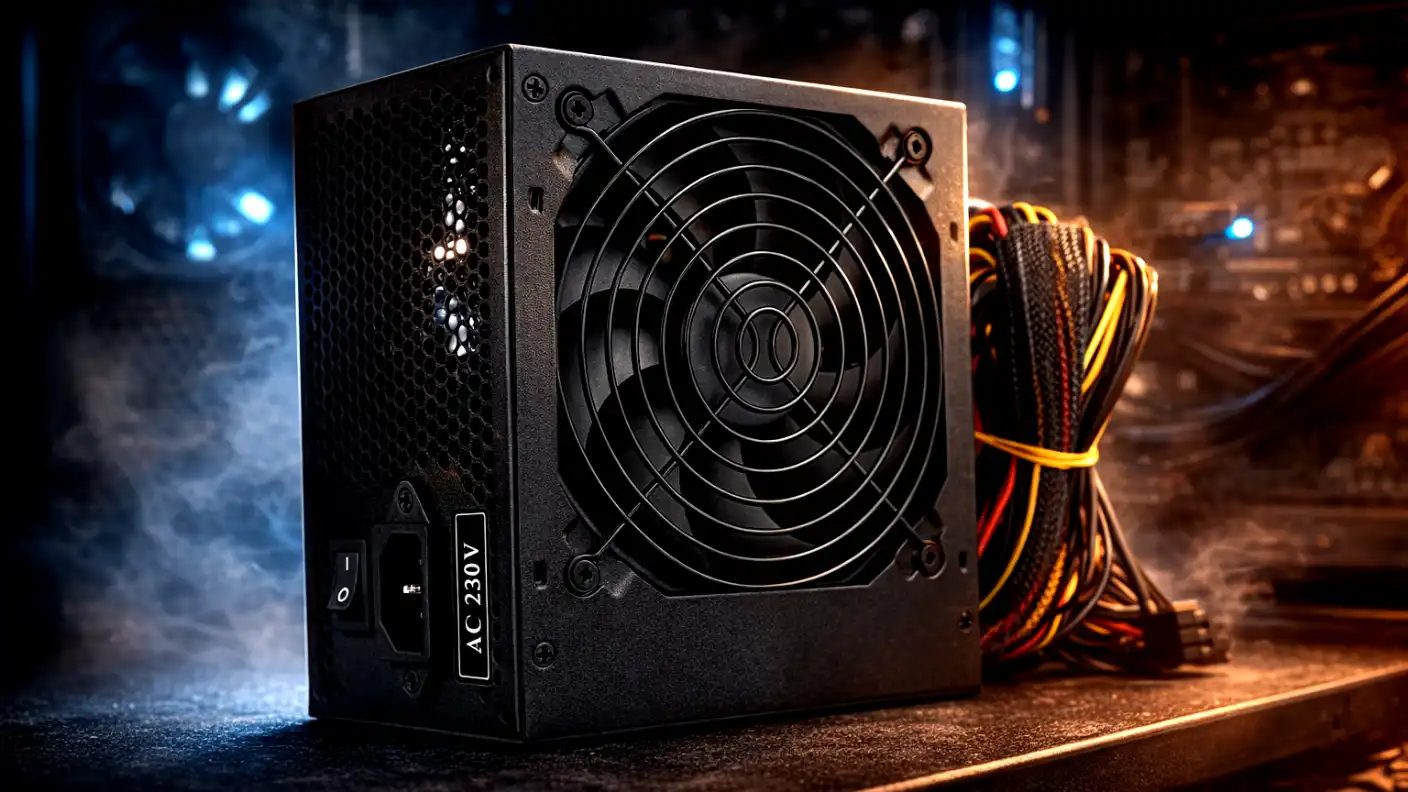
You’ve spent weeks, maybe even months, planning the perfect PC build. You’ve obsessed over every detail. You picked the fastest processor your budget could handle, a graphics card that will render games in glorious detail, and a sleek case with flashing lights to show it all off. You’re down to the last few components, and your budget is tight. You see the power supply. “Eh,” you think, “as long as it has enough watts, it’ll be fine.” You grab a cheap, generic model and call it a day. This is, without a doubt, one of the most common and most catastrophic mistakes a person can make. The power supply unit (PSU) is the unsung hero of every great computer, and treating it as an afterthought is a recipe for disaster.
The Heart of Your Machine
Think of your computer as a high-performance athlete. The CPU is the brain, making lightning-fast calculations. The GPU is the muscle, handling intense visual work. But the PSU? The PSU is the heart. Its job is not just to pump power, but to pump clean, stable, and reliable power—the lifeblood of your entire system. Every single component, from your expensive processor to your delicate motherboard, relies on the PSU to take the chaotic AC power from your wall outlet and transform it into the precise DC voltages they need to survive. A cheap, low-quality PSU delivers “dirty” power with unstable voltages, like feeding your star athlete a diet of junk food. It might work for a while, but a breakdown is inevitable.
The Silent Killer of Components
When a computer starts randomly crashing or freezing, most people immediately blame their memory, their software, or their CPU. They spend hours troubleshooting the wrong parts, never suspecting the true culprit. An unstable power supply is one of the leading causes of system instability. But it gets much worse than that. A cheap PSU is built with inferior components that can’t handle stress. When it finally fails—and it will—it doesn’t always go quietly. It can fail catastrophically, sending a surge of unregulated voltage through your entire system. In an instant, that $60 part you saved money on can electrocute and destroy your $700 graphics card and $400 processor. It’s a silent killer that can turn your dream machine into a very expensive paperweight.
Efficiency and Noise: The Hidden Costs
Beyond the risk of total system failure, there are practical, everyday reasons to invest in a good power supply. You’ve probably seen labels like “80 Plus Bronze,” “Gold,” or “Platinum” on them. This isn’t just marketing fluff. It’s a rating of the PSU’s efficiency. A more efficient PSU wastes less energy as heat. This has two direct benefits. First, it means a lower electricity bill over the five- or ten-year lifespan of a good PSU, which can add up to real savings. Second, less wasted heat means the PSU’s fan doesn’t have to work as hard. A high-quality, efficient power supply is often virtually silent, contributing to a quieter and more pleasant computing experience.
Why We Get It So Wrong
So if a good PSU is so critical, why do so many people overlook it? The reason is simple: it’s not a glamorous component. It doesn’t have exciting performance metrics like gigahertz or frame rates to brag about to your friends. Its specifications are a list of boring electrical terms. The benefits of a good PSU—stability, reliability, and longevity—are invisible. You only notice the PSU when something has gone horribly wrong. Marketing departments focus on the flashy parts, so the humble, hardworking power supply gets left in the dust, quietly waiting in the budget’s corner.
Conclusion
Building or buying a computer is an investment. A good power supply isn’t just another part on a list; it’s the insurance policy for that entire investment. It’s the strong foundation upon which the whole structure rests. Don’t let it be the weakest link. Spending a little extra on a quality PSU from a reputable brand is one of the smartest decisions you can make. It will protect your other components, save you money in the long run, and give you the peace of mind that the heart of your machine is strong, steady, and reliable.