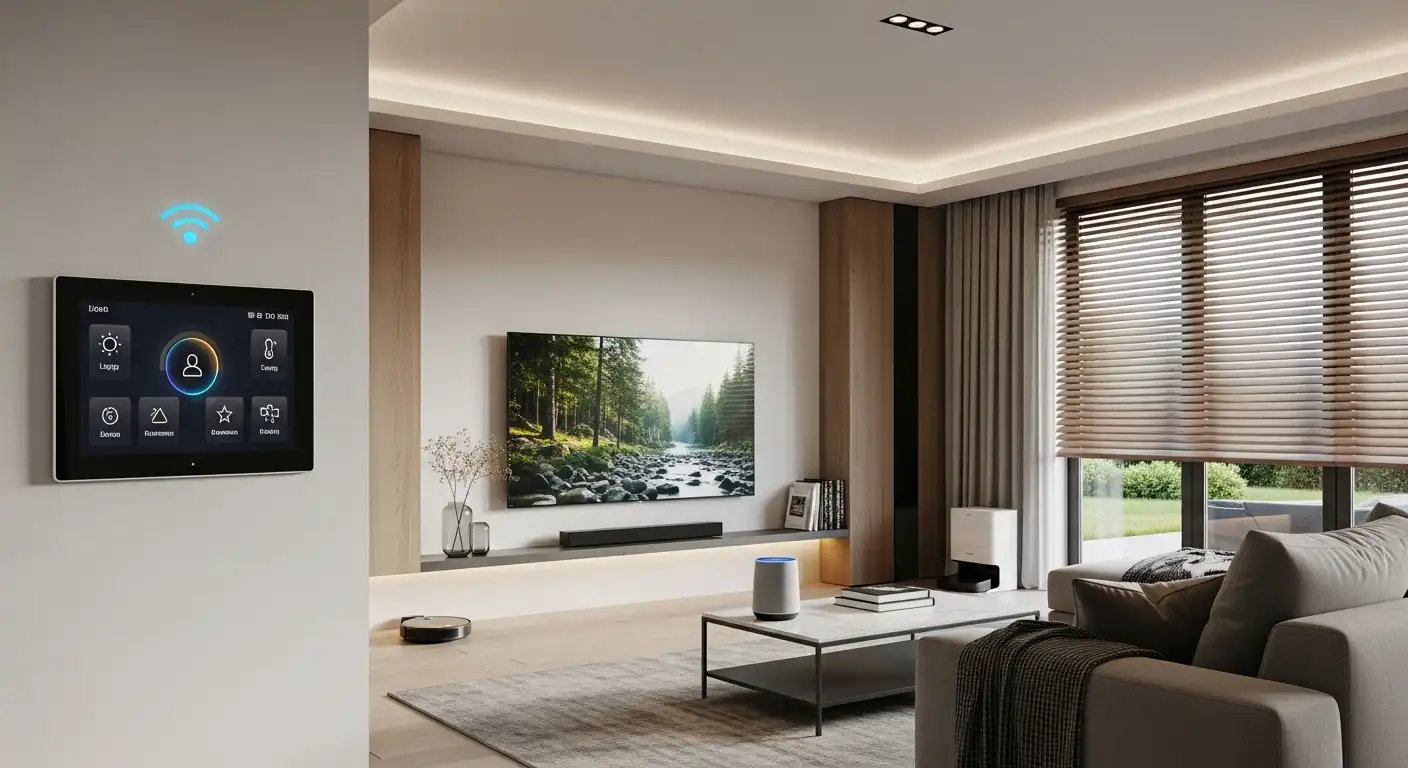
The magic is undeniable. You walk into a dark house and say, “Lights on.” You adjust the thermostat from your office, miles away. Your doorbell shows you who’s at the door while you’re on vacation. The smart home promises a life of effortless convenience, a futuristic dream made real. But this seamless magic comes with a hidden, unspoken cost that is running up our electric bills and straining our power grids. Every single one of these convenient devices is a tiny, silent energy vampire, and together they constantly feed on your home’s electricity, 24 hours a day.
The “Always On, Always Listening” Problem
A traditional lamp is simple. When the switch is off, it uses zero electricity. It is truly off. Your smart bulb, however, is never truly off. Even when the light is out, a small part of its brain—the Wi-Fi or Bluetooth chip—must stay awake, alert, and connected to your network. It has to be ready to receive the command to turn on. The same is true for your smart speaker, which is always listening for its wake word, and your smart TV, which is always waiting for a signal to cast a video. This constant state of readiness is called “standby power” or “phantom load,” and it’s the digital equivalent of leaving your car idling in the driveway all night, just in case you need to go somewhere.
Death by a Thousand Tiny Sips
One smart plug sipping a tiny amount of power doesn’t seem like a big deal. But who has just one? The problem isn’t a single device; it’s the army of them you’ve invited into your home. You have the smart thermostat, the video doorbell, multiple smart speakers, a dozen smart bulbs, smart plugs on your coffee maker and fans, and security cameras watching your property. Each one of these devices takes a small, constant sip of power. Together, it’s not a sip; it’s a steady stream. It’s death by a thousand cuts for your electricity bill, a slow, silent drip that adds up to a significant and wasteful amount of energy over the course of a year.
The Cloud is a Thirsty Beast
The “smart” part of your smart home doesn’t actually live in your house. It lives in a massive, air-conditioned, power-hungry data center hundreds or thousands of miles away. Every time you ask Alexa for the weather or your Google Home to play a song, your device sends a signal to a giant server farm. These data centers are among the largest energy consumers on the planet. Your smart home is essentially a network of tiny terminals connected to a giant, shared brain that never, ever sleeps. An enormous, continuous energy footprint in the cloud subsidizes the convenience in your living room.
The Myth of Smart Savings
The great irony is that many smart home devices are sold with the promise of saving energy. A smart thermostat, for example, can intelligently lower the heat when you’re not home. But we have to ask whether the small savings it provides are completely wiped out by the combined 24/7 power draw of the thermostat itself, the Wi-Fi router that must always be on, and the cloud servers that run the system. In many cases, the convenience of the smart home actually encourages more consumption. It’s so easy to leave lights and devices on because we know we can just turn them off later on our phones—but often we forget.
Conclusion
This isn’t a call to throw your smart devices in the trash. The convenience they offer is real and, for many, a welcome part of modern life. But we must stop pretending that this convenience is free. We need to be more conscious consumers, aware of the hidden energy cost behind the magic. We should question whether we truly need every single gadget to be “smart” and connected. The first step to taming the energy vampires in your home is to acknowledge that they exist, silently sipping away in the background, long after you’ve turned out the lights.