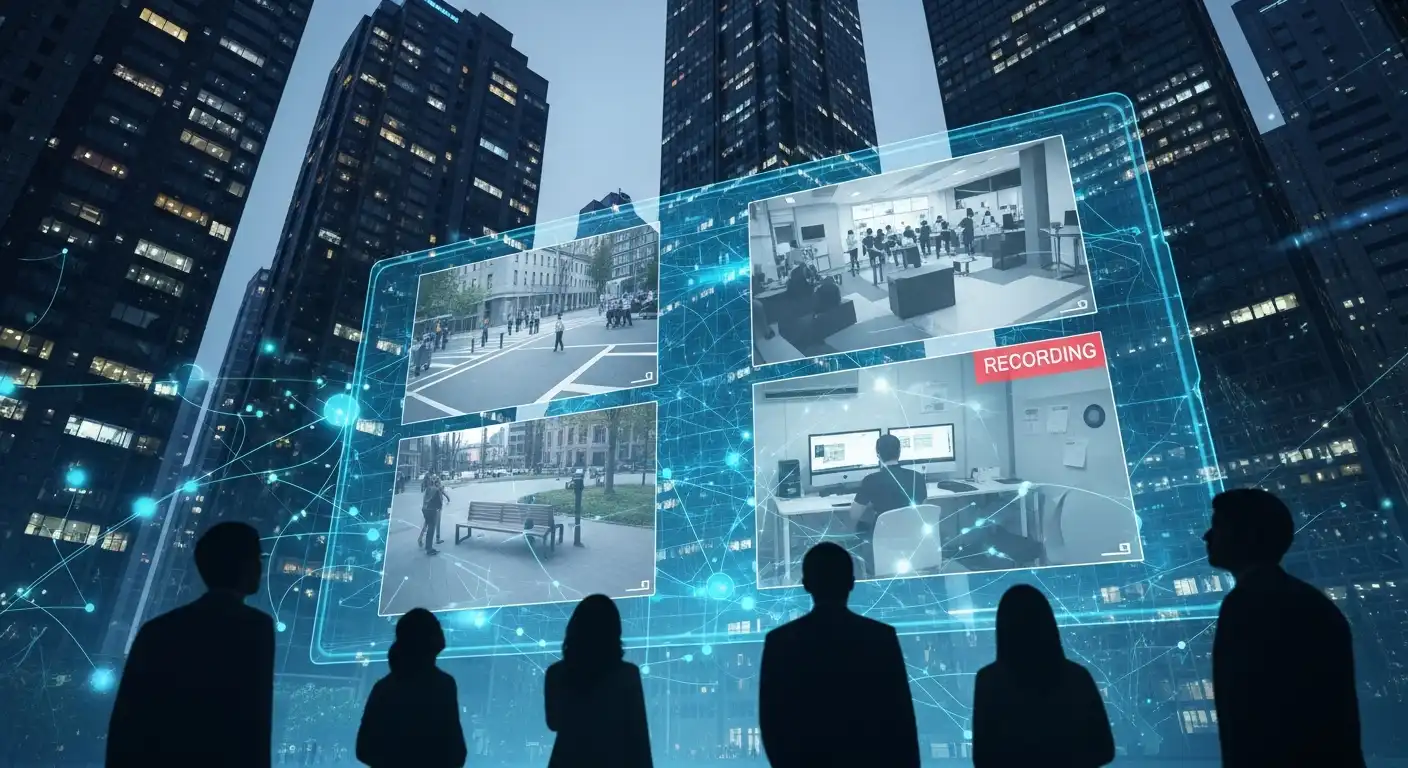
When we think of surveillance, our minds jump to George Orwell’s 1984. We picture a shadowy government agency, listening in on our calls and monitoring our movements—a “Big Brother” state that wants to control us. Edward Snowden confirmed many of our worst fears. But while we’ve been looking over our shoulders at the government, we’ve willingly invited a different, more effective spy into our homes and our pockets. The surveillance conducted by corporations isn’t just scarier than government spying; it’s more pervasive, more personal, and we are paying for the privilege.
The Difference in Motive
A government agency, at least on paper, spies for reasons of national security or to prevent crime. Their goal is control. A corporation spies for a simpler, more relentless reason: profit. They don’t want to know if you’re a dissident; they want to know if you’re feeling sad so that they can sell you a vacation. They track your location to see if you walk by a coffee shop so that they can serve you a coupon. This profit motive is arguably more dangerous because it’s amoral. It seeks to understand your deepest insecurities, desires, and weaknesses, not to control you, but to manipulate you into buying things.
The Illusion of Consent
The most insidious part of corporate surveillance is that we “agree” to it. Every time we click “Accept” on a new app’s terms of service, we are signing a contract that gives a company the right to collect a staggering amount of our personal data. But this isn’t a real choice. Can you participate in modern society without a smartphone, a search engine, or social media? For most of us, the answer is no. We are forced to trade our privacy for access. This creates the illusion of consent, making the surveillance feel less threatening even though it’s just better disguised.
A Profile the Stasi Could Only Dream Of
The sheer scale of corporate data collection is breathtaking. Google knows what you’re curious about. Amazon knows what you buy. Meta knows who your friends are and what you talk about. Your smart speaker knows what you say in the privacy of your home. Combined, these companies are building a psychological profile of you that is more detailed than anything the KGB or the Stasi could have ever dreamed of. They don’t just know what you do; their algorithms can predict what you will do, often better than you can yourself.
No Rules, No Oversight
Government surveillance, for all its faults, operates under at least some legal constraints. There are laws, courts, and oversight committees (even if they are often ineffective). In the world of corporate surveillance, it’s the Wild West. Tech companies largely regulate themselves. Your data can be bought and sold to data brokers you’ve never heard of. It can be lost in massive data breaches with little consequence for the company. There is no warrant needed, no judge to sign off. There is only a user agreement that no one ever reads.
A More Intimate Betrayal
In the end, what makes corporate surveillance so much scarier is that it feels like a betrayal by a friend. We use these services to connect with loved ones, to learn, and to be entertained. They are woven into the fabric of our lives. The government is a distant, abstract entity. The corporation is the friendly interface on your phone. And that friendly face is watching, learning, and building a perfect model of you, not to protect the state, but to sell you one more thing. We’ve traded the iron fist of Big Brother for the invisible hand of the algorithm, and it has a much tighter grip.