Key points
- Scientists have revealed the detailed structure of a key protein complex that controls cell growth.
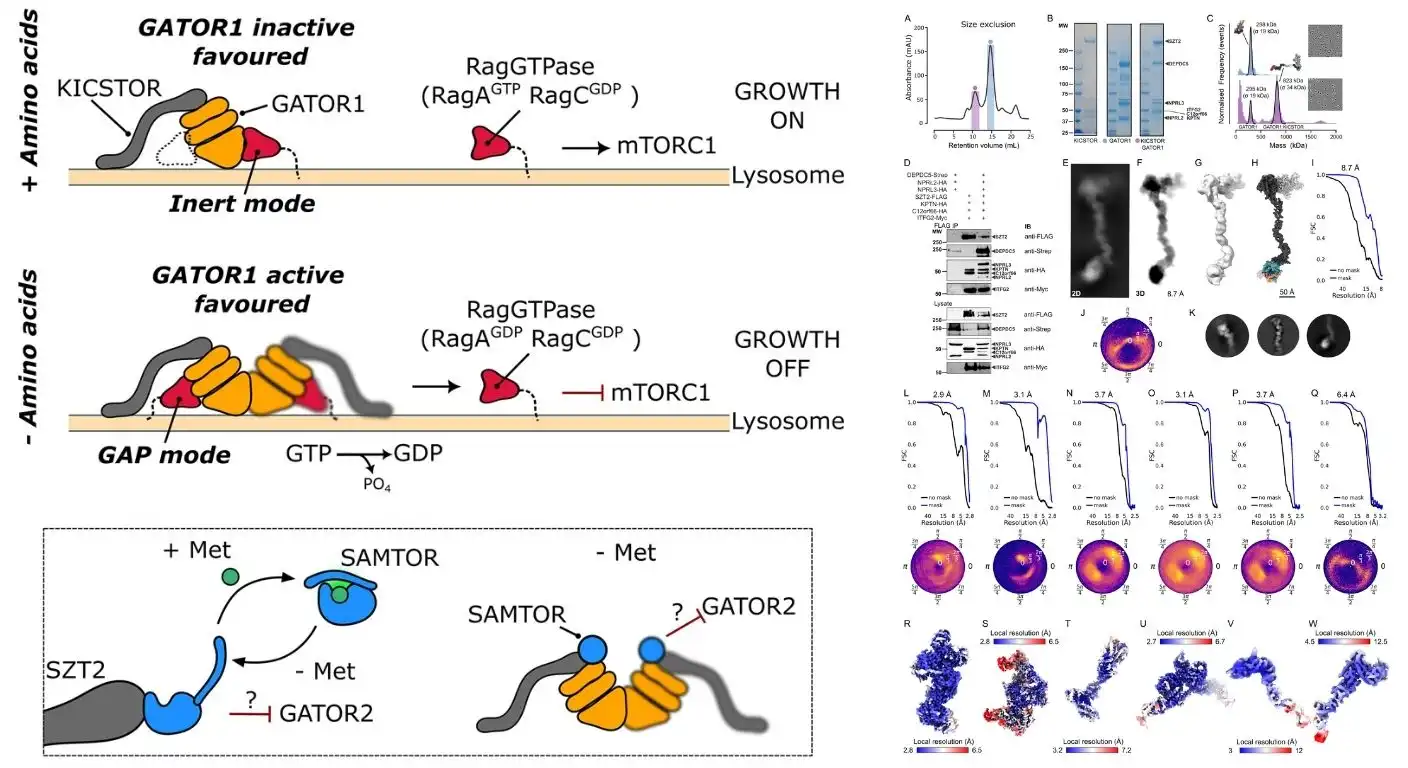
- The “KICSTOR–GATOR1 complex” acts as a “brake pedal,” stopping growth when nutrients are low.
- Problems with this system are linked to cancer, epilepsy, and other diseases.
- The discovery was made using an ultra-powerful imaging method called cryo-EM.
For the first time, scientists have obtained a clear view of a critical “brake pedal” inside our cells that signals when to stop growing. A team at Monash University used a super-powerful imaging technique called cryo-EM to reveal the detailed structure of a protein partnership called the “KICSTOR–GATOR1 complex.” This system acts as a nutrient sensor, slowing cell growth when there isn’t enough fuel, such as amino acids, to go around.
Published in Cell, the discovery is significant because it could alter our understanding of diseases in which this system is disrupted.
In many cancers, for example, the cells continue to grow and divide, even when they don’t have enough nutrients. It’s like a car with a broken brake pedal that just keeps accelerating. Problems with this same system are also a major genetic cause of some childhood epilepsies, where brain cells become overly excitable.
“By understanding how the KICSTOR-GATOR1 system helps cells sense when they can no longer support healthy growth, we can better understand what goes wrong in diseases where growth control is lost,” said one of the lead authors.
The nutrient-sensing system is ancient and has been preserved throughout evolution, from yeast to humans, underscoring its essential role in survival. Until now, scientists knew the two parts of the system worked together, but they didn’t know how they physically connected to form the “machinery” that stops growth.
This new structural “blueprint” provides researchers with a foundation for exploring how this system goes awry in disease and how new medicines might fine-tune it.
The next step is to use this blueprint to study in greater detail how the brake pedal is switched on and off, and whether its activity can be safely adjusted to treat diseases such as cancer and epilepsy.