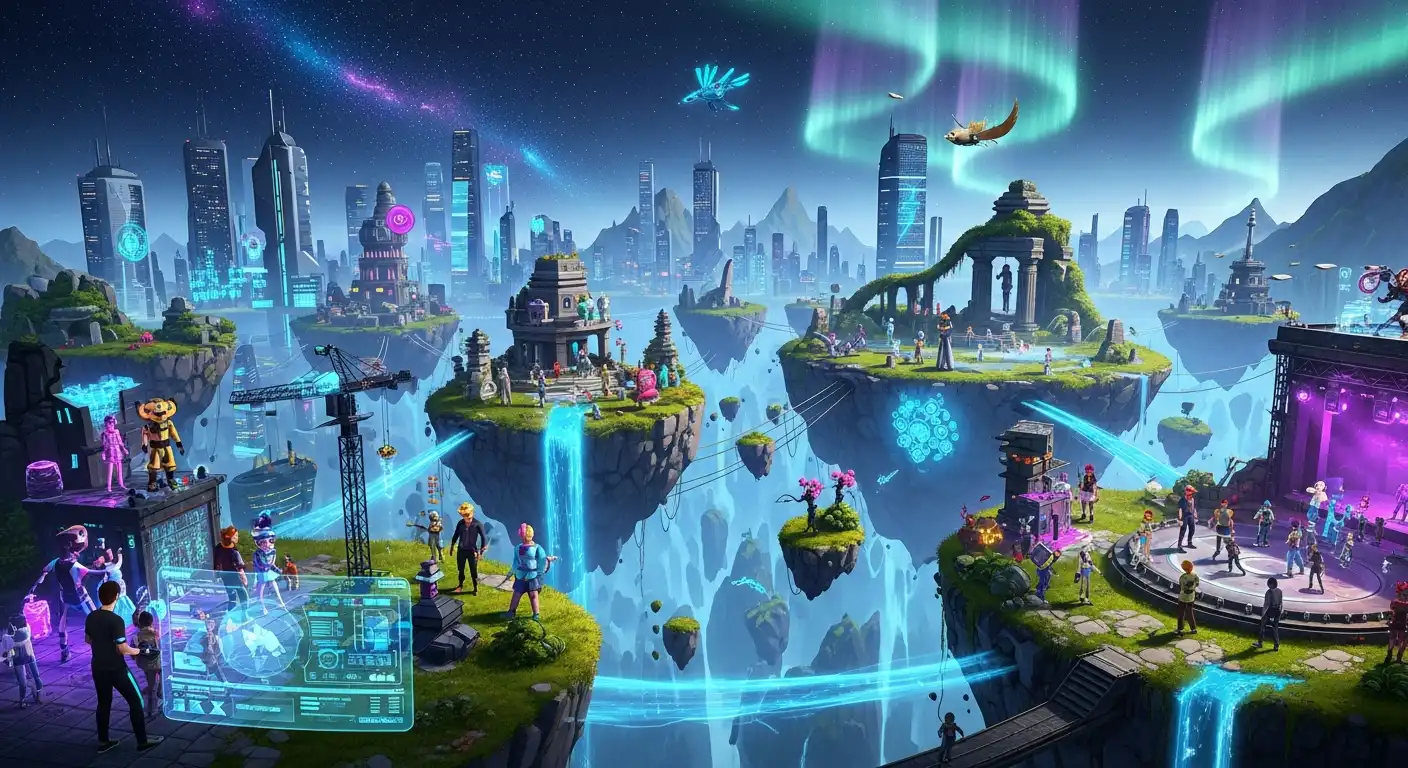
The initial frenzy around the “metaverse” may have cooled, but the foundational work of building the next iteration of the internet has only accelerated. By 2026, the metaverse will no longer be a vague buzzword; it’s a rapidly segmenting industry where specialized platforms are carving out dominant positions in gaming, social interaction, and enterprise collaboration. The leaders in this space aren’t just building virtual worlds; they’re creating the operating systems for our future digital lives.
The companies at the forefront are those with the vision, resources, and technical prowess to build immersive, persistent, and economically viable virtual spaces. They are tackling monumental challenges in hardware, software, and creator tooling. Here are the top 5 metaverse platform companies that are set to define this new frontier in 2026.
Meta Platforms, Inc. (Meta)
No conversation about the metaverse can begin without its most vocal and heavily invested champion, Meta. After rebranding from Facebook and pouring billions into its Reality Labs division, the company is all-in on building a consumer-focused, social metaverse accessible through its popular Quest line of VR headsets.
By 2026, Meta’s strategy will be bearing significant fruit, with the Quest 3 (and its likely successor) having achieved mainstream adoption and its Horizon Worlds platform maturing into a more robust social hub. Meta’s key strengths are:
- End-to-End Ecosystem Control: Meta designs the hardware (Quest headsets), develops the core operating system, and builds the flagship social platform (Horizon Worlds), giving it a powerful, Apple-like integrated advantage.
- Massive R&D Investment: With an unparalleled budget dedicated to solving the hard problems of VR/AR, Meta is pushing the boundaries of everything from photorealistic avatars to haptic feedback technology.
- Existing Social Graph: With billions of users across Facebook and Instagram, Meta has a massive built-in audience to onboard into its immersive experiences.
- Focus on Social Presence: The company’s primary goal is to perfect the feeling of “presence”—the sense of actually being there with someone else—which is the cornerstone of a successful social metaverse.
Target Application: Consumer-grade social VR, immersive entertainment (concerts, events), and the future of remote social interaction and gaming.
NVIDIA Corporation (NVIDIA)
While Meta is building the consumer-facing living room of the metaverse, NVIDIA is constructing its industrial and professional backbone. The company’s “Omniverse” platform is a powerful, real-time 3D design and simulation environment that is becoming the essential tool for building and connecting enterprise-grade virtual worlds.
NVIDIA’s vision isn’t about entertainment; it’s about creating “digital twins”—perfectly simulated virtual replicas of real-world factories, cities, and products. By 2026, Omniverse will be the standard for industrial metaverse applications. Its advantages include:
- Foundation in Graphics Leadership: As the world leader in GPUs, NVIDIA’s hardware provides the raw power needed to render complex, physically accurate virtual worlds.
- Focus on Interoperability: Omniverse is built on Universal Scene Description (USD), a framework pioneered by Pixar, allowing creators using different 3D tools (Blender, 3ds Max, etc.) to collaborate seamlessly in a shared virtual space.
- Digital Twin Mastery: Companies are using Omniverse to simulate manufacturing processes, train autonomous robots, and design new products with incredible efficiency, providing clear ROI.
- Developer and Enterprise Focus: NVIDIA is empowering the builders of the metaverse, providing the “plumbing” and tools that other companies will use to create their own experiences.
Target Application: Industrial design, advanced robotics simulation, factory and city-scale digital twins, and collaborative engineering in a shared virtual environment.
Epic Games, Inc. (Epic Games)
Fueled by the global phenomenon of Fortnite and the power of its Unreal Engine, Epic Games is championing a vision for a creator-driven, open, and interoperable metaverse. The company sees the metaverse not as a single-walled garden, but as a network of interconnected experiences built by millions of independent creators.
By 2026, Fortnite will have evolved far beyond a game into a persistent social platform, while Unreal Engine 5 (and its successor) will be the premier tool for building high-fidelity, photorealistic virtual worlds. Epic’s key strengths are:
- World-Class Creation Tools: Unreal Engine is the gold standard for creating breathtaking, real-time 3D graphics, powering everything from AAA games to Hollywood virtual productions.
- A Living, Breathing Proto-Metaverse: Fortnite is already a metaverse in practice, hosting live concerts, movie premieres, and social events for hundreds of millions of users.
- Creator-Centric Economy: Through tools like the Unreal Editor for Fortnite (UEFN), Epic is empowering creators to build and monetize their own experiences within its ecosystem.
- Advocacy for an Open Metaverse: Epic is a vocal proponent of interoperability and fair practices, challenging the closed-ecosystem models of Apple and Google.
Target Application: High-fidelity gaming, live virtual events, creator-monetized worlds, and serving as the primary engine for third-party metaverse development.
Roblox Corporation (Roblox)
Roblox is the dark horse that was a functioning metaverse long before the term went mainstream. With a platform built entirely on user-generated content (UGC), Roblox has created a massive, self-sustaining digital economy and a shared virtual space for over 70 million daily active users, primarily from a younger demographic.
As its user base ages up and its technology becomes more sophisticated, Roblox is poised to expand its dominance in 2026 from a kids’ gaming platform to a metaverse for all ages. Its unique advantages are:
- Thriving Creator Economy: Roblox has a deeply entrenched economy where millions of developers build and sell experiences and virtual items, providing a powerful incentive loop.
- Massive and Engaged User Base: Its huge daily user numbers provide an incredible network effect, making it the de facto digital hangout for its demographic.
- Cross-Platform Nativism: The platform works seamlessly across mobile, desktop, and VR, allowing users to connect from virtually any device.
- Expansion into New Verticals: Roblox is actively pushing into education, virtual concerts, and brand partnerships (e.g., “Nikeland”), broadening its appeal to older audiences and corporate partners.
Target Application: User-generated gaming and social experiences, immersive brand activations, and the future of interactive education and virtual communities.
Microsoft Corporation (Microsoft)
Microsoft is taking a characteristically pragmatic and enterprise-focused approach to the metaverse. Instead of building a single consumer destination, the company is weaving immersive technologies into its existing suite of productivity tools, with Microsoft Mesh at the center of its strategy.
By 2026, Microsoft Mesh will be deeply integrated into Microsoft Teams, transforming remote work and collaboration for millions of professionals. Microsoft’s strength lies in its dominance of the enterprise software market:
- Enterprise Integration: By bringing the metaverse to where work already happens (Microsoft Teams), Microsoft is removing the friction for adoption in a professional context.
- Productivity Focus: The goal is not just to meet in VR, but to collaborate on 3D models, conduct immersive training, and design products, providing tangible business value.
- Hardware and Software Synergy: With its HoloLens augmented reality headset and deep expertise in cloud computing (Azure), Microsoft controls key parts of the enterprise technology stack.
- Gaming as a Trojan Horse: The acquisition of Activision Blizzard gives Microsoft an enormous foothold in consumer gaming, providing a parallel path to metaverse dominance alongside its enterprise efforts.
Target Application: Enterprise collaboration, remote work in VR/AR, immersive employee training, and professional-grade digital meetings.
Conclusion
The metaverse of 2026 will not be a single, monolithic entity but rather a “multi-verse” of interconnected platforms, each with a distinct purpose. While Meta and Roblox battle for the social and entertainment spheres, NVIDIA and Microsoft are building the powerful infrastructure for the industrial and professional worlds. At the center of it all is Epic Games, championing a creator-first vision that could ultimately tie them all together. The future of our digital existence is being built today, and these five companies are the primary architects.