Key Points:
- Low oxygen levels drastically lower blood sugar in mice and humans.
- Red blood cells act as a hidden “sink” for consuming glucose.
- Hypoxia tricks bone marrow into creating new, sugar-hungry cells.
- A chemical switch inside the cell speeds up sugar metabolism.
Scientists have solved a biological mystery that could change how we treat diabetes. For years, researchers knew that people living at high altitudes—where oxygen is lower—tend to have lower blood sugar and fewer cases of diabetes. A new study published in Cell Metabolism finally explains why: red blood cells are eating the sugar.
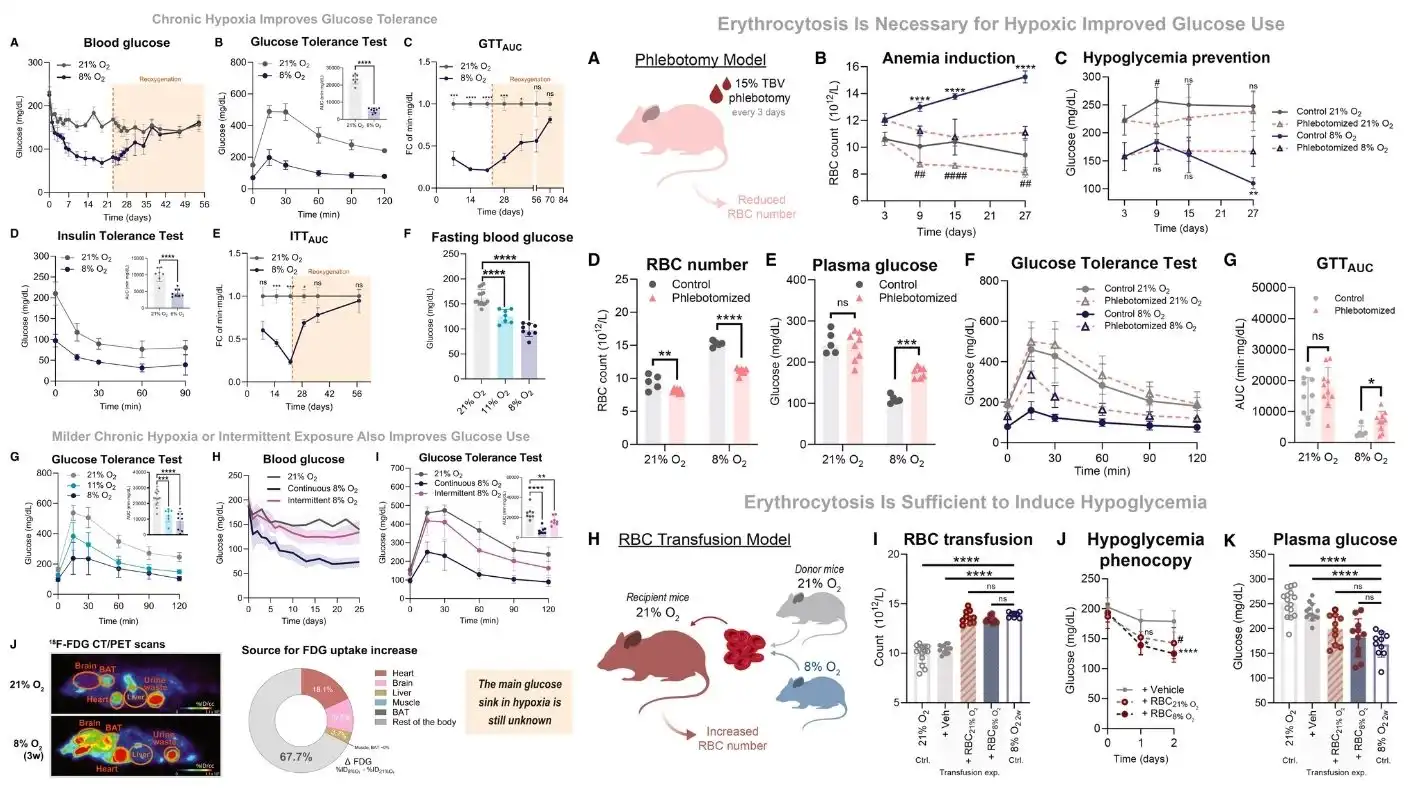
The research team started by observing mice in low-oxygen environments, known as hypoxia. They noticed a massive drop in blood sugar that insulin couldn’t explain. Scans of the major organs showed nothing, leaving 70% of the missing sugar unaccounted for. The team realized the answer was hiding in the blood itself. Red blood cells, which rely entirely on glucose for energy, were consuming it at high rates.
To prove this, the scientists ran “old-school” experiments. When they removed excess red blood cells from the hypoxic mice, their blood sugar returned to normal. Conversely, when they injected red blood cells into healthy mice, their blood sugar dropped. The connection was undeniable.
The study found that low oxygen changes how the body produces blood. Under hypoxic conditions, the bone marrow starts churning out a new generation of red blood cells that are “born hungry.” These new cells have significantly more transporters, or doors, that let sugar inside.
Inside the cell, a clever chemical trick occurs. When oxygen levels drop, proteins change shape and release enzymes that were previously stuck to the cell wall. These freed enzymes burn through sugar rapidly to create a molecule called 2,3-DPG, which helps the body release oxygen to tissues.
This discovery offers hope for diabetics. The researchers successfully reversed high blood sugar in diabetic mice by triggering this low-oxygen response. While blood transfusions aren’t a practical daily treatment, scientists believe they can develop drugs that mimic this effect, turning red blood cells into sugar-burning machines to help control diabetes.
Source: Cell Metabolism (2026).