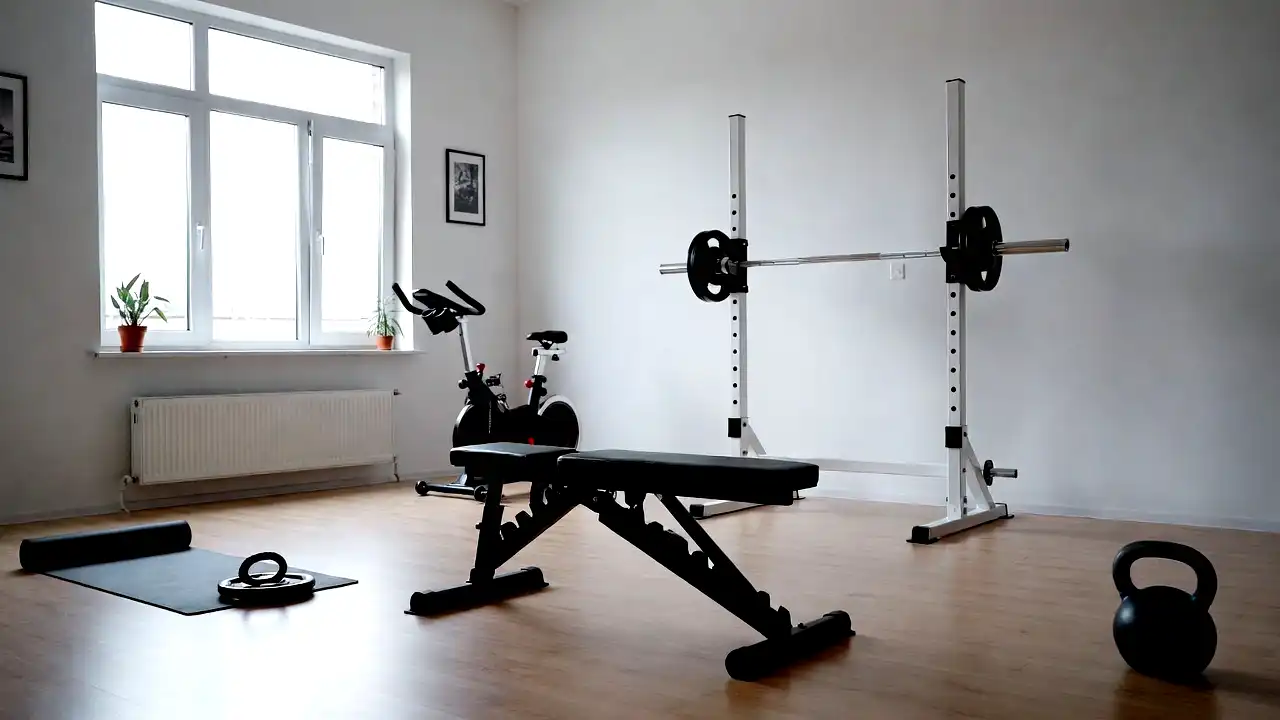
The fitness industry is built on a foundation of complexity. We are bombarded with commercials for smart mirrors that cost thousands of dollars, treadmills with television screens, and elaborate machines that isolate single muscles you didn’t even know you had. The underlying message is always the same: if you want to get fit, you need more. You need more gear, more space, and more money.
But the truth of physical culture, dating back to the ancient Greeks, is exactly the opposite. The human body does not require a labyrinth of chrome and pulleys to build strength, agility, and endurance. It requires resistance, consistency, and gravity.
In fact, the clutter of a commercial gym or an overstuffed home setup often works against us. It introduces “decision fatigue.” When you have fifty options, you spend ten minutes choosing one. When you have three options, you get to work.
This is the philosophy behind the Minimalist Home Gym. It is not about having less for the sake of deprivation; it is about having exactly what you need to achieve maximum results with the smallest possible footprint. It is about stripping away the non-essential to focus on the effective.
Whether you are living in a studio apartment, trying to reclaim your garage, or simply tired of the commute to a crowded commercial gym, this guide will walk you through how to build a sanctuary of strength that fits your life, your budget, and your goals.
The Philosophy of “Effective Minimalism”
Before we buy a single weight, we must establish the ground rules. A minimalist gym isn’t just a pile of random equipment shoved into a corner. It is a curated system. To build it successfully, you must subscribe to the principle of Functional Density.
Functional Density means that every object in your gym must serve multiple purposes. A leg extension machine has low functional density because it does one thing: extends the leg. A kettlebell has high functional density because it can be used for squats, swings, presses, rows, and carries.
In a minimalist setup, we prioritize:
- Compound Movements: Exercises that use multiple joints and muscle groups (e.g., squats, deadlifts, pushups).
- Free Range of Motion: Equipment that allows your body to move naturally, rather than locking it into a fixed path.
- Durability: Tools that will last a lifetime.
- Space Efficiency: Gear that can be tucked away, hung up, or looks good enough to sit in the corner of a living room.
Assessing Your Space and Budget
The beauty of the minimalist gym is its scalability. You don’t need a dedicated room. You need a “zone.”
The “Nook” Setup (20 sq. ft.)
If you live in a city apartment, your gym might be the space between your coffee table and your TV. Here, every inch counts. You need equipment that can slide under a couch or sit neatly on a small rack.
The “Garage/Basement” Setup (100+ sq. ft.)
If you have a bit more room, you can introduce heavier implements and permanent fixtures, like a mounted pull-up bar or a jump mat, but the principles of minimalism should still apply to keep the space usable for cars or storage.
The Budget Reality
You can build a world-class physique for under $500. You can build a very good one for under $200. We will break down the equipment into tiers so you can choose your entry point.
Tier 1: The Foundation (The Floor)
The most important piece of equipment in your gym is the ground beneath your feet. Before you buy weights, you must protect your body and your home.
The Importance of the Mat
Working out on carpet can lead to carpet burn and instability. Working out on hardwood or tile is slippery and dangerous for your joints.
- The Yoga Mat: If you are strictly doing bodyweight work and yoga, a high-density yoga mat is sufficient. Look for one that is at least 6mm thick for joint protection.
- Horse Stall Mats: For those lifting weights in a garage, this is the gold standard. These ¾-inch thick rubber mats (usually 4×6 feet) are sold at farm supply stores. They are cheaper than “gym flooring” and indestructible. They protect your concrete from cracking if you drop a weight and provide a stable, grippy surface.
Tier 2: The King of Minimalism (The Kettlebell)
If you were stranded on a desert island and could only bring one piece of gym equipment, it should be the kettlebell. It is the ultimate tool for the minimalist because it bridges the gap between strength training and cardiovascular conditioning.
Why the Kettlebell Wins
Unlike a dumbbell, the center of gravity in a kettlebell is offset from the handle. This forces your stabilizer muscles to work overtime with every repetition.
- The Swing: This single movement targets the entire posterior chain (hamstrings, glutes, back) and spikes your heart rate faster than running, all without your feet leaving the ground.
- The Get-Up: The Turkish Get-Up promotes shoulder stability, core strength, and total body coordination.
What to Buy
Avoid plastic kettlebells filled with sand; they break and feel terrible to use. Buy a cast-iron kettlebell.
- For Men: Start with one 16kg (35lb) bell.
- For Women: Start with one 8kg (18lb) or 12kg (26lb) bell.
Eventually, you may want a pair, but one is enough to build an entire fitness routine around.
Tier 3: Variable Resistance (Resistance Bands)
Resistance bands are often dismissed as tools for the elderly or for rehabilitation. This is a massive mistake. For the minimalist, they are indispensable. They weigh nothing, cost very little, and provide “accommodating resistance”—meaning the exercise gets harder as you stretch the band, matching your muscle’s natural strength curve.
Types of Bands
- Loop Bands (Power Bands): These are thick, continuous loops of rubber. They are essential for assisted pull-ups, mobility work, and adding resistance to pushups or squats.
- Tube Bands with Handles: These mimic cable machines found in commercial gyms. They are excellent for isolation exercises like bicep curls, tricep extensions, and face pulls.
The Door Anchor
Ensure your band set comes with a door anchor. This small foam attachment allows you to shut the band in a doorframe, instantly turning any door into a high-pulley or low-pulley machine. This unlocks vertical pulling movements (like lat pulldowns), which are otherwise impossible to do at home without a pull-up bar.
Tier 4: The Upper Body Essential (The Pull-Up Bar)
A strong back is the foundation of a healthy posture, especially for those who work at desks. Gravity is the best tool for building a back, but you need something to hang from.
The Options
- Doorway Leverage Bar: These hook onto the trim of your doorframe. They require no drilling and can be taken down in seconds. This is the best option for renters.
- Mounted Bar: If you own your home and have a garage or a sturdy wall, a mounted bar is more stable and allows for dynamic movements like kipping or weighted pull-ups.
If you cannot do a pull-up yet, do not skip this purchase. Use the Loop Bands from Tier 3 to assist you. Loop the band over the bar, put your foot in the loop, and let it help you up. This is far superior to the “assisted pull-up machine” at the gym because it forces you to stabilize your core.
Tier 5: The Heavy Hitters (Adjustable Dumbbells)
Eventually, you may want to move beyond the kettlebell and bodyweight. You want to press, row, and squat with traditional loads. In a commercial gym, you see a rack of dumbbells ranging from 5 to 100 pounds. This takes up an entire wall.
In a minimalist gym, you replace that entire wall with one pair of Adjustable Dumbbells.
The Investment
These are pricey, ranging from $300 to $800, but they are the most space-efficient purchase you can make. Brands like PowerBlock, Bowflex, or Nuobell allow you to change the weight from 5lbs to 50lbs (or more) with the click of a dial.
This allows for “Progressive Overload”—the scientific principle that to get stronger, you must gradually increase the stress placed on the body. Adjustable dumbbells allow you to micro-load your lifts in a way that kettlebells do not.
Tier 6: The Cardio Solution (The Jump Rope)
Treadmills are the enemy of the minimalist. They are expensive, loud, require maintenance, and turn into clothes hangers. Ellipticals are even worse.
The most effective tool for cardiovascular health takes up the space of a coiled snake and costs less than $20: the Jump Rope.
Why Jumping Rope?
Ten minutes of jumping rope burns roughly the same number of calories as 30 minutes of jogging. It improves bone density, coordination, agility, and calf strength. It forces you to maintain an upright posture, unlike the hunched position often adopted on stationary bikes.
Get a simple PVC “speed rope.” Avoid the weighted leather ropes or beaded ropes initially; speed ropes are easier to learn on and hurt less when you inevitably whip yourself in the shins.
Putting It All Together: The Setup
Now that you have the gear, how do you arrange it? A minimalist gym should not look like a storage locker. It should look inviting.
Storage Solutions
- The Basket: A nice woven basket or a small wooden crate can hold your bands, jump rope, and foam roller. It looks like furniture, not gym equipment.
- The Mat Hook: If you use a yoga mat, install two hooks on the wall to hang it flat, or roll it up and put it in the basket.
- Floor Space: Keep the floor clear. The psychological barrier of having to “clean up” before you work out is a habit-killer. The space should be ready to go.
The Atmosphere (Sensory Inputs)
Gyms are designed with bright lights and loud music to stimulate the nervous system. You need to recreate this trigger.
- Lighting: If you are in a garage, get a bright LED shop light. If you are in a living room, open the blinds. Do not work out in the dark; it signals sleep to the brain.
- Sound: Invest in a decent Bluetooth speaker. Headphones are fine, but a speaker fills the room and changes the energy of the space.
Sample Workouts: Utilizing the Minimalist Setup
Having the gear is only step one. Knowing how to combine them is where the magic happens. Here are two workout structures that utilize this specific equipment list.
Workout A: The “Kettlebell & Bodyweight” Grinder (Endurance/Conditioning)
Time Cap: 20 Minutes (As many rounds as possible)
- Kettlebell Swings: 15 reps (Posterior chain cardio)
- Pushups: 10 reps (Upper body push)
- Goblet Squats (holding KB): 10 reps (Lower body push)
- Pull-ups (or Banded Lat Pulldowns): 5 reps (Upper body pull)
- Jump Rope: 50 turns.
Workout B: The “Dumbbell Strength” Focus (Hypertrophy/Strength)
5 Rounds, Rest 90 seconds between rounds
- Dumbbell Floor Press: 8-12 reps (Chest/Triceps)
- Dumbbell Bulgarian Split Squat: 8 reps per leg (Quads/Glutes)
- Single Arm Dumbbell Row: 10 reps per arm (Back/Biceps)
- Dumbbell Overhead Press: 8-10 reps (Shoulders)
The Hidden Component: Digital Minimalism in the Gym
One of the greatest advantages of a home gym is the lack of distractions. There are no people waiting for machines, no unwanted conversations, and no “gym fails” being filmed in the background. However, you bring the biggest distraction with you: your phone.
In a minimalist gym, your phone should be a tool, not a toy.
- Use it for a Timer: Download a specialized interval timer app.
- Use it for Music: Set a playlist and leave it.
- Do Not Doom-Scroll: Resting between sets is for recovering your ATP (energy) stores, not for checking Instagram. Scrolling lowers your dopamine baseline and reduces your drive to push hard in the next set. Put the phone in “Do Not Disturb” mode or leave it across the room.
Maintenance and Longevity
Minimalist equipment is robust, but it requires basic care to last a lifetime.
- Cast Iron: If your kettlebells or dumbbells are in a garage, they are susceptible to rust due to humidity. Once a month, wipe them down with a rag and a tiny bit of 3-in-1 oil.
- Bands: Rubber dries out and cracks over time. Keep them out of direct sunlight when not in use. Check them for micro-tears before every workout to avoid a snap-back injury.
- The Floor: Keep your mats clean. Dust and grit make them slippery. A simple mix of water and vinegar works wonders.
What You Do NOT Need (The Anti-Shopping List)
To stay true to the minimalist ethos, you must know what to avoid. The fitness industry is great at inventing problems to sell you solutions.
- Ab Machines: Your abs are made in the kitchen and strengthened through compound lifts and simple planks. You do not need an “ab roller” or a crunch rocker.
- Bosu Balls: Unless you are rehabbing a specific ankle injury, unstable surface training usually just reduces your force output. Stand on the floor.
- Fancy Cardio Machines: Unless you are a competitive rower or cyclist, these giant clothes hangers are unnecessary. Burpees, jump rope, and kettlebell swings provide better conditioning for $0.
- Weight Gloves: Developing calluses is part of the process. Gloves reduce your tactile connection to the weight (proprioception) and can actually weaken your grip strength over time.
Overcoming the “Home Gym” Mental Block
The biggest challenge of a home gym isn’t the equipment; it’s the mindset. When you are at the gym, you are in “work mode.” When you are at home, you are in “relax mode.” Blurring these lines can be difficult.
The “Doorframe” Trigger
Create a psychological trigger. When you step onto your yoga mat or enter your garage, you are no longer a parent, a partner, or an employee. You are an athlete. Some people use a specific song to start the session. Others change into specific “gym clothes” even if they are alone. Do not work out in your pajamas. The act of changing clothes signals to your brain that it is time to perform.
Conclusion
Building a minimalist home gym is an act of independence. It liberates you from monthly fees, from the commute, from the waiting, and from the judgment of others. It strips fitness down to its rawest, most honest form: you against gravity.
By focusing on high-value, versatile equipment like kettlebells, bands, and pull-up bars, you acknowledge a fundamental truth: the machine is not the equipment. The machine is you.
You do not need a room full of chrome to build a body of steel. You need a few square feet, a few heavy objects, and the discipline to pick them up. Start small, buy quality, and focus on the movement. Your best workout is waiting for you in your living room.