Key Points:
- Google is merging its GFiber unit with Astound Broadband to create a new independent company.
- Investment firm Stonepeak will become the majority owner of this combined business.
- Google will retain a minority stake and remain invested in the venture’s future.
- The deal aims to accelerate national expansion to meet rising demand for AI and high-speed internet.
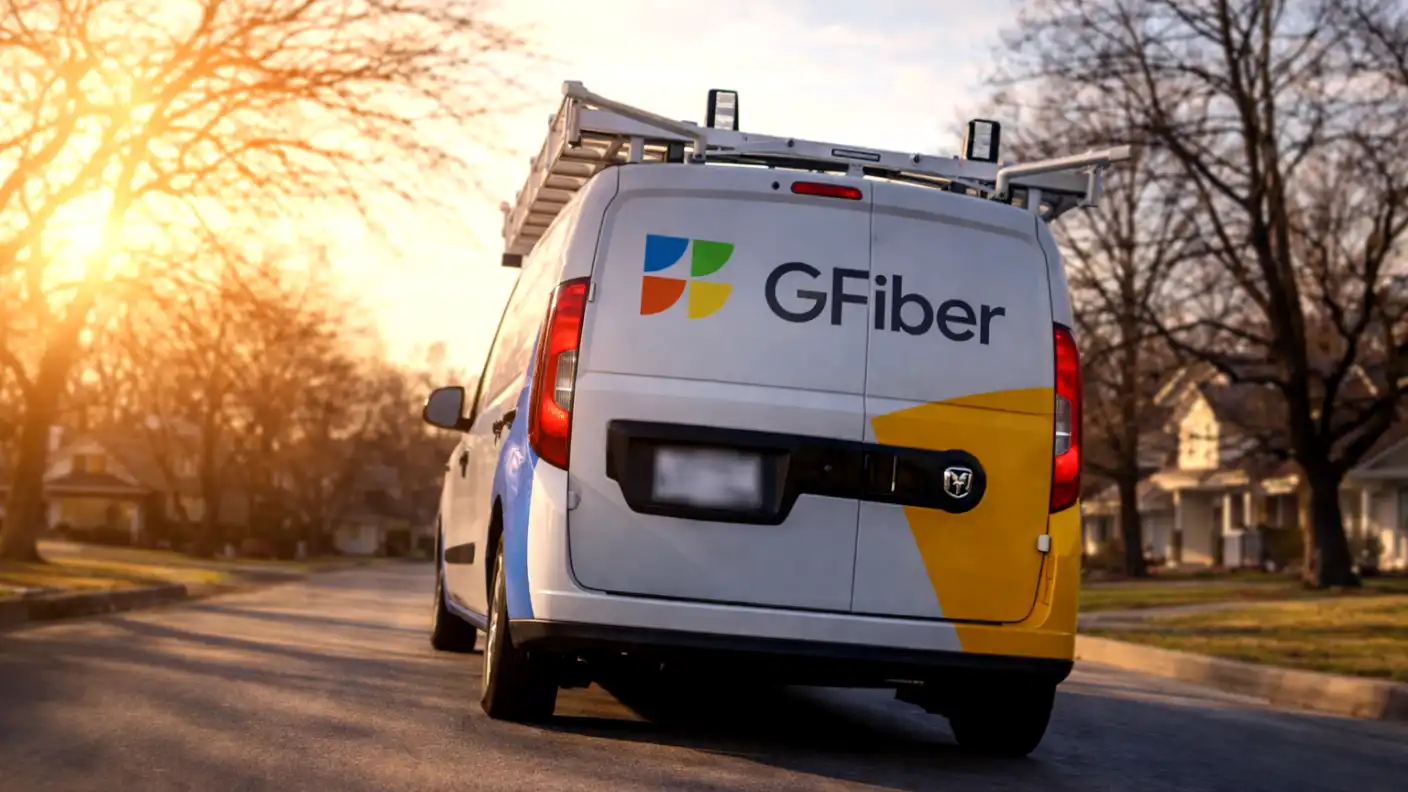
Google announced a massive restructuring of its high-speed internet business on Wednesday. The company plans to combine its long-running GFiber unit with Astound Broadband. This merger creates an independent internet service provider, with the investment firm Stonepeak stepping in as the majority owner. Google will not walk away entirely, as it plans to keep a minority stake in the new organization.
Management expects the deal to close by the end of the fourth quarter. The current executive team at GFiber will lead the new company, bringing their extensive experience in fiber-optic innovation to manage the massive combined network footprint. This partnership provides the external capital necessary for the provider to expand its services much faster across the United States.
Google Fiber first launched in 2010. It started as an ambitious, high-profile project to deliver gigabit-speed internet to American homes, famously beginning with a rollout in Kansas City in 2012. At that time, Google offered connection speeds far faster than what traditional U.S. cable companies provided. However, the project faced significant hurdles. The company eventually canceled several planned expansions and pivoted to focus on select markets instead of attempting a costly and time-intensive nationwide buildout.
This spinout marks a new chapter for the division, which has long lived inside Google’s “Other Bets” segment. That segment houses non-core assets like the Waymo robotaxi project and the drug discovery business, Isomorphic Labs. While Other Bets generated 1.54 billion dollars in revenue during 2025—less than half of one percent of Alphabet’s total sales—the segment also recorded a staggering operating loss of 16.8 billion dollars. Moving GFiber into an independent entity helps Alphabet clean up its balance sheet while allowing the internet business to operate with more financial freedom.
The demand for high-capacity internet networks continues to explode. Modern life requires massive bandwidth for streaming, cloud computing, and the rapidly growing field of artificial intelligence services. As AI applications become more complex, they require robust infrastructure to process information instantly. U.S. tech giants are currently racing to build transcontinental subsea cables and local fiber networks to keep pace with these bandwidth needs. By spinning off GFiber, Google positions the brand to secure the outside funding required to build that infrastructure at a much larger scale.
GFiber CEO Dinni Jain expressed excitement about the new corporate structure. He described the partnership with Astound and Stonepeak as the next natural step in a decade-long mission to change what customers expect from their internet service provider. Astound, a major U.S. cable and broadband operator, has been part of Stonepeak’s portfolio since the investment firm bought it for 8.1 billion dollars in 2021. Stonepeak brings deep expertise in infrastructure and real estate development to the table, which should help the new company overcome the logistical challenges of laying down fiber cables across the country.
Ultimately, this move reflects a broader trend among major tech firms. While Google originally wanted to build everything in-house, it now prioritizes financial independence for its specialized projects. By leveraging external capital and combining resources with established cable operators, Google Fiber can finally evolve from a regional experiment into a nationwide competitor in the high-speed internet market.