Key Points:
- Auto China 2026 features more than 2,000 companies and 1,451 vehicles, including 181 global debuts.
- Horizon Robotics launched a new 5-nanometer chip that saves carmakers $585 per vehicle and cuts development time by 10 months.
- XPeng plans to achieve fully driverless operations by early 2027 and sell 10,000 humanoid robots.
- Global brands like Volkswagen and BMW partnered with local tech firms to bring advanced AI features to Chinese buyers.
The Auto China 2026 show in Beijing proves that auto shows no longer just display new car models. Instead, companies focus entirely on new computing systems and artificial intelligence. This year, the massive event attracted more than 2,000 companies from 21 countries and regions. Automakers brought 1,451 vehicles to the exhibition floor, setting records with 181 global debuts and 71 concept cars. Chinese brands account for more than 60 percent of these global premieres.
Behind these huge numbers, the entire car industry faces a massive transformation. Car companies previously competed by offering different body styles or engine types. Today, they compete using artificial intelligence, software architecture, and system-level innovation. Chinese automakers now use their massive booth space to showcase their computer technology stacks just as much as their physical vehicles. Big domestic brands like BYD, Chery, and Geely rented out large standalone halls to prove they lead the pack in intelligent systems.
As batteries and electric motors become highly similar across different brands, companies must find new ways to stand out. Analysts note that artificial intelligence serves as the new battleground for customer attention. Geely showed off its full-domain AI 2.0 system at the event. SAIC’s Roewe brand showcased new AI-based in-car applications to be developed in partnership with software developer Volcano Engine. Meanwhile, Huawei presented its automotive business as an independent brand, showing off cars that run entirely on its Harmony operating system.
Features like smart cockpits and large language models now connect directly into a vehicle’s main computer brain. XPeng CEO He Xiaopeng gave one of the clearest explanations of this shift. He outlined his company’s new strategy focused on physical AI. He announced that XPeng’s newest model features full backup hardware that meets strict robotaxi standards. The company has already secured road testing permits in Guangzhou to test these features in the real world.
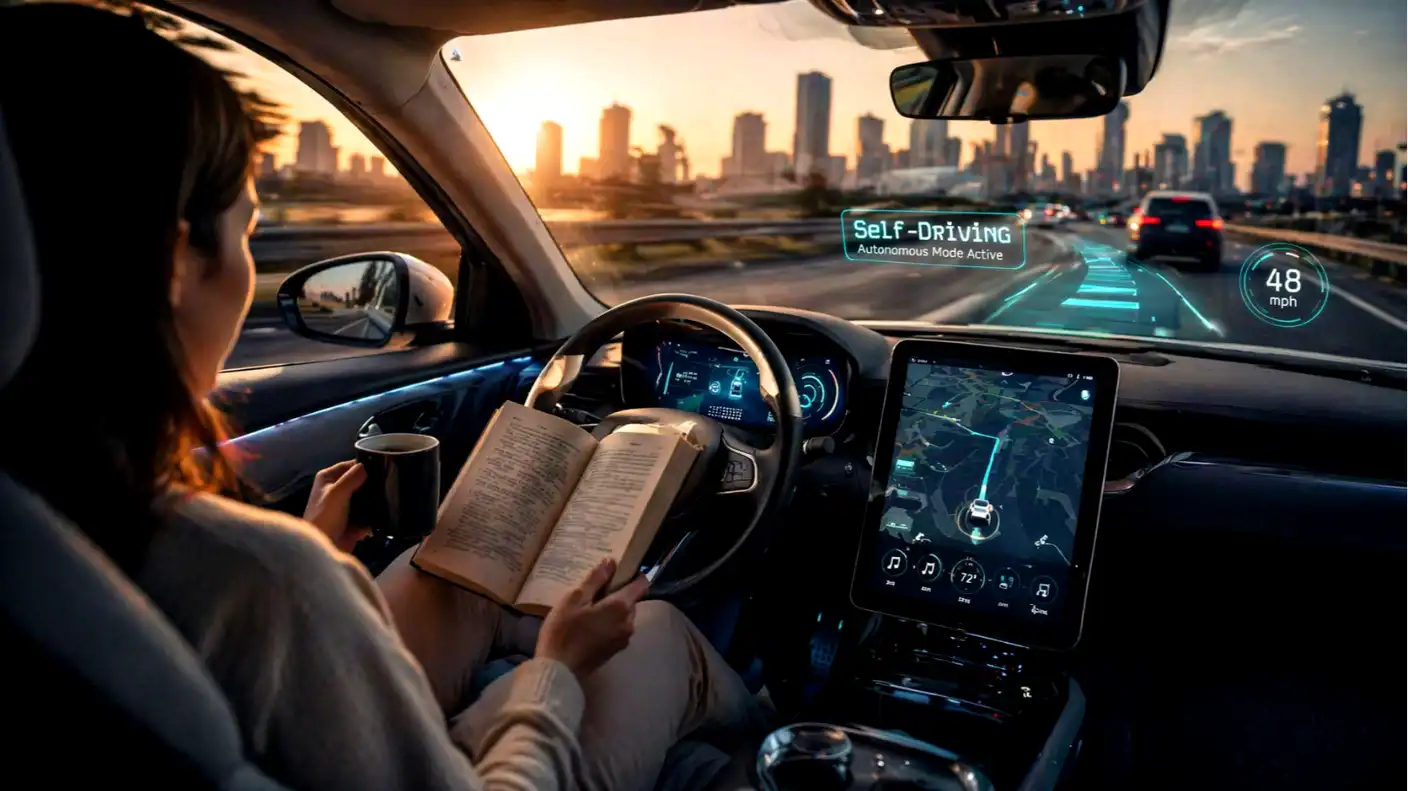
XPeng currently conducts regular Level 4 self-driving tests on public roads. The company plans to put regular passengers in these cars with safety drivers later this year. By early 2027, XPeng wants these cars to drive completely without human help. The CEO also wants to remove physical AI from the car entirely. XPeng engineers currently build humanoid robots to work in retail stores. The company hopes to sell more than 10,000 of these robots by 2027.
This push into robotics highlights a new reality for automakers. The physical hardware of cars improves very slowly these days. Software, especially artificial intelligence, now drives the biggest changes in how cars feel and operate. This massive shift forces carmakers to completely redesign the hidden computers inside their vehicles.
Two days before the auto show officially opened, Horizon Robotics introduced its new Starry chip. Engineers built this powerful brain using an advanced 5-nanometer manufacturing process. The chip delivers 650 TOPS of computing power. This means a single chip runs both the self-driving systems and the smart dashboard screens simultaneously.
Combining these different computer systems saves companies a lot of money and time. Horizon Robotics executives say this integrated design cuts vehicle costs by up to 4,000 yuan, which equals about $585. It also reduces the time required to develop a new car from 18 months to just 8 months. More than 10 major manufacturers, including Volkswagen, Bosch, BYD, and Chery, already want to buy this new chip.
For the first time, parts suppliers and car manufacturers share the same exhibition halls. This layout change proves that battery makers and chip companies hold much more power than they did in the past. They no longer hide in the background. CATL built a massive 1,500-square-meter technology zone right at the entrance to a main hall to showcase its new solid-state and sodium-ion batteries. Other major parts suppliers, like Bosch, offer complete software solutions rather than just physical car parts.
International car companies also realize they must adapt to China’s fast-moving software market. Volkswagen Group CEO Oliver Blume announces that his company will move beyond simple electric motors and offer agentic AI to everyone. He promised that Volkswagen’s new in-car AI Agent will arrive in locally built cars starting this year. The system uses a locally trained language model to understand complex driver commands.
BMW Group CEO Oliver Zipse shared a similar strategy for the Chinese market. He explained that BMW integrates local software from partners like Momenta and Alibaba directly into its cars. Zipse believes artificial intelligence will define the entire future of driving. He noted that future cars will learn human habits and automatically slow down before a turn. He says advanced computers and driving pleasure go hand in hand perfectly.