Key Points:
- The Beijing Auto Show features exactly 1,451 vehicles across 380,000 square meters of exhibition space.
- High global oil prices caused by Middle East conflicts make electric vehicles highly attractive to consumers.
- Chinese automakers shipped 371,000 electric vehicles to foreign markets in March alone, doubling last year’s total.
- Chinese drivers report dropping their daily commuting costs by 90% after switching to battery power.
Beijing currently hosts the world’s largest auto show, and the focus rests entirely on new energy vehicles. Turmoil in the Middle East and skyrocketing fuel prices give drivers massive financial reasons to abandon traditional gasoline cars. Chinese automakers now offer competitive prices, modern designs, and smart technology that attract buyers from all over the world. The massive Beijing International Automotive Exhibition covers 380,000 square meters and features exactly 1,451 vehicles, showing the true scale of the electric revolution.
During the busy event, Chinese companies unveiled an impressive lineup of fresh electric models. BYD showed off the Formula S, Li Auto presented the L9 Livis, and NIO displayed the ES9. Traditional luxury brands also joined the electric race to survive in the modern market. Volvo brought the EX90, Volkswagen revealed the ID.ERA 9X and Nissan introduced the NX8. Conversations on the showroom floor completely changed this year. Buyers no longer ask about raw horsepower. Instead, they want to know about battery capacity, charging speeds, and overall fuel savings.
Jaroslaw Kochanowski, a Polish automotive dealer, explained this shift while sitting inside a Zeekr 001 electric sedan. He noted that the ongoing conflicts involving America, Israel, and Iran pushed global oil and gas prices extremely high. He expects these high fuel costs to remain for a very long time. The International Energy Agency recently warned that the war in the Middle East has created a massive energy crisis and caused the largest oil supply disruption in history.
Kochanowski said ordinary people urgently need ways to save money, which is forcing them to seek affordable transportation. He believes electric vehicles provide the perfect logical step. Owners of electric cars gain a real sense of energy independence and stop worrying about fuel shortages. Homeowners can install solar panels on their roofs to generate their own electricity. They use this free solar power to charge their cars and dodge volatile oil prices entirely. As Kochanowski pointed out, a regular person can never produce their own gasoline.
Inside China, gasoline prices increased by 3.8% in March compared to last year. While the Chinese government managed to keep this price hike smaller than in other countries, local drivers still rush to buy electric cars to take advantage of cheap electricity. A resident named Wang shared how switching from a gas car to an NIO electric vehicle destroyed her daily commuting costs.
Wang stated that her energy costs dropped by more than 90%. Her electric car uses 17 kilowatt-hours of electricity to travel 100 kilometers. This trip costs her just 7 yuan, which equals about $1. Her old gasoline car burned 9.2 liters of fuel to drive the same distance, costing her roughly 78 yuan. She said choosing an electric vehicle for her family simply makes perfect financial sense right now.
Chinese electric vehicle manufacturers also experience massive success in overseas markets. Zeekr reported record export numbers during the first quarter of 2026. The company saw huge demand for its Zeekr 7X electric SUV in Australia. Australian drivers face tight fuel supplies and expensive petrol, making the Zeekr SUV one of the most popular premium vehicles in the country between January and March.
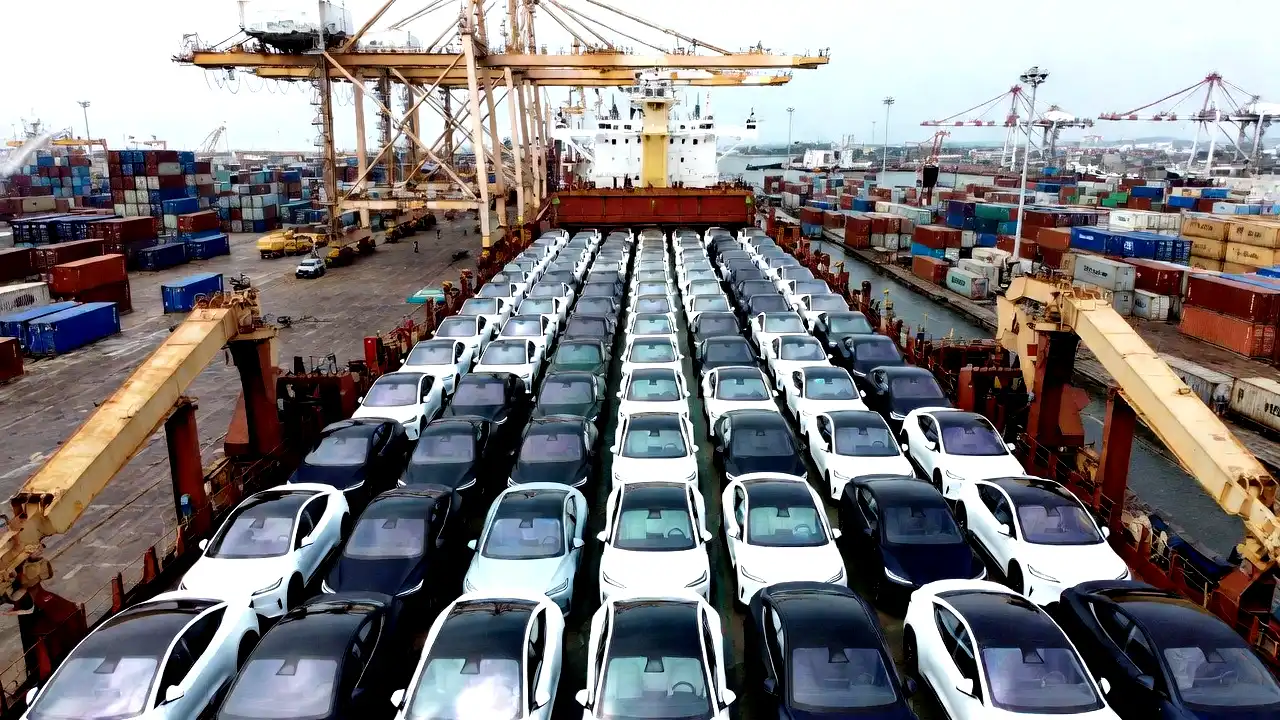
Overall, Chinese car exports easily beat expectations after the Middle East conflict escalated in late February. In March alone, Chinese automakers shipped 371,000 electric vehicles to foreign countries. This number more than doubles the export total from exactly one year earlier. Cui Dongshu, an executive at the China Passenger Car Association, explained that high oil prices highlight the true cost advantages of electric vehicles.
Cui noted that drivers save massive amounts of money over the entire lifespan of an electric car. The Chinese electric vehicle sector benefits from a strong supply chain and low manufacturing costs. In 2025, Chinese companies produced and sold over 16 million electric vehicles. These battery-powered cars captured more than 50% of all new-car sales in the country.
However, cheap driving does not represent the only reason people buy these cars. George, a young visitor from Hungary, closely examined the Xiaomi YU7 at the auto show. He said fuel prices did not motivate him at all. Instead, the incredible driving performance and modern technology captured his interest. Many young buyers view Chinese electric cars as highly advanced gadgets rather than just cheap transportation.
Despite booming sales, the global transition still faces major roadblocks in regions lacking adequate infrastructure. Kochanowski mentioned that public charging stations in Poland are expensive to use, which eats into fuel savings. Many countries still lack enough public chargers, leaving drivers with serious range anxiety.
Lang Xuehong, an executive at the China Automobile Dealers Association, said long charging times and broken stations frustrate new owners. To secure long-term global success, Chinese automakers must change their strategy. Lang said companies cannot simply ship cars overseas. They must export their entire industrial ecosystem, build local battery factories, and create reliable supply chains directly inside foreign countries.