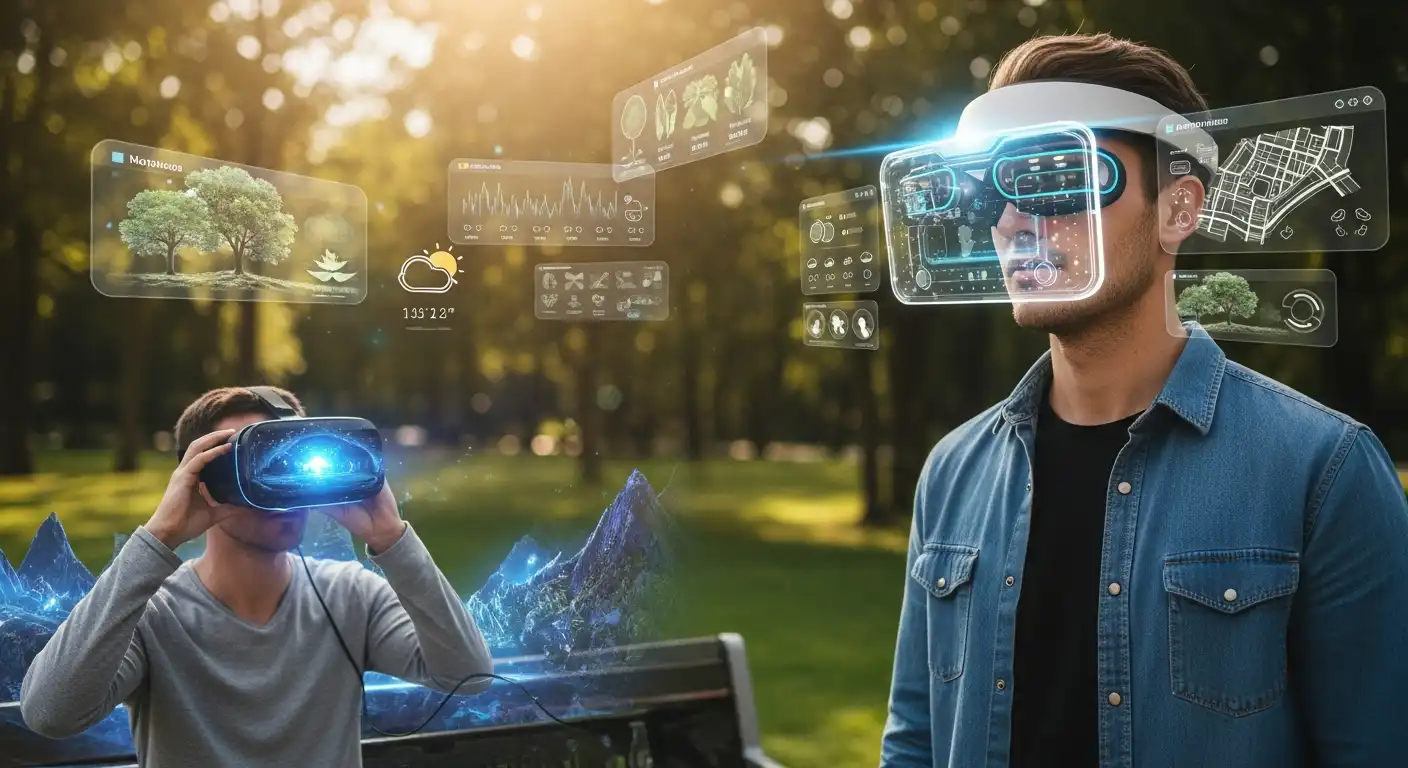
While virtual reality (VR) has struggled to gain mainstream traction, augmented reality (AR) is quietly finding practical applications and showing a clearer path to becoming a major computing platform. AR overlays digital information onto the real world, rather than immersing you in a completely virtual one. This subtle but crucial difference makes it more practical for everyday use and presents a compelling, long-term investment theme.
The Difference Between AR and VR
It’s important to understand the distinction. VR, like Meta’s Quest headset, completely blocks out the real world and transports you to a virtual environment. It’s great for gaming and immersive experiences, but can be isolating. AR, on the other hand, enhances your view of the real world. Think of the “Heads-Up Display” in a fighter jet or the yellow first-down line in a televised football game. It adds useful information to your reality.
AR on the Smartphone Today
For most people, the primary experience with AR today is through their smartphone. Think of Pokémon GO, where digital creatures appeared in the real world, or an app from IKEA that lets you see how a piece of furniture would look in your living room. These mobile AR applications are proving the utility of the technology and getting consumers comfortable with the concept.
The Enterprise and Industrial Use Case
The most significant near-term opportunity for AR is in the enterprise. A warehouse worker wearing AR glasses could see the optimal path to pick an item off a shelf. A surgeon could see a patient’s vital signs overlaid in their field of view during an operation. An engineer can receive remote assistance from an expert who can see what they see and draw instructions based on their vision. These applications can deliver a clear and immediate return on investment.
The Holy Grail: AR Glasses
The ultimate goal for AR is a pair of lightweight, stylish glasses that can be worn all day, replacing the smartphone as our primary interface with the digital world. This is the vision that companies like Apple (with its Vision Pro, which has AR capabilities), Google, and Meta are all chasing. The technological challenges are immense, from battery life to processing power. Still, the company that cracks this will have created the next major computing platform.
How to Invest in the AR Trend
Investing in AR today is a long-term game. There are very few pure-play AR companies. The best way to invest is through the large tech giants that are making massive investments in the space. Apple is a key player to watch with its development of the Vision Pro and future AR products. The companies that provide the key components for AR devices, such as specialized lenses, sensors, and low-power chips, are another crucial part of the ecosystem.
Conclusion
Augmented reality has the potential to be more transformative than virtual reality because it enhances our world rather than replacing it. While the dream of consumer AR glasses remains years away, practical applications in the enterprise and on our smartphones are available today. For long-term investors, AR represents a foundational shift in how we will interact with technology.