

Key Points:
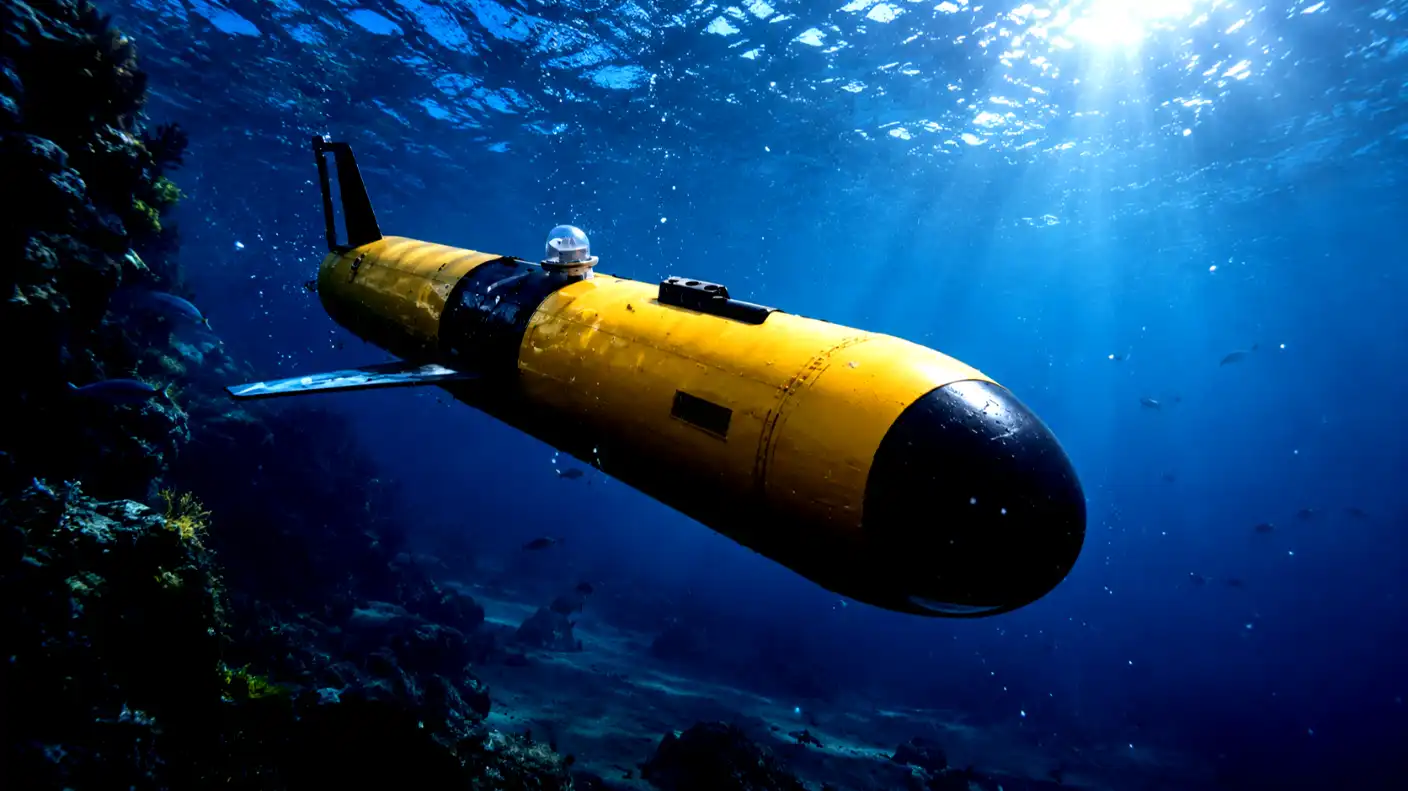
- The AUKUS security alliance has officially launched its first Pillar Two signature project: the joint development of Uncrewed Undersea Vehicles (UUVs).
- The trilateral initiative aims to deploy advanced underwater drones to protect critical subsea communication cables and energy pipelines by 2027.
- UK Defense Secretary John Healey announced that Britain will contribute £150 million ($201 million) to accelerate the project’s technical pipeline.
- Australian Defense Minister Richard Marles warned that the “seabed is becoming a battlefield,” citing an unprecedented rise in covert attacks and Russian submarine activity.
The trilateral security partnership between Australia, the United Kingdom, and the United States (AUKUS) has officially taken a major step to secure the global seabed. On the sidelines of the Shangri-La Dialogue security summit in Singapore on Monday, June 1, 2026, defense ministers from the three nations announced the AUKUS Underwater Drone Project. This landmark initiative represents the first concrete, joint-development deliverable under Pillar Two of the alliance, which focuses on advanced technology and military science. By deploying automated systems to patrol the ocean floor, the allies intend to build a high-tech shield to defend the vital digital and energy pipelines that connect modern civilization.
The announcement comes amid stark warnings that the ocean floor has transitioned into a highly volatile geopolitical front line. Australian Defense Minister Richard Marles used some of the most combative language of the summit to describe why the unmanned undersea vehicle (UUV) project was necessary. Marles warned delegates that over the past 18 months, the world has witnessed a series of covert attacks against subsea critical infrastructure at a scale and frequency that is historically unprecedented. “The seabed is becoming a battlefield. The shadow fleet is becoming a weapon,” Marles told the summit, emphasizing that island nations are acutely vulnerable to these hidden operations.
To counter these maritime threats, the three partner nations will accelerate their technological cooperation to deploy the first advanced UUV systems by next year, 2027. While the allies have kept the total cost of the project confidential, UK Defense Secretary John Healey confirmed that Britain will contribute £150 million, which equals roughly $201 million, to fund the initial phase. While the initial £150 million budget represents roughly 1.5% of the UK’s overall annual defense procurement spending, the strategic return remains immense. Acknowledging previous criticisms that the alliance has been slow to transition from conceptual discussions to real-world hardware, Healey remarked, “For too long in AUKUS, we talked too much and delivered too little. That has now changed under our three governments.”
The joint development program will focus on creating a suite of highly adaptable, multi-mission payloads and advanced enabling systems for each country’s existing UUV fleets. These technologies will include cutting-edge underwater sensors, autonomous navigation software, and high-precision weapon systems. By pooling their defense industrial bases, the three nations plan to build standardized hardware capable of performing complex tasks, including automated threat detection, mine countermeasures, electronic warfare, and anti-submarine reconnaissance. This system-level integration will allow the allies to maintain undersea superiority and rapidly deploy shared assets across both the Indo-Pacific and the Euro-Atlantic.
The primary driver behind this military urgency is the extreme vulnerability of global digital communications. Currently, over 95% of the world’s internet traffic and financial data flows through a vast, highly fragile network of publicly known undersea cable systems. These underwater networks serve as the literal arteries of the modern global economy, carrying trillions of dollars in real-time transactions. In the United Kingdom alone, telecoms minister Liz Lloyd recently highlighted that over £1.4 trillion in daily economic transactions rely entirely on subsea cable connectivity, making any physical disruption a potentially catastrophic economic disaster.
Security officials warn that these critical links are increasingly targets of deliberate sabotage. Over the past 18 months, regional authorities have documented a disturbing pattern of suspicious activity near seabed cables, including five instances of severed cables in the Taiwan Strait and three in the Baltic Sea. Furthermore, the UK Defense Secretary recently disclosed that the Royal Navy, working alongside allied forces, tracked three Russian submarines operating covertly within the North Atlantic to survey and map subsea cable routes. As a result, the UK government is currently consulting on plans to introduce much tougher fines and prison sentences for any commercial vessel that recklessly damages subsea infrastructure.
This sudden consensus on undersea security has triggered a broader wave of international cooperation beyond the AUKUS alliance. On the sidelines of the Singapore summit, Singapore led the launch of the Guiding Principles for Underwater Infrastructure Defence Exchanges (GUIDE). This new, cross-regional framework brings together 17 countries spanning Southeast Asia, Europe, Oceania, and the Gulf. Designed to facilitate real-time information sharing and practical defense cooperation on seabed security, the GUIDE initiative proves that governments worldwide are finally recognizing the vital importance of protecting their digital highways from hostile, state-sponsored disruption.
In tandem with the Pillar Two drone project, the defense ministers also announced a subtle but significant change to the submarine acquisition plan under AUKUS Pillar One. Instead of purchasing a mix of new and used conventionally armed, nuclear-powered submarines as previously planned, Australia will now buy three secondhand Virginia-class submarines directly from the United States. Deputy Prime Minister Richard Marles explained that transitioning entirely to used vessels will significantly simplify supply chain management, reduce maintenance and training overheads, and maximize immediate cost efficiencies for the Australian taxpayer.
Ultimately, the launch of the AUKUS Underwater Drone Project marks a decisive and necessary transition in how democratic allies protect their sovereign interests. By moving past theoretical discussions and investing millions in automated, non-human defense systems, the United States, the United Kingdom, and Australia are building a highly resilient shield for the world’s digital infrastructure. As the first advanced UUV systems prepare to enter service in 2027, this joint program will serve as a vital case study for the future of robotic warfare. In an era where the seabed has officially become a front line, securing the ocean floor is no longer just about protecting territory—it is about securing the global flow of information itself.