
Key Points:
- SpaceX is pressuring its underwriting syndicate to accept a record-low IPO fee rate of less than 0.75% for its upcoming public listing.
- Despite the low percentage, Wall Street banks are still chasing a massive $500 million fee windfall due to the transaction’s historic size.
- The company adjusted its public valuation target to at least $1.8 trillion following extensive feedback from lead underwriters and investors.
- SpaceX plans to launch its formal investor roadshow on June 4, 2026, with the final offering price expected to be finalized by June 11, 2026.
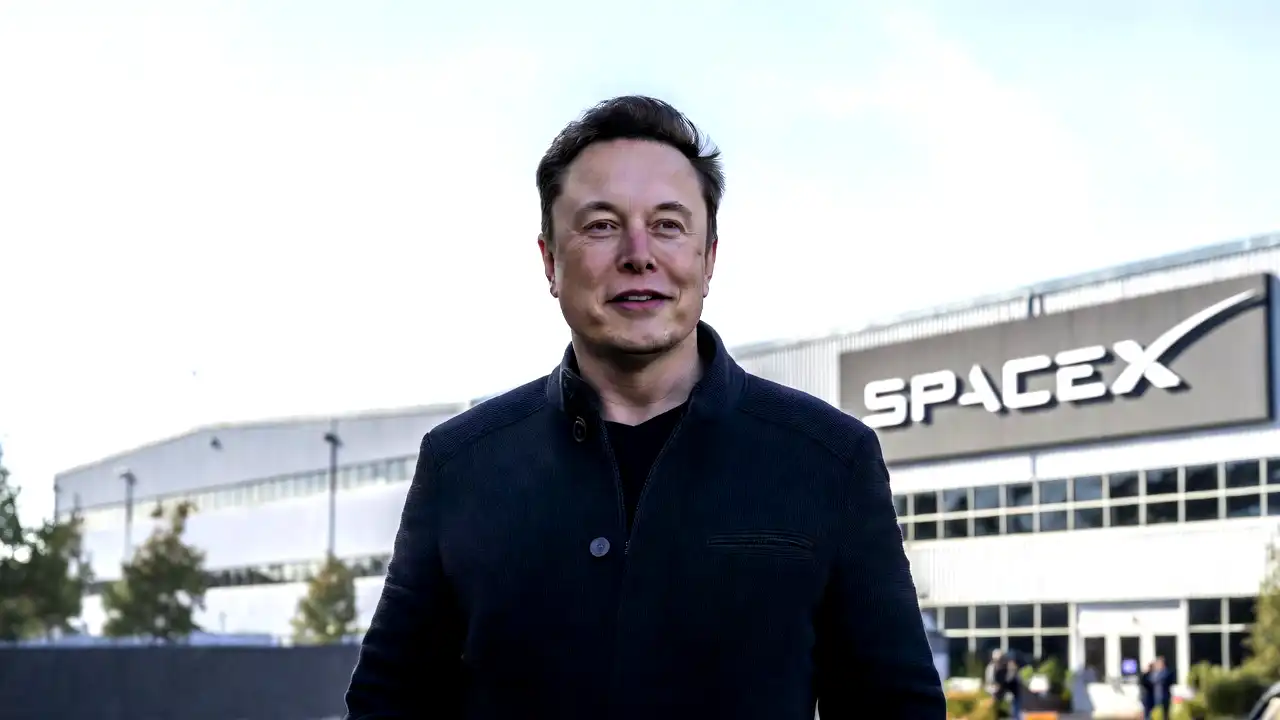
The highly anticipated public debut of Elon Musk’s aerospace and artificial intelligence empire is triggering an intense, unprecedented battle over Wall Street commissions. On Tuesday, June 2, 2026, Bloomberg reported that SpaceX is actively pressuring its underwriting syndicate to accept a record-low fee structure for its upcoming initial public offering (IPO) on the Nasdaq. According to sources familiar with the ongoing, private negotiations, the rocket and satellite giant is demanding an underwriting fee rate of less than 0.75%. If the major investment banks capitulate, this rate will mark the lowest underwriter commission percentage in modern financial history, rewriting the traditional rules of corporate listings.
While a sub-0.75% fee rate would represent a massive discount compared to standard industry practices, the sheer, astronomical scale of the transaction ensures that Wall Street’s top investment banks are still chasing a historic payday. SpaceX intends to raise to $75 billion through its upcoming public listing, which would easily establish the transaction as the largest IPO in global history, far surpassing Saudi Aramco’s record-breaking $29.4 billion raise in 2019. Consequently, even under a highly compressed fee structure, the participating underwriters are still poised to split a massive $500 million fee windfall, making it the most lucrative single capital-markets event of the year.
To put SpaceX’s aggressive fee demands in perspective, one must look at the historical economics of major public listings. For typical mid-sized corporate IPOs, Wall Street underwriters routinely charge gross spreads of 4% to 7% of the total capital raised. Even for historic mega-listings, banks usually secure much higher percentages; for example, Visa paid a 2.8% fee on its $17.9 billion IPO in 2008, Uber paid 1.3% on its $8.1 billion listing in 2019, and Facebook paid 1.1% on its $16 billion debut in 2012. Only General Motors’ $15.8 billion government-backed IPO in 2010 managed to match the 0.75% threshold. While the requested 0.75% underwriting fee represents a microscopic 1.5% of the overall global investment banking commission pool this year, the absolute dollar value remains immense.
Despite the highly compressed profit margins, the world’s most prestigious financial institutions are competing fiercely for a piece of the action. According to the company’s amended regulatory filings, SpaceX has assembled a powerful syndicate of 23 underwriters to manage the historic transaction. Goldman Sachs Group Inc. has secured the highly coveted “lead left” position on the prospectus, meaning the bank will oversee the critical task of final share allocation and pricing. Meanwhile, Morgan Stanley will serve as the IPO’s stabilizing agent, tasked with executing trades to steady the stock price during its crucial first weeks of public trading on the Nasdaq, where the stock will trade under the ticker symbol SPCX.
The intense fee negotiations coincide with strategic adjustments to the company’s target valuation. After extensive consultations with its lead underwriters and prospective institutional investors, SpaceX lowered its initial public valuation target to at least $1.8 trillion, down slightly from an earlier, highly ambitious target of over $2 trillion. Financial advisers noted that this minor valuation correction represents a pragmatic effort to ensure a strong, positive “first-day pop” when public trading begins, rather than risk overpricing the largest market debut in history, especially as other prominent tech firms prepare their own public listings.
The comprehensive IPO prospectus, which SpaceX made public on May 20, 2026, also offered a rare, detailed look at the consolidated financial performance of Musk’s combined business empire. In February, SpaceX completed a historic corporate merger, absorbing Musk’s artificial intelligence venture, xAI—along with the Grok chatbot and the social media platform X—at a combined valuation of $1 trillion. While the core company generated a healthy $18.7 billion in revenue in 2025 (up from $14 billion in 2024), driven largely by $11.4 billion from its Starlink satellite internet division, the heavy capital expenditures required to build out massive AI data centers resulted in a consolidated net loss of $4.94 billion for the year and a further $4.3 billion loss in the first quarter of 2026.
These heavy financial losses have not slowed down the company’s commercial and governmental momentum. On Friday, May 29, 2026, the U.S. Space Force awarded SpaceX a massive $4.16 billion contract for its “Space-Based Advanced Moving Target Indicator” program. This high-profile defense contract will utilize SpaceX’s launch services and advanced satellite networks to build out highly secure orbit-to-ground tracking systems. This major contract win, combined with the successful flight testing of its massive Starship rocket, has reinforced investor confidence ahead of the upcoming IPO roadshow, proving that the company is an indispensable partner to the U.S. national security apparatus.
With the preliminary paperwork completed, the financial community is bracing for the final stages of the IPO process. SpaceX plans to officially launch its formal investor roadshow on Thursday, June 4, 2026, giving executive leadership a highly publicized platform to pitch the $1.8 trillion opportunity directly to sovereign wealth funds, pension plans, and large-scale mutual funds. Under the current schedule, underwriters expect to finalize the official offering price as early as June 11, 2026. However, sources note that the company could delay the final trading timeline by a few days to digest investor feedback fully.
Ultimately, the successful execution of this historic IPO will establish a new benchmark for corporate listings. By pairing a historic $1.8 trillion valuation target with a compressed fee structure under 0.75%, Elon Musk is proving that the sheer scale of his corporate empire can rewrite the rules of modern investment banking. For the 23 underwriters anchored to the deal, splitting a massive $500 million commission pool represents a highly lucrative compromise. As the planned June 12 Nasdaq listing date draws near, the global financial community will watch closely to see whether this high-volume transaction can successfully revitalize the broader IPO market, proving that, in the modern economy, SpaceX dictates the terms of both orbit and finance.