

Key Points:
- Chinese cultural intellectual property (IP), including designer toys, gaming, and animation, is experiencing a massive surge in popularity across Europe.
- Chinese toy brand Pop Mart reported a staggering 506.3% revenue jump in Europe for 2025, driven by the viral social media success of characters like Labubu.
- The animated blockbuster Ne Zha 2 dominated the 2025 global box office, generating nearly 15.95 billion yuan ($2.36 billion) in worldwide revenue.
- Game Science’s Black Myth series has sparked widespread curiosity about Chinese mythology, prompting young European gamers to read traditional literature.
A powerful cultural shift is sweeping through Europe’s retail, entertainment, and gaming sectors as Chinese intellectual property (IP) captures the imagination of a new generation of consumers. Spanning highly detailed designer toys, cinematic animated blockbusters, and state-of-the-art video games, these cultural exports have successfully crossed geographical boundaries to establish deep connections with European audiences. This massive global expansion is no longer just about manufacturing; it is a highly sophisticated, content-driven push transforming how young Europeans engage with Eastern history, mythology, and modern design.
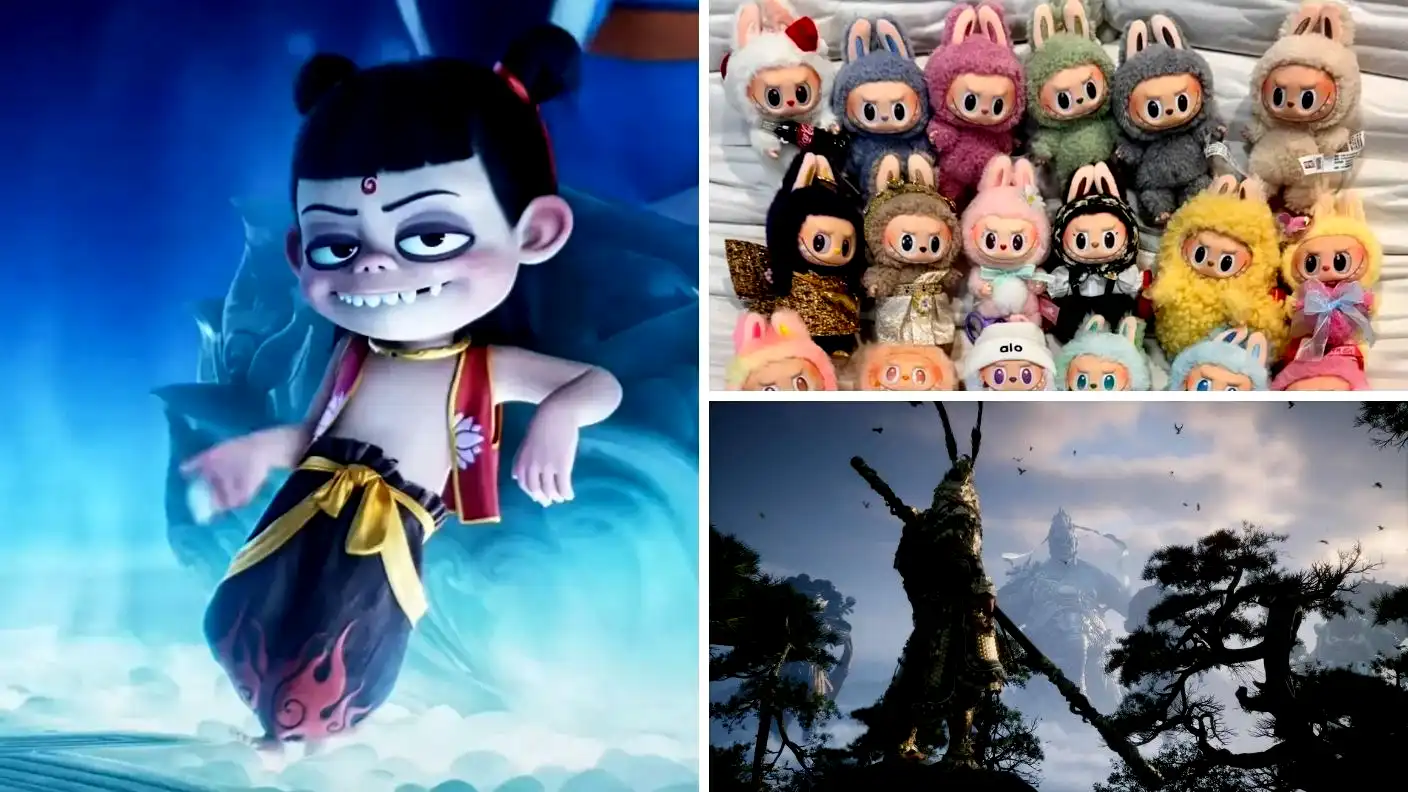
At the forefront of this physical retail surge is the Chinese designer toy brand Pop Mart. Since opening its flagship German store near Berlin’s historic Alexanderplatz last year, the brand has seen consistent crowds of young consumers lining up outside its doors. The primary driver of this retail frenzy is a mischievous, sharp-toothed character named Labubu, which has become a viral sensation across local TikTok and Instagram feeds. Young adult consumers are flocking to stores to experience the thrill of opening “blind boxes,” buying collectible figurines, and matching them with daily outfits as stylish bag charms to showcase their individual personalities.
This consumer enthusiasm aligns with a highly lucrative global trend known as “kidulting”—where adults enthusiastically embrace childlike hobbies, toys, and lifestyle products. Data from the German Association of the Toy Industry reveals that IP-themed products currently account for approximately 28% of Germany’s total toy market, with demand for collectibles rising rapidly. This favorable retail landscape has allowed Chinese creators to post record-breaking financial returns. Pop Mart reported a total annual revenue of 37.12 billion yuan, or roughly $5.48 billion, in 2025, marking a staggering 184.7% year-on-year increase. While the initial European segment accounted for roughly 1.5% of the brand’s total global footprint just five years ago, the region has rapidly become a central driver of corporate expansion, posting an exceptional 506.3% surge over the same period.
While designer toys dominate retail shelves, Chinese cinematic creations are achieving equal success on the silver screen. In 2025, the highly anticipated Chinese animated blockbuster Ne Zha 2 claimed the crown as the world’s highest-grossing animated film, pulling in a massive 15.95 billion yuan (approximately $2.36 billion) at the global box office. European film critics and German audiences have lauded the film’s exceptional visual effects, breathtaking action sequences, and dramatic narrative structure. Many noted that the film’s meticulous technical craftsmanship has completely reshaped their views on the capabilities of modern Chinese animation.
The monumental global success of Ne Zha 2 is the direct result of a highly disciplined, long-term production cycle. The development team spent five and a half years bringing the mythical story to life, coordinating more than 4,000 creative professionals and generating nearly 2,000 complex visual effects shots. Industry experts note that the film’s success lies in its ability to blend the deep, ancient elements of traditional Chinese folklore with modern, globally accessible storytelling techniques. This allows European viewers to experience the emotional depth of Eastern philosophy while enjoying a high-octane, Hollywood-quality cinematic spectacle.
Simultaneously, the global interactive entertainment sector has emerged as another powerful vehicle carrying Chinese cultural narratives overseas. At the Gamescom 2025 exhibition in Cologne, Germany—the world’s largest video game convention—Chinese developers occupied the absolute center of attention. Hangzhou-based game studio Game Science used the event’s closing showcase to unveil the trailer for its highly anticipated next title, Black Myth: Zhong Kui. This presentation marked the first time in history that a Chinese video game served as the grand finale of a top-tier international gaming expo, building on the massive critical and commercial success of its predecessor, Black Myth: Wukong.
This gaming phenomenon is driving an unprecedented wave of cultural curiosity among younger European players. On popular international gaming forums, players are no longer just discussing gameplay mechanics and graphics; they are actively researching the underlying mythology. Thousands of gamers have begun reading translated versions of the classic Chinese novel Journey to the West and studying ancient Daoist mythology to decipher in-game concepts like heavenly palaces, deities, and dragon kingdoms. This grassroots curiosity proves that highly polished digital entertainment can successfully spark a genuine, long-term interest in traditional Eastern literature.
Venture capital and retail experts point out that this global expansion is far from accidental. Rather, it reflects the emergence of a highly mature industrial ecosystem that seamlessly integrates manufacturing efficiency with advanced consumer psychology. German retail specialist Ghalia Boustani pointed out that Chinese companies have successfully achieved deep emotional resonance and cultural identification with overseas consumers through their IP exports. Boustani explained that by prioritizing individuality, emotional connection, and high-quality physical products, Chinese brands are perfectly matching the lifestyle demands of Gen Z and millennial consumers across Europe.
Ultimately, the rapid rise of Chinese cultural IPs across Europe represents a major turning point for the global creative economy. Backed by solid domestic manufacturing capabilities, a massive home market, and a highly collaborative pool of design talent, China is transforming from a general industrial manufacturer into a leading global hub for original creative concepts. As more advanced games, cinematic blockbusters, and highly collectible toys make their way onto European streets, cross-border cultural exchange will likely continue to accelerate, proving that in the digital age, compelling storytelling remains the ultimate tool for bridging geographical divides.