
Key Points:
- Axiom Space has successfully raised an additional $525 million, boosting its total funding to over $1.5 billion.
- Japan’s MUFG Bank led the new funding round, signaling growing international confidence in private space infrastructure.
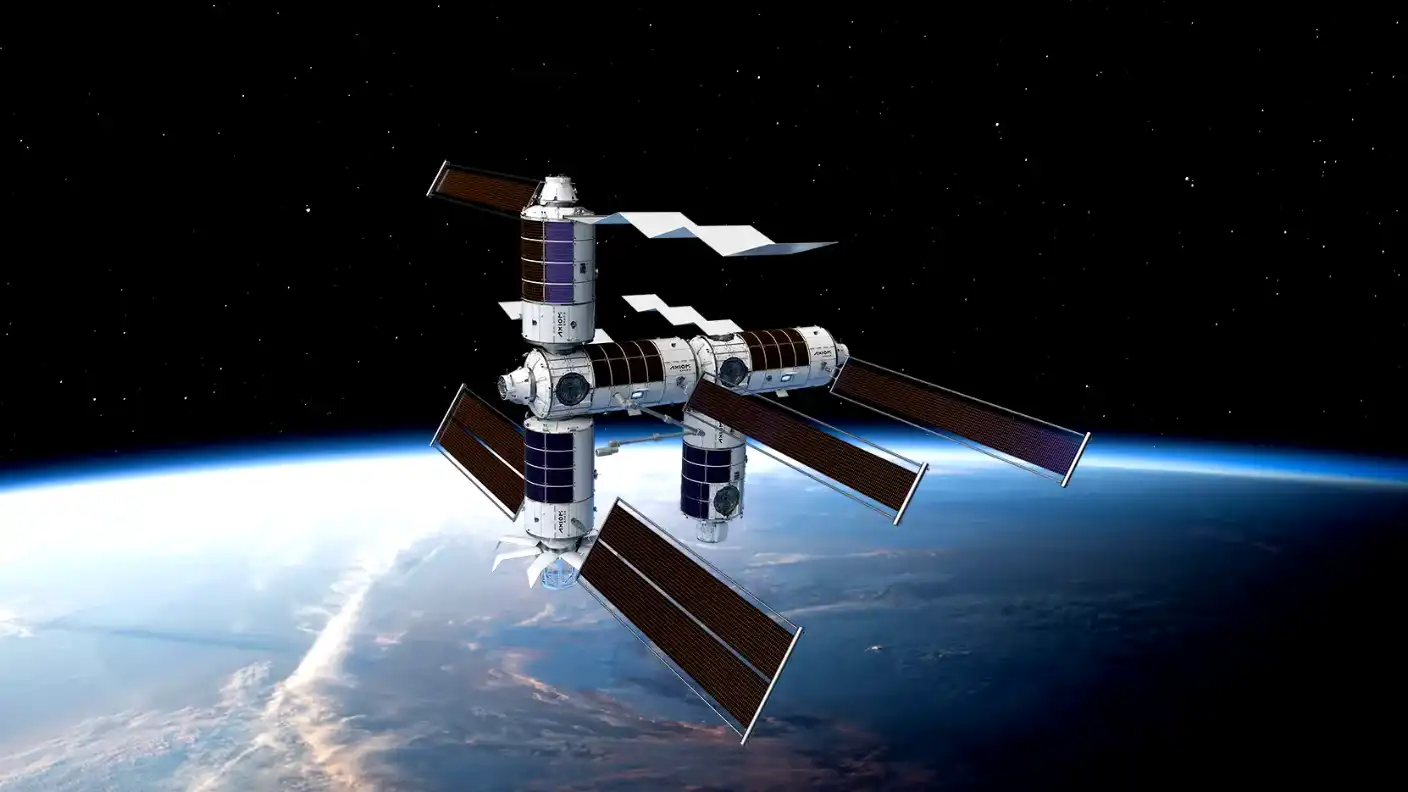
- The Houston-based company plans to use the capital to build Axiom Station, the world’s first commercial space station.
- Axiom expects to launch the first module of its private space station by late 2026, with full operational status targeted for 2030.
The race to commercialize outer space is accelerating at an unprecedented pace. On Thursday, June 4, 2026, Houston-based space infrastructure developer Axiom Space announced that it had successfully raised an additional $525 million in funding. This massive capital injection, which brings the company’s total funding to well over $1.5 billion, will fuel the construction of Axiom Station—the world’s very first private commercial space station. The funding round, led by Japan’s MUFG Bank, underscores a growing international confidence in the viability of private human spaceflight and orbital infrastructure.
The strategic importance of MUFG Bank’s leadership in this funding round cannot be overstated. MUFG, one of Japan’s largest and most influential financial institutions, has historically remained cautious about speculative venture capital investments. Its decision to anchor Axiom’s latest funding round sends a clear signal to other traditional banks that private space infrastructure represents a tangible, long-term investment opportunity. This institutional backing helps to legitimize the entire commercial space sector, paving the way for further mainstream financial participation in the burgeoning trillion-dollar space economy.
Axiom Space plans to use the newly secured capital to fund the crucial next phases of Axiom Station’s development. The company has already secured contracts from NASA to attach its initial modules to the International Space Station (ISS) by late 2026. This phased approach allows Axiom to test its habitat designs and life support systems in a real-world orbital environment. As the ISS nears its planned deorbit date in 2030, Axiom Station will serve as a seamless replacement, providing critical orbital laboratories and living quarters for both national space agencies and private commercial enterprises.
The vision for Axiom Station extends far beyond simply replacing the ISS. The private station aims to become a bustling hub for microgravity research, in-space manufacturing, and orbital tourism. Companies will be able to lease dedicated laboratory modules to conduct experiments on advanced materials, pharmaceuticals, and biological processes without the interference of Earth’s gravity. Axiom also plans to host private astronaut missions, offering high-net-worth individuals and corporate researchers the opportunity to live and work in orbit, with full operational status targeted for 2030.
The commercial space sector is currently experiencing a historic boom, driven by massive investments in satellite internet constellations, reusable rocket technology, and orbital tourism. Industry analysts project that the global space economy will grow to well over $1 trillion by 2040, with private companies capturing an increasingly larger share of that market. Companies like SpaceX, Blue Origin, and Rocket Lab are driving down launch costs, making it economically viable for firms like Axiom to deploy and maintain complex orbital infrastructure. This synergistic growth across the space value chain is accelerating the transition from government-led missions to private commercial ventures.
In addition to its private station plans, Axiom Space has also secured lucrative contracts to fly private astronaut missions to the International Space Station. In March 2026, the company completed its third private mission, Ax-3, sending a crew of four astronauts to live and work on the ISS for 14 days. These missions, which cost individual participants upwards of $55 million, generate substantial revenue for Axiom while providing invaluable operational experience for its flight control and mission support teams. This hands-on experience is critical for developing the robust safety protocols required for future commercial space station operations.
The company’s strategy of attaching its modules to the ISS for a transitional period offers multiple benefits. By connecting to the existing station, Axiom avoids the immense technical challenges and financial costs of launching a completely independent orbital platform from scratch. This approach allows Axiom to leverage the ISS’s mature life support systems, power grids, and communication arrays, drastically reducing the complexity of its initial deployments. This cost-effective strategy provides a lower-risk pathway to establishing a permanent commercial human presence in low Earth orbit.
Axiom Space also boasts a highly experienced leadership team, which includes former NASA Administrator Michael Suffredini as its President and CEO. Suffredini, who spent decades managing the ISS program, brings unparalleled expertise in human spaceflight operations and orbital safety. This deep institutional knowledge, combined with a seasoned team of engineers and mission specialists, provides investors with confidence that Axiom can successfully execute its ambitious plans to build and operate complex orbital infrastructure without relying on unproven technologies.
Furthermore, the company’s long-term vision aligns directly with NASA’s broader strategy to commercialize low Earth orbit. As the ISS approaches its retirement, NASA plans to shift its focus and resources toward deep space exploration missions, such as returning humans to the Moon and eventually sending crews to Mars. To ensure a continued U.S. presence in low-Earth orbit, NASA is actively supporting private initiatives such as Axiom Station through commercial contracts and technical assistance. This strategic partnership provides Axiom with a clear government customer and a guaranteed revenue stream for its orbital services.
Ultimately, Axiom Space’s successful $525 million funding round, led by Japan’s MUFG Bank, marks a pivotal moment for the commercial space industry. By securing over $1.5 billion in total capital, the company is well-positioned to achieve its goal of launching the first module of Axiom Station by late 2026. As the world moves steadily toward a permanent human presence in low-Earth orbit, Axiom Space is building the essential infrastructure that will unlock a new era of space exploration, microgravity research, and orbital commerce, making the once-distant dream of a private space station an increasingly near-term reality.